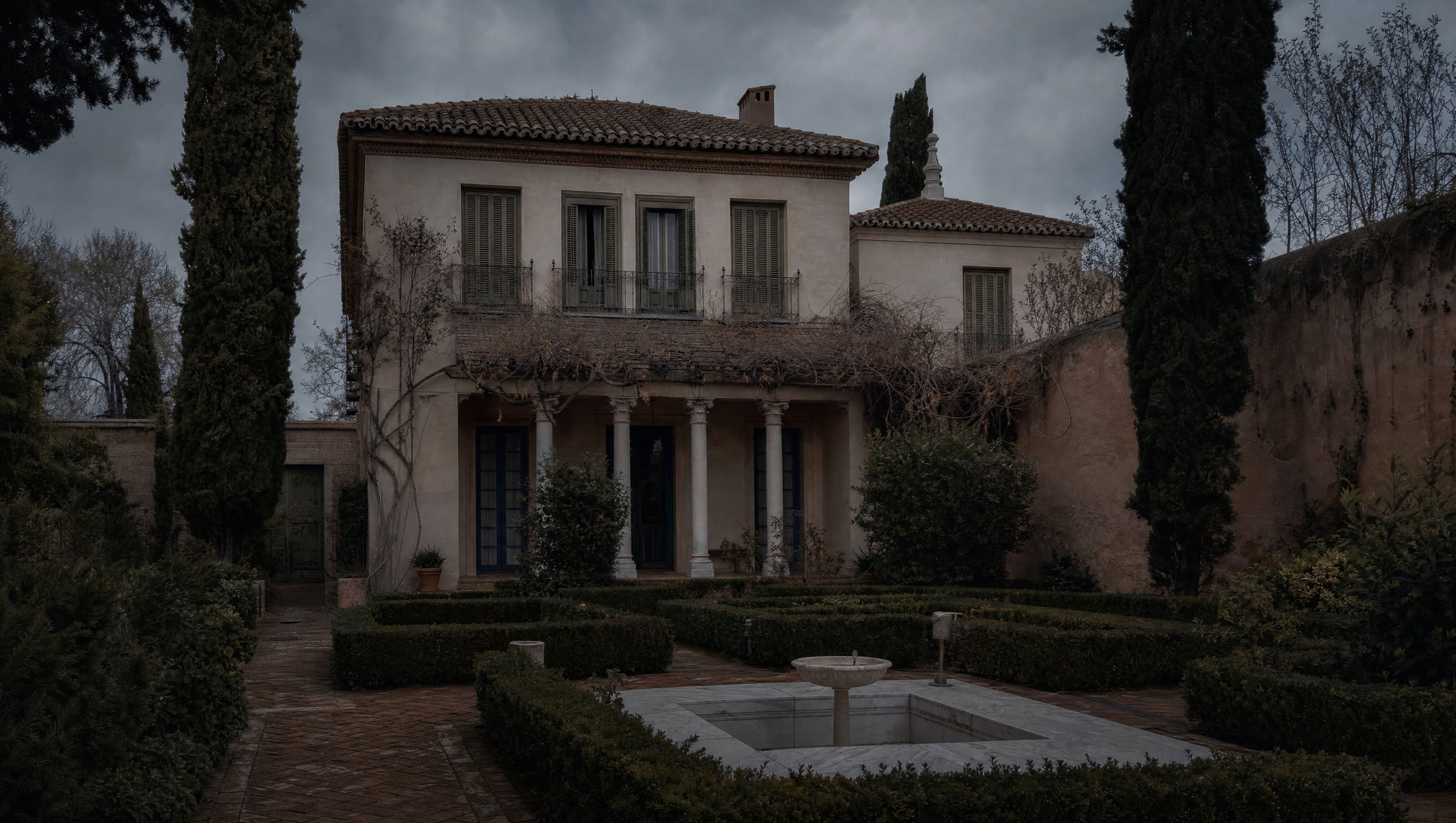
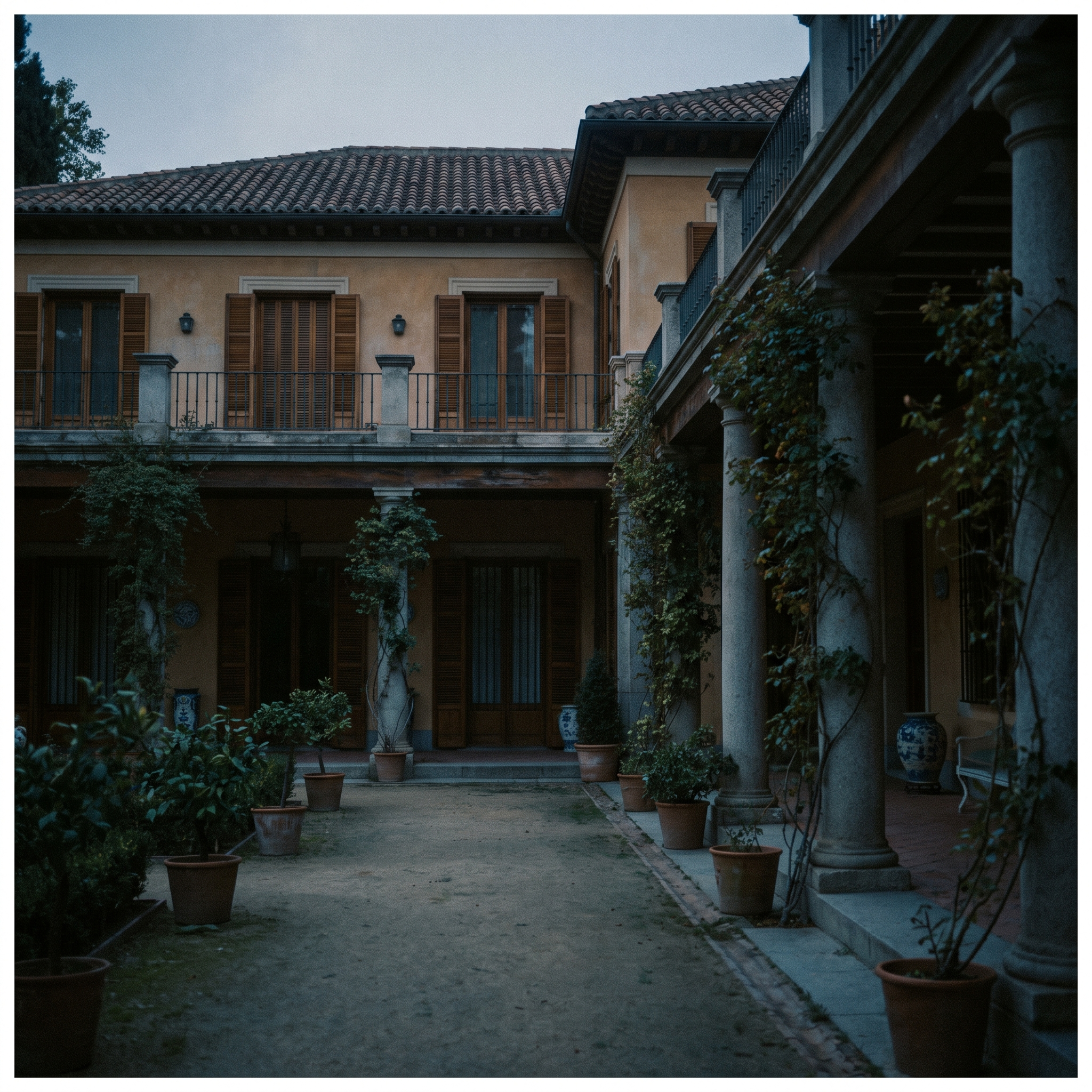
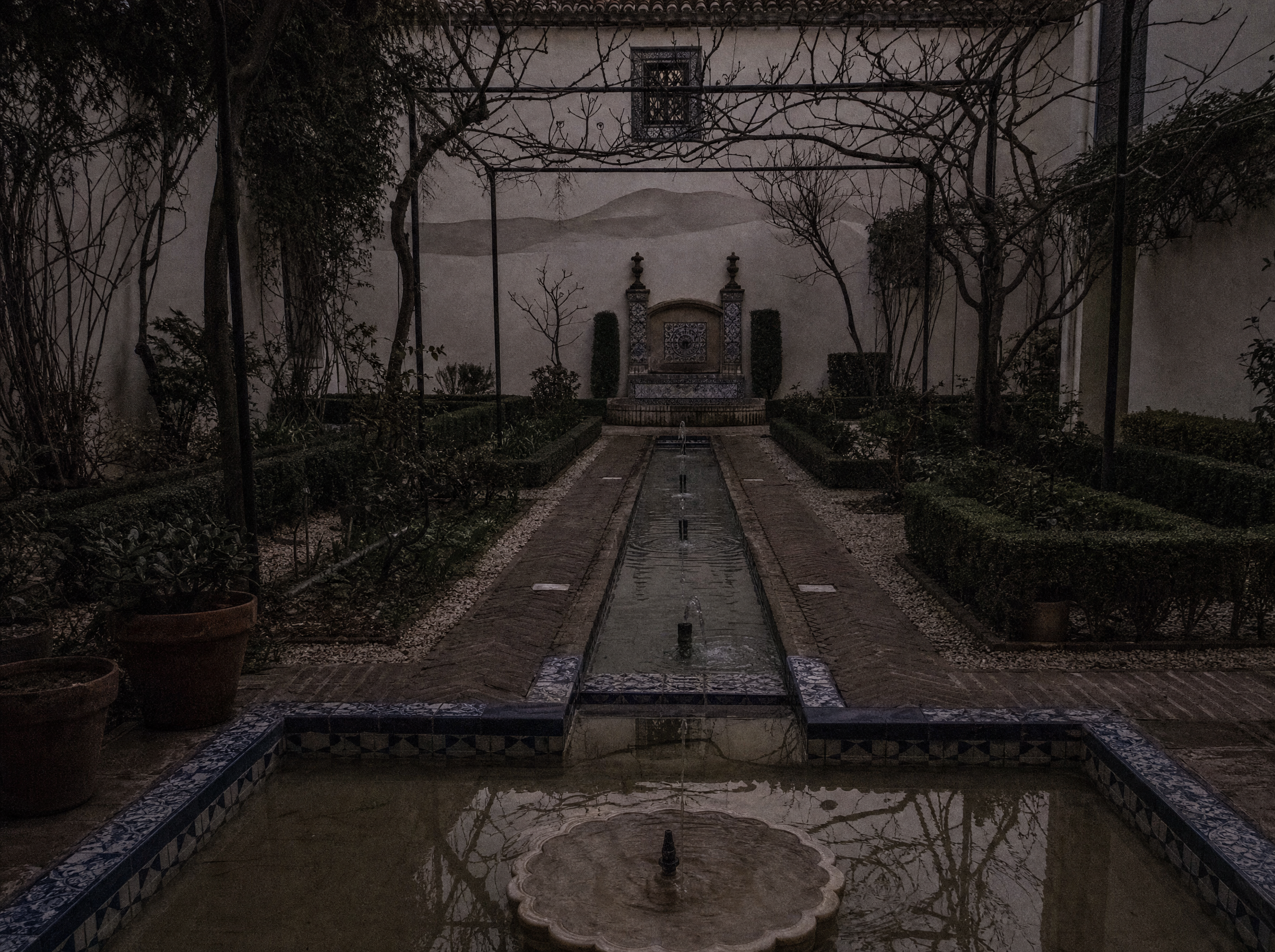
You do not enter this house through a door. You enter it through a garden, and then a second garden, and then a third, and by the time you reach the portico the building has already told you what it thinks. Joaquín Sorolla had the house raised on what was then the northern edge of Madrid — the architect was Enrique María Repullés y Vargas, better known for the Bolsa — and the family moved in at the end of 1911. The gardens are the painter's own: the first laid out after the Jardín de Troya at the Alcázar in Seville, around an old marble basin; the second a narrow neo-Arab watercourse in the manner of the Generalife; the third a pond, a sculpture group and a pergola where he sat with his family. He did not commission a garden to look at. He commissioned subjects, and then painted them.
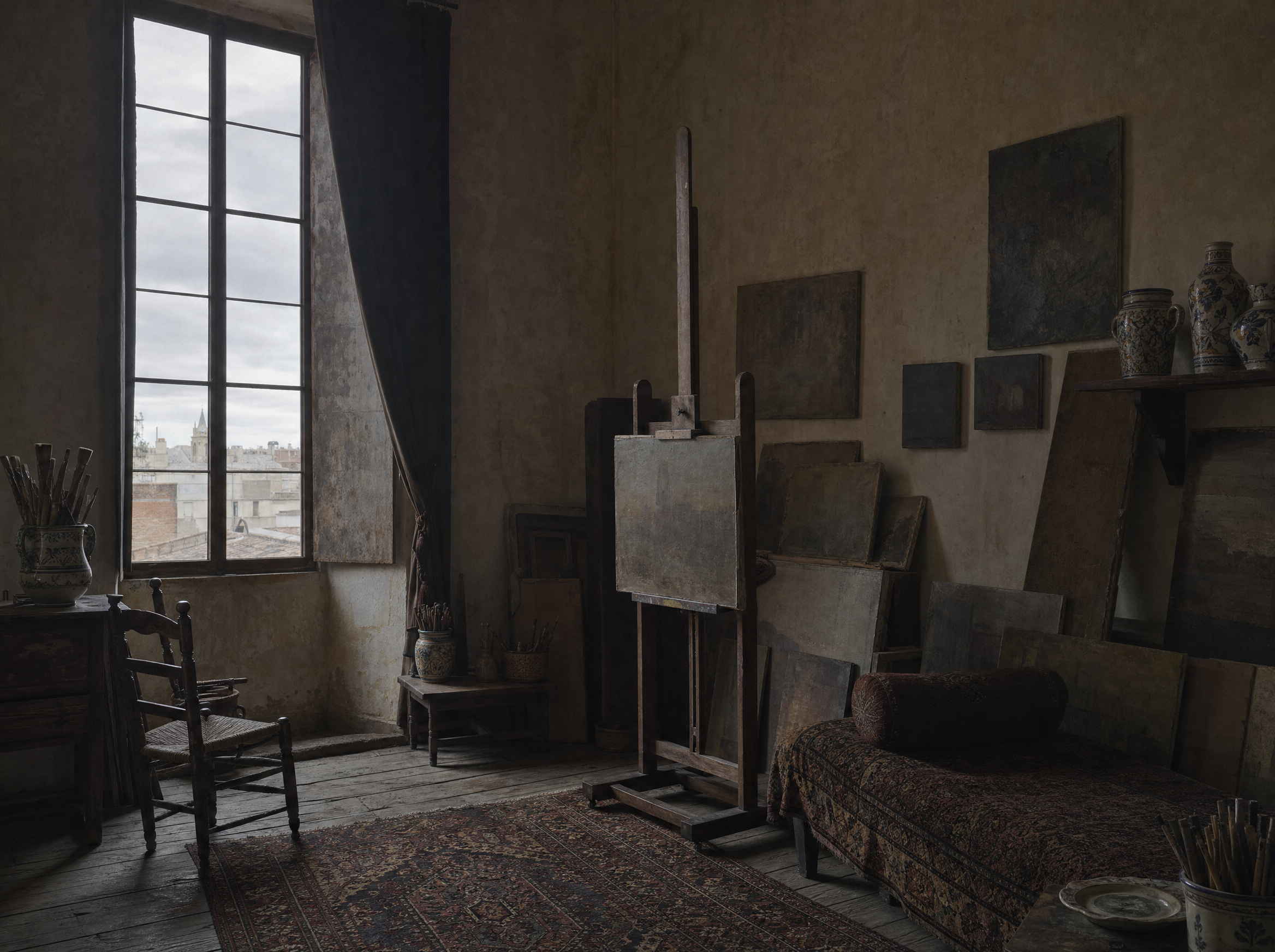
Indoors the temperature drops and the light changes character entirely, which is the whole argument of the place. The studio is a working room rather than a shrine — tall window, easel, canvases against the wall in the order of somebody who intended to come back to them. Sorolla died in 1923. His widow, Clotilde García del Castillo, willed the house and its contents to the state as a museum; she died in 1929 and it opened in 1932. That sequence matters. Nobody reconstructed this. A household simply stopped, and was then looked after.
And now the honest part, which is why this entry exists in the state it does. The museum closed to the public on 1 October 2024 and has not reopened. The Ministry of Culture is spending €6.5 million on an expansion next door of more than two thousand square metres and a full rehabilitation of the house itself — floors, woodwork, banisters, facade, climate control in every room that will hold anything, and, at long last, step-free access, which the house has never had. The gardens are being restored with the Instituto del Patrimonio Cultural de España. The reopening was estimated for early 2026; it had not happened when I last looked. Do not plan a Madrid morning around this until the museum's own page says otherwise.
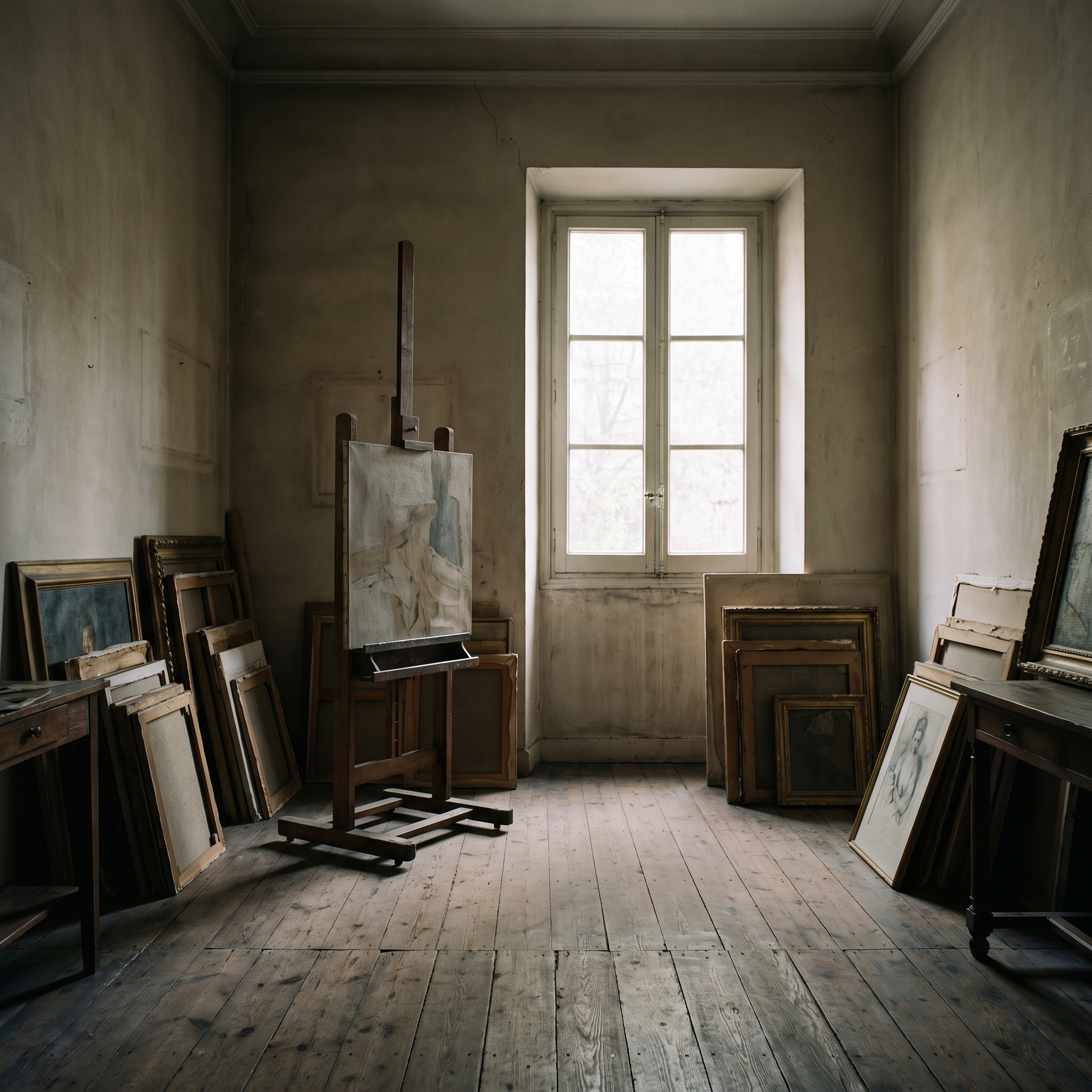
The promise of a house museum is that nothing moves. This one is being moved, on purpose, for its own good.
The museum's own slogan for the closure is cerrando puertas, ampliando horizontes — closing doors, widening horizons — and I find I cannot argue with a word of it. A house with no climate control is a house slowly losing its contents. A house with no lift is a house that has quietly decided who is allowed in. Both of those are being fixed.
Still. The particular spell of this place was never conservation-grade. It was the sense that the family had gone out for the afternoon and left the light on. You cannot re-lay a floor and restore a garden and double a building without the household being packed up first, and nobody, however careful, unpacks a room exactly as they found it.
So I will go back on the first ordinary weekday after it opens, stand in the garden, and find out. If the water is running and the studio still smells faintly of nothing in particular, they will have got away with it.