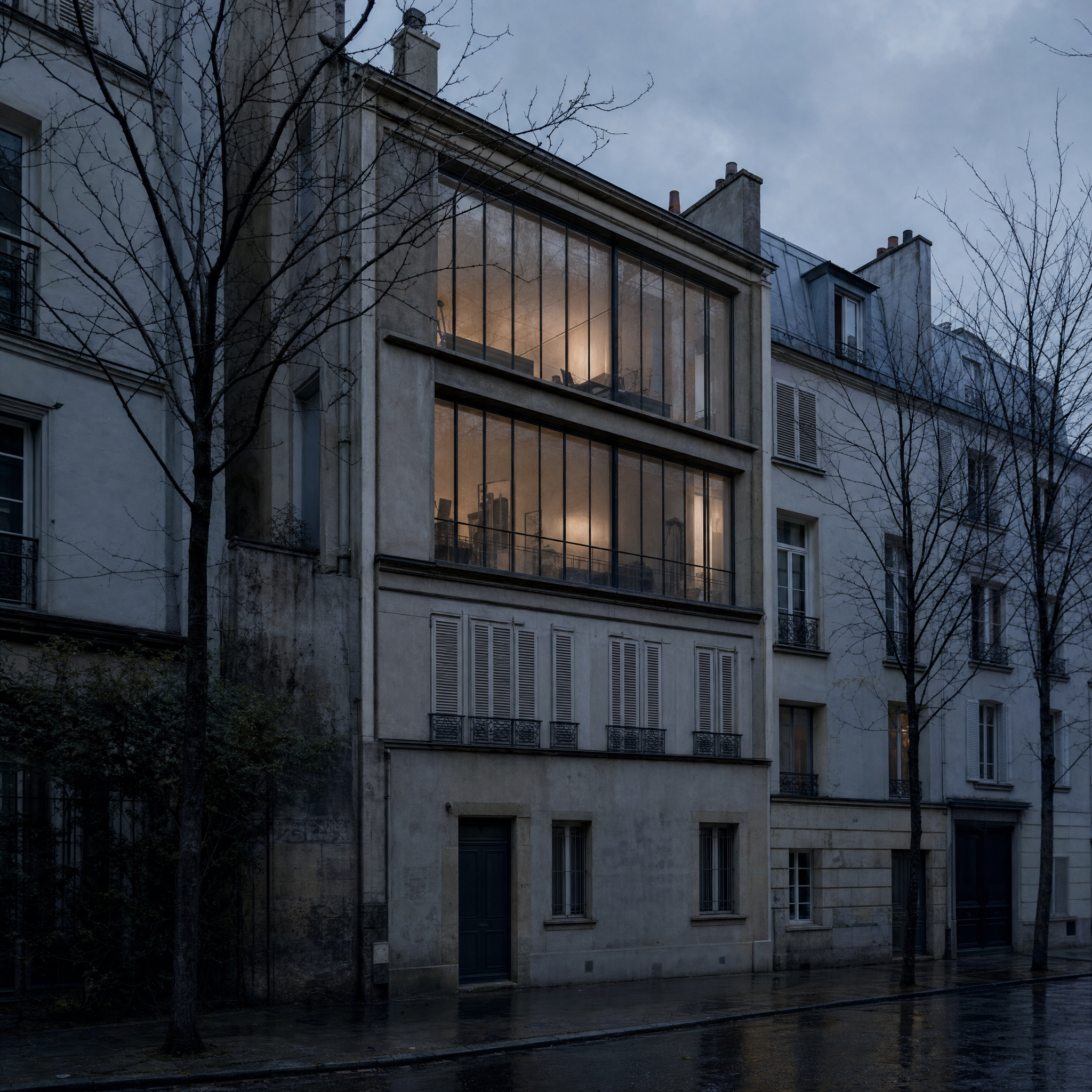
The family took this house in 1852 and Moreau worked in a small studio at the top of it for forty years. As early as 1862 he was writing about keeping the work together — separated, he said, the pictures perish; taken together they give some idea of what he had been at. In April 1895 he stopped theorising, hired a young architect named Albert Lafon, and had the upper half of his own home demolished and rebuilt as two vast north-lit studios. He was seventy. He had three years left.
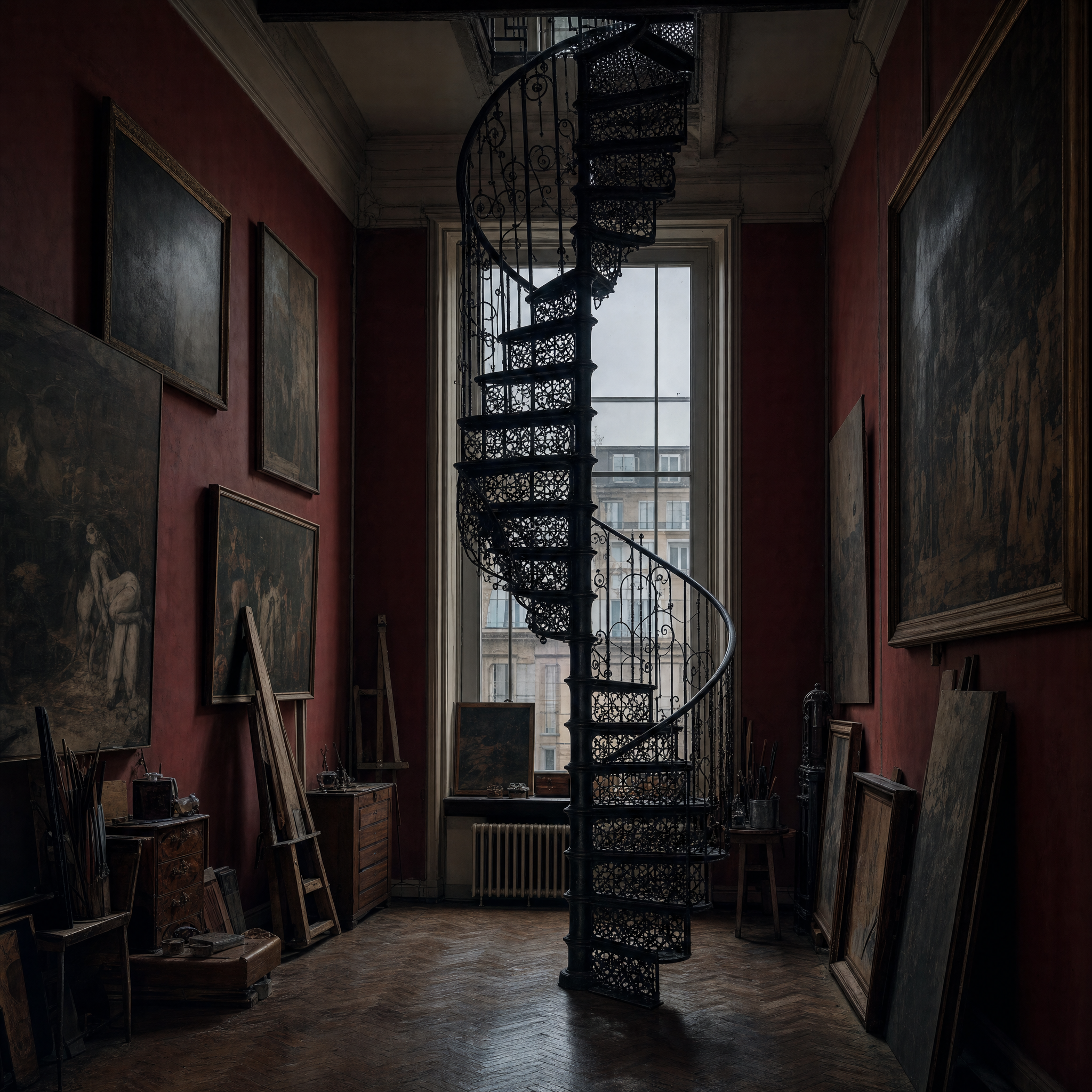
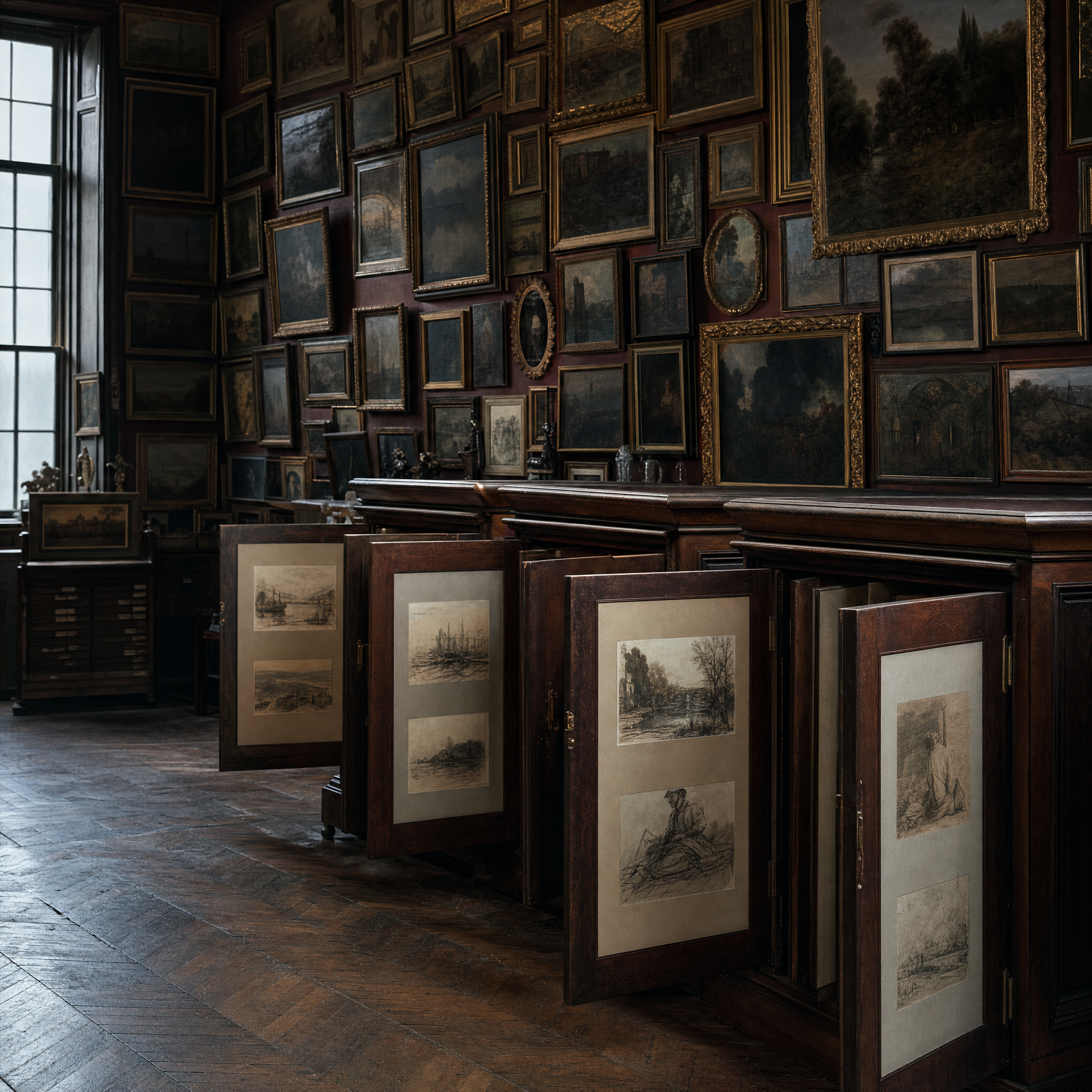
The result is the strangest thing in the ninth arrondissement and one of the most moving buildings in Paris. Everything hangs frame to frame, floor to ceiling, in the density of a stockroom rather than a gallery — hundreds of paintings and watercolours, thousands of drawings, because thinning it out was precisely what he was trying to prevent. The drawings live in tall cabinets whose leaves swing open on hinges, and you are meant to work them yourself. Lafon's cast-iron spiral stair between the two studios is showing off, and may.
Save it for rain. On a wet afternoon the cabinets feel like shelter and the crush of frames stops being a problem to solve; in bright weather the same rooms simply look overloaded. Two things to know before you climb: there are three staircases and no lift, which rules the house out for a good many visitors, and the museum has been subject to occasional unannounced closures. Look at the front page of the site the morning you go. I have walked up rue de La Rochefoucauld to a locked door, and it is a long way back down.
family portraits and Chassériau
plate not yet made
He signed the will in September, and was dead by the following April.
The will is dated 10 September 1897 and leaves the house and everything in it to the French State. Moreau died on 18 April 1898, with the hanging unfinished. His friend Henri Rupp completed the installation on his behalf; the State accepted the bequest in 1902; the museum opened in 1903 with some fourteen thousand works in it.
Almost nothing has been rearranged since. That is the whole point of the visit and the reason the density is not a curatorial failure — you are looking at a man's own account of himself, in his own order, made in the knowledge that he would not be there to explain it.
Go down to the first floor last. The apartment is small, dark and full of other people's pictures — Chassériau, Degas, family — and after two floors of his own work it lands like a sentence spoken quietly at the end of a long argument.