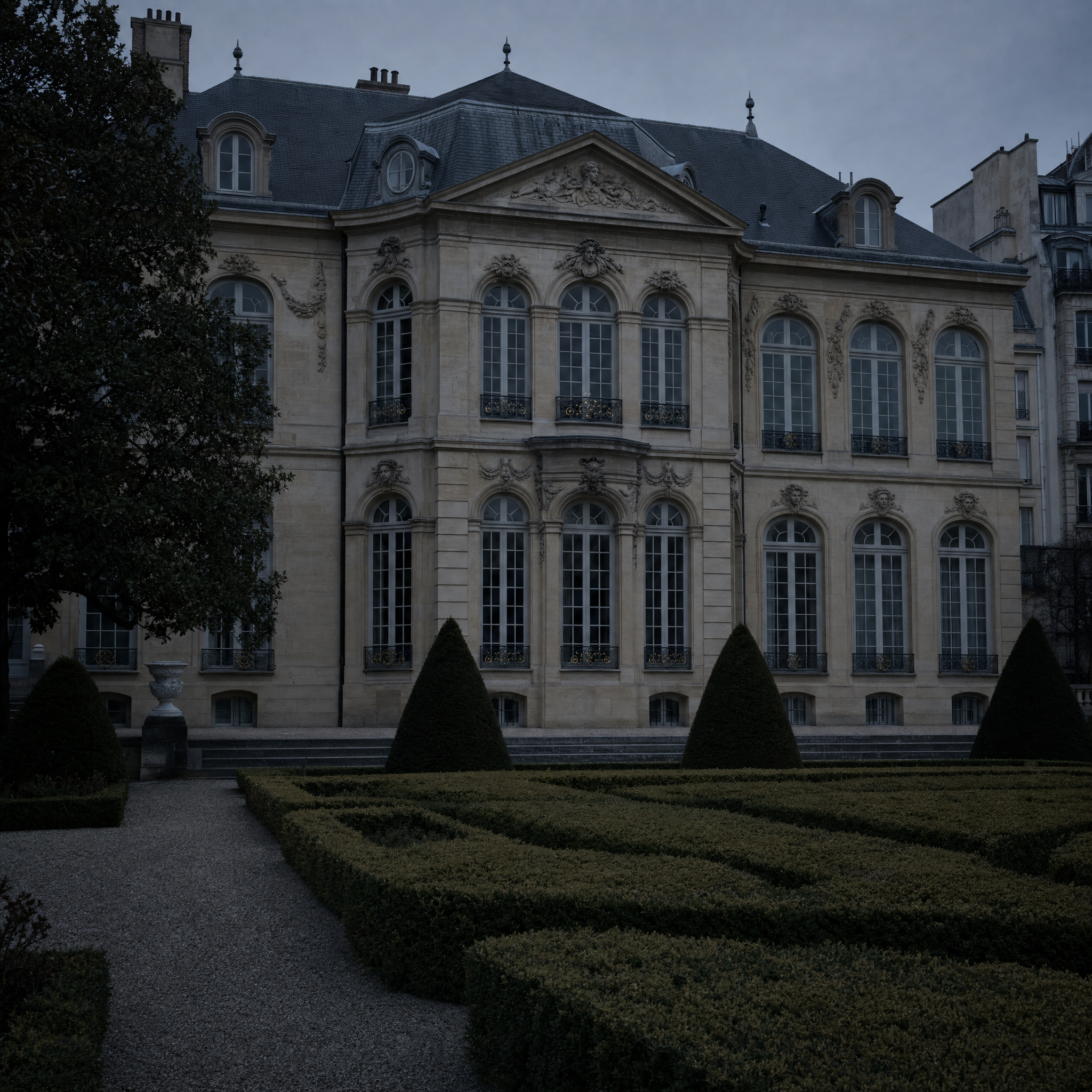
The Hôtel Biron was built in 1732 to a design by Jean Aubert, and by 1908 it was practically abandoned — a fine rococo shell being let out in pieces to whoever wanted cheap space with tall windows. Rodin took four rooms on the ground floor. By 1911 he had the run of the building. In 1916 the National Assembly voted to accept his donations and hand him the house and its garden for a museum of his work; he died the following year, and it opened on 4 August 1919. It is the only museum in Paris that began as a lease.
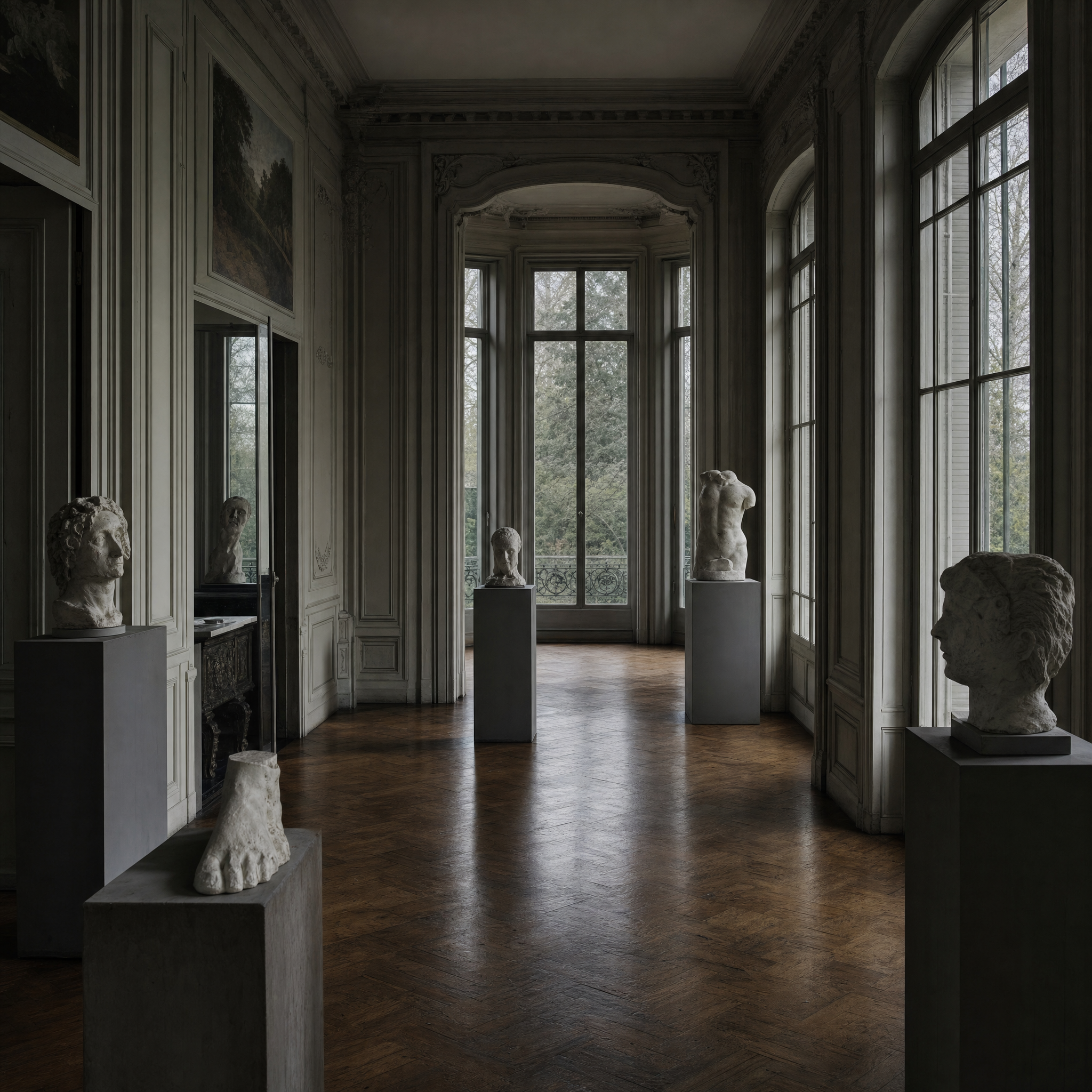
Everyone comes for the garden, and the garden deserves it — but the queue is out there and the best rooms are not. Go indoors first. The galleries are hung and lit by those same tall bay windows, which means the sculpture changes hour by hour and season by season, and it means that a wet grey afternoon in the plaster rooms is a completely different museum from a bright one. Plaster is the honest material here: it is what he actually handled, it carries the seams and the pins and the corrections, and it is what the marble was pretending not to be.
May, late in the day, is the correct booking. The roses are doing their work, the coach parties have gone, and the low light down the garden axis is the reason the sculpture was placed where it is. The permanent galleries are not air-conditioned, which in a July heatwave is a genuine consideration; the Studio Rodin, in the chapel, is. There is a café in the garden and it is perfectly adequate, which in this arrondissement counts as praise.
the Camille Claudel room
plate not yet made
The room he asked for took thirty-three years to open.
When Rodin was arranging the terms of his bequest he asked for a space in the future museum reserved for the work of Camille Claudel. It did not happen in his lifetime. The room opened in 1952, after her brother Paul gave four major sculptures to the museum — Vertumnus and Pomona, Clotho, and both versions of The Age of Maturity.
The museum has gone on collecting her since, and now holds more of her work than anywhere else. Stand in front of The Age of Maturity for longer than feels comfortable. It is a group of three figures and it is also, unmistakably, an account of what had happened to her — made by the person it happened to, in a house that now belongs to the man it happened with.
Room 16 is small and easily walked past on the way to the garden. That is precisely why I put it last on the list, and why I have never once managed to leave it in under a quarter of an hour.