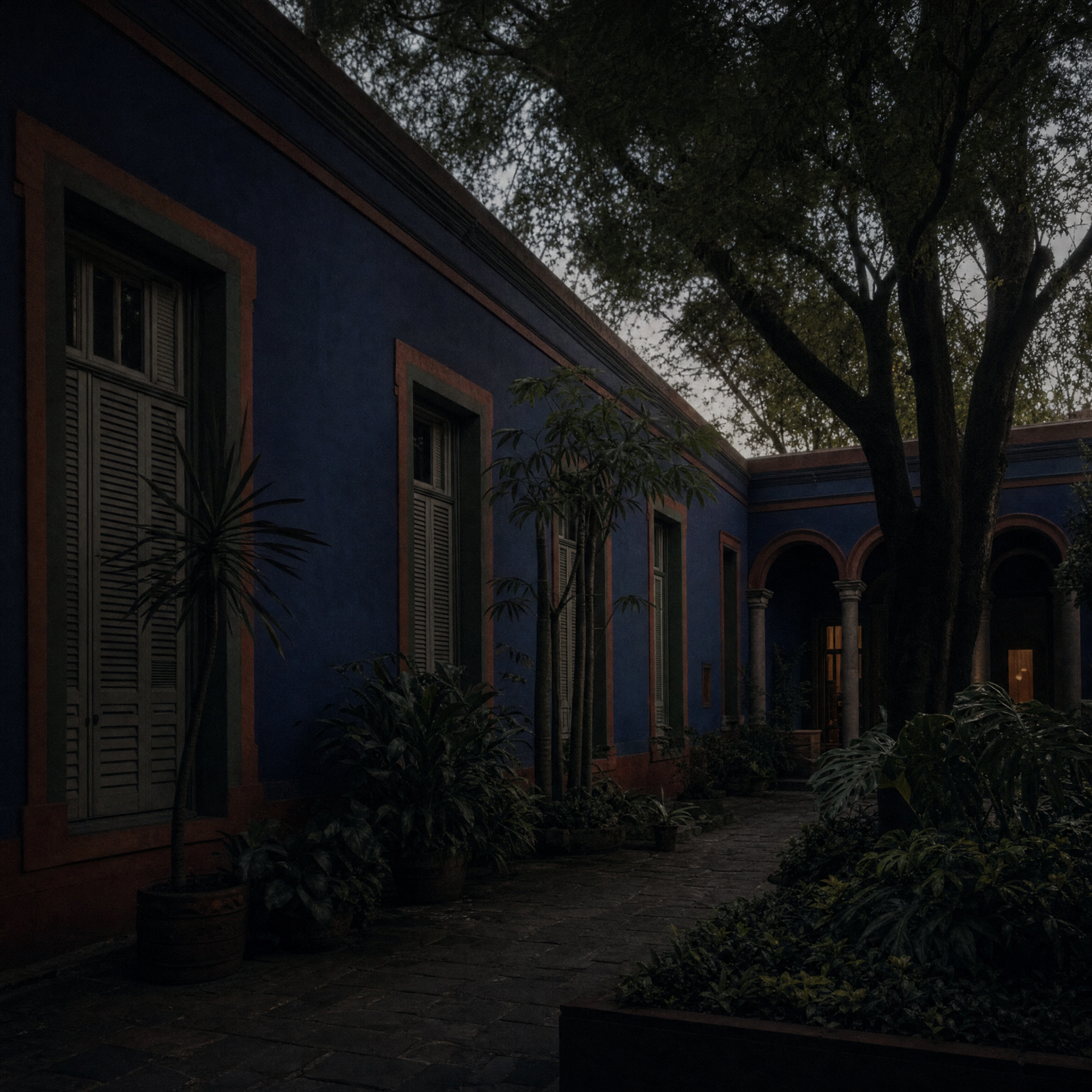
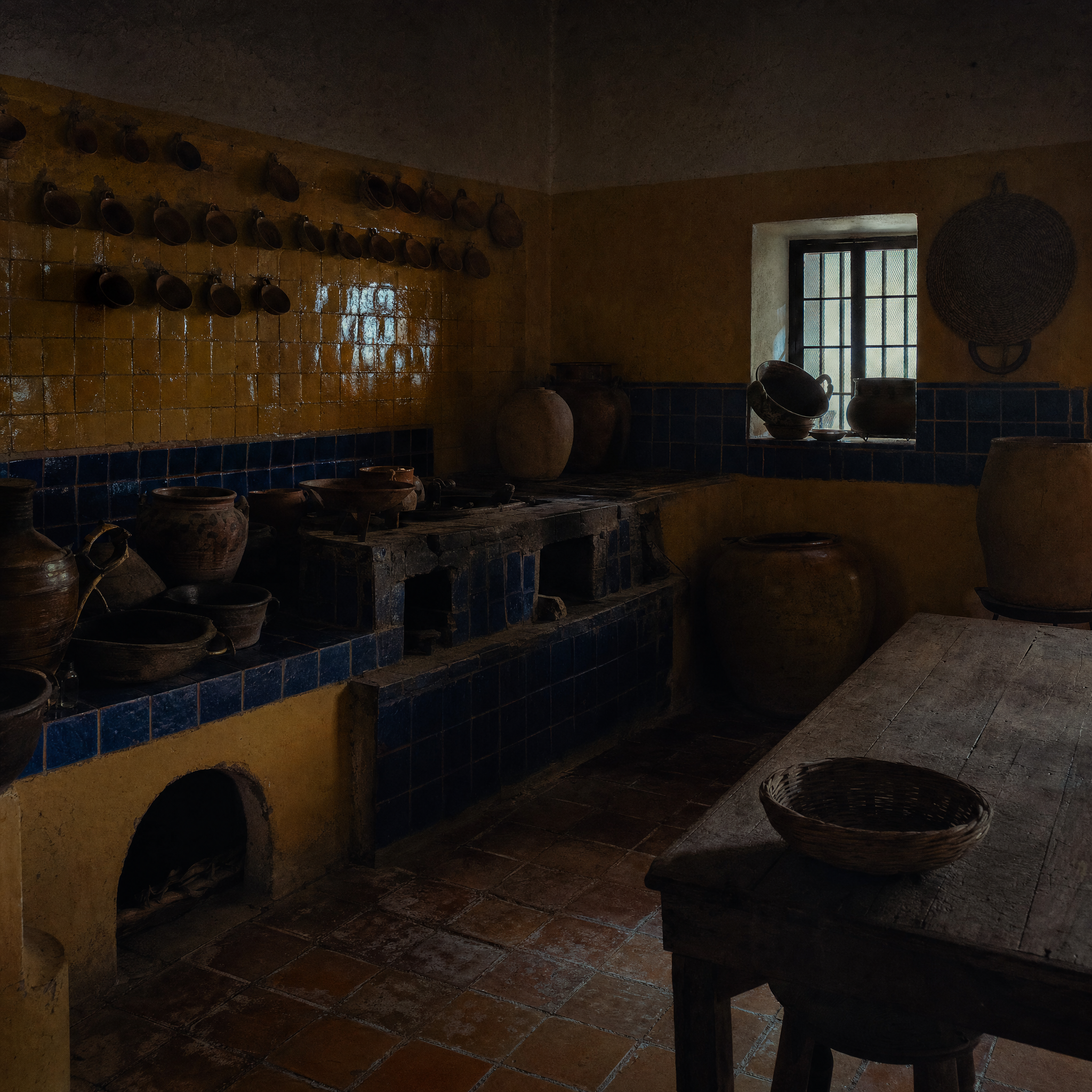
I took the first slot of the day and still shared the kitchen with thirty people, and I want to say plainly that it did not spoil it. The Casa Azul defeats crowd-avoidance as a strategy; go anyway, and change tactics instead. Let the room fill and empty around you. Stand at the edge and wait. Everything worth seeing here is small, domestic and low down, and the crowd moves at head height.
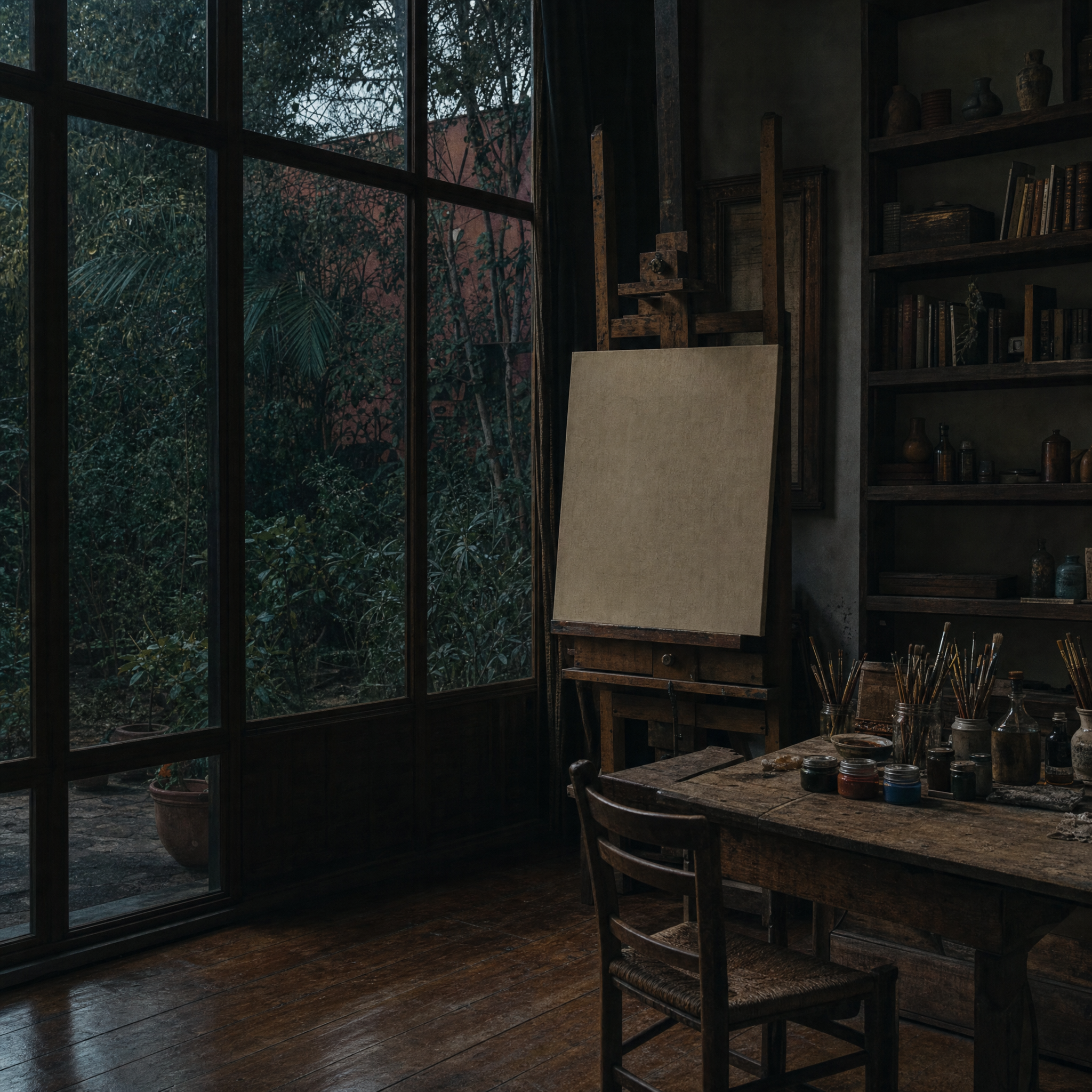
What surprised me is how much of it is not about painting. Guillermo Kahlo built the house in 1904 as a family home; Frida was born in it in 1907 and died in it in 1954, and for a good stretch in between she lived here with Diego Rivera. So the rooms are arranged the way a household arranges itself — a kitchen with names spelled out in tiny clay cups, jars of pigment on a work table, a corset, a mirror fixed to the canopy above a bed. The last of those is the whole biography in one object, and there is no label that improves on it.
Practical, and non-negotiable: there is no ticket desk. Nothing is sold at the door, the slots go weeks out in season, and the museum keeps closed Mondays plus a scatter of national dates. Buy online, then plan the day around the time you were given rather than the other way round — Coyoacán rewards being early and staying late, and the house does not reward hurry at all.
She is still in the house. That is not a figure of speech.
Frida died here in 1954. Rivera gave the house to the nation and it opened as a museum in 1958, a year after his own death — which means the arrangement you walk through was made by a widower with the rooms still warm, not by a curator with a thesis. Her ashes are in the house. You pass them.
And the house went on keeping things after that. A room shut up for decades was finally opened in 2004, and out of it came clothes, corsets, letters and photographs that nobody living had seen — which is why there is now a dress display at all, and why the wardrobe reads less like costume than like medical history.
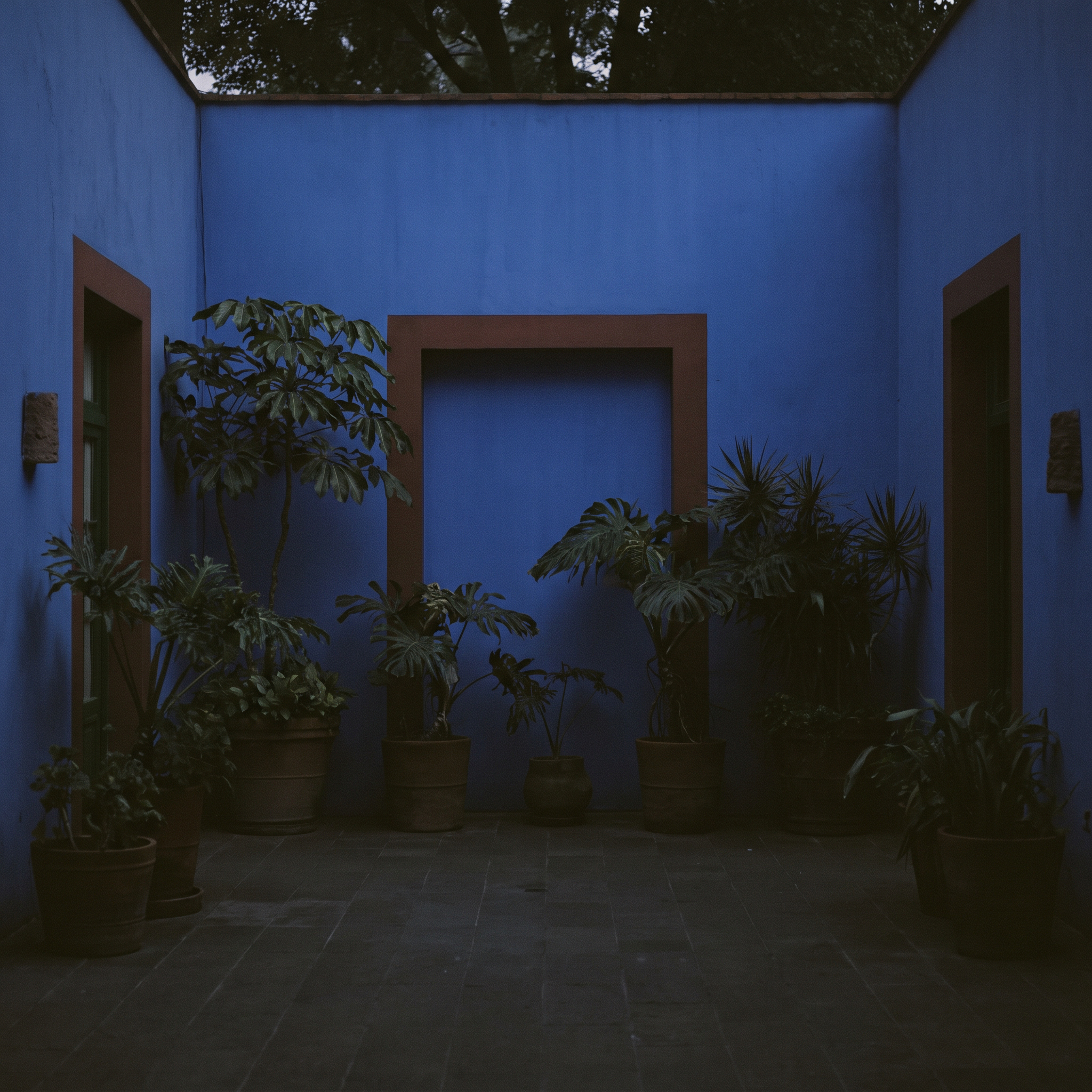
Everyone arrives knowing the face from the tote bags. What the house gives back is the ordinary scale underneath it: a kitchen, a garden, a bed with a mirror where the ceiling should be. Go out into the courtyard afterwards and sit down for ten minutes before Coyoacán starts selling you things again.