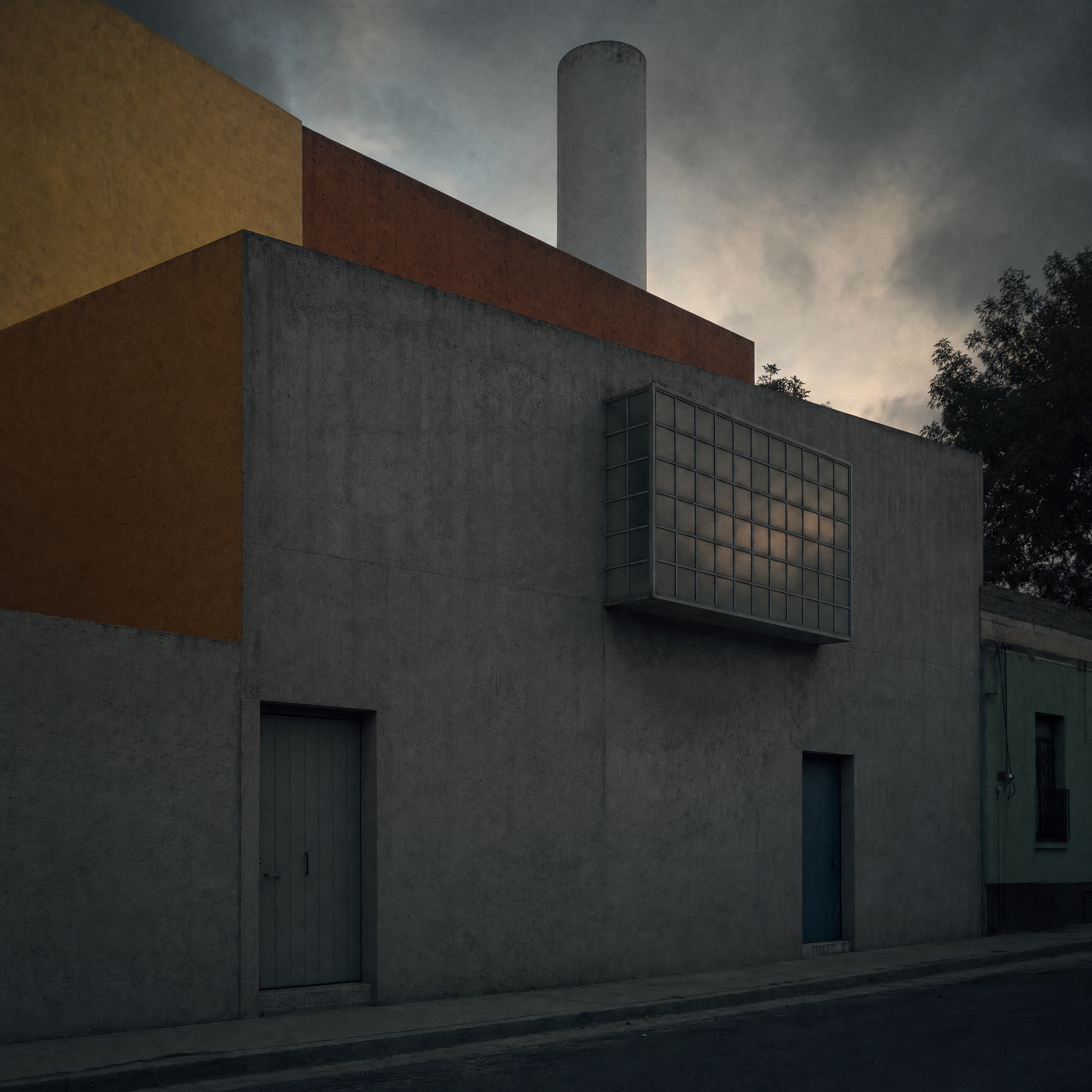
You will walk past it. That is not a failure of the address; it is the first thing the house says. Barragán finished it in 1948 on a narrow street in Tacubaya — a plain neighbourhood of small houses, workshops, builders' merchants and cheap kitchens — and gave the street a flat expanse of raw cement render with the doors painted and almost nothing else. The one gesture is the library's gridded window pushing out above the pavement, and two planes of yellow and orange folded round the top corner, which you only notice on the way back.
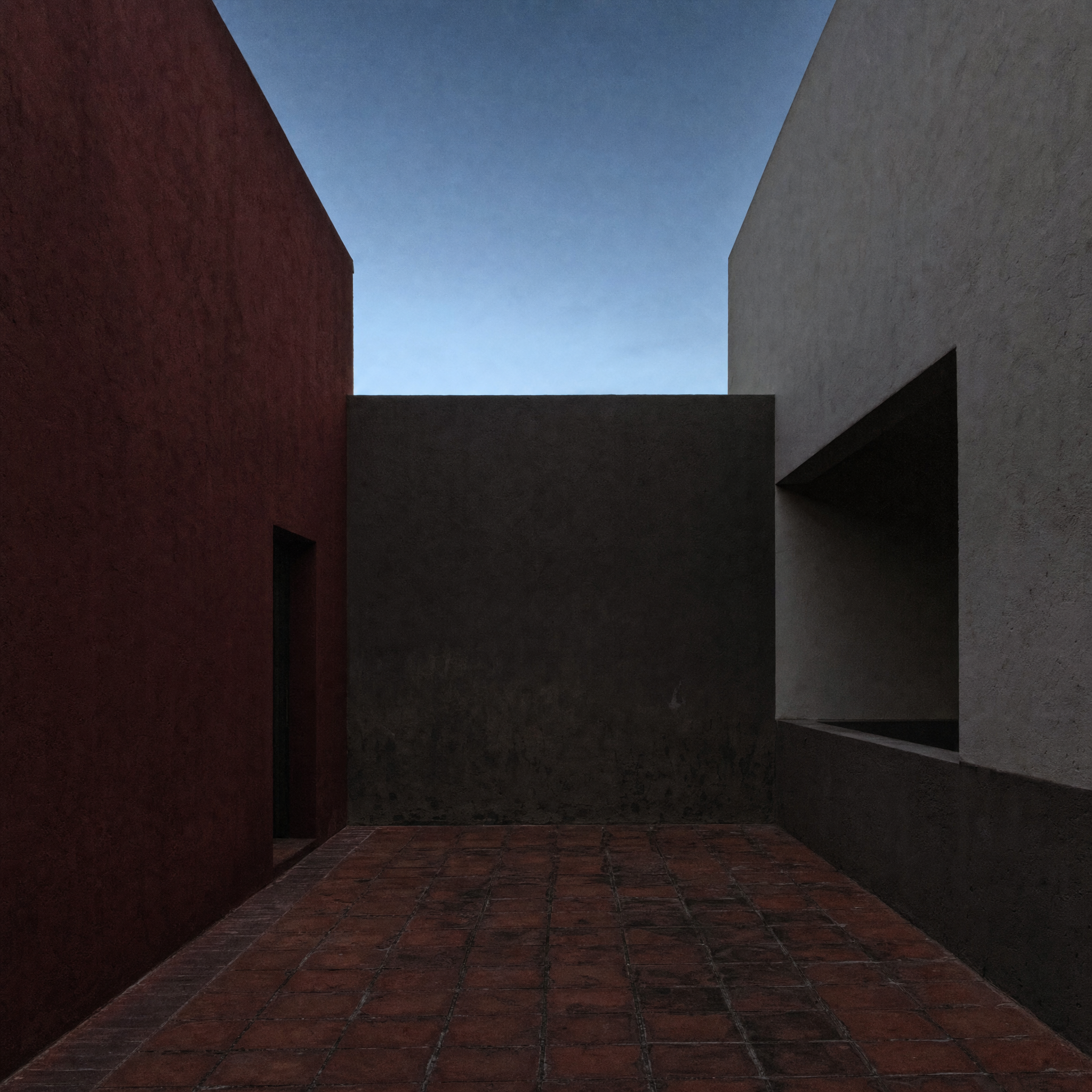
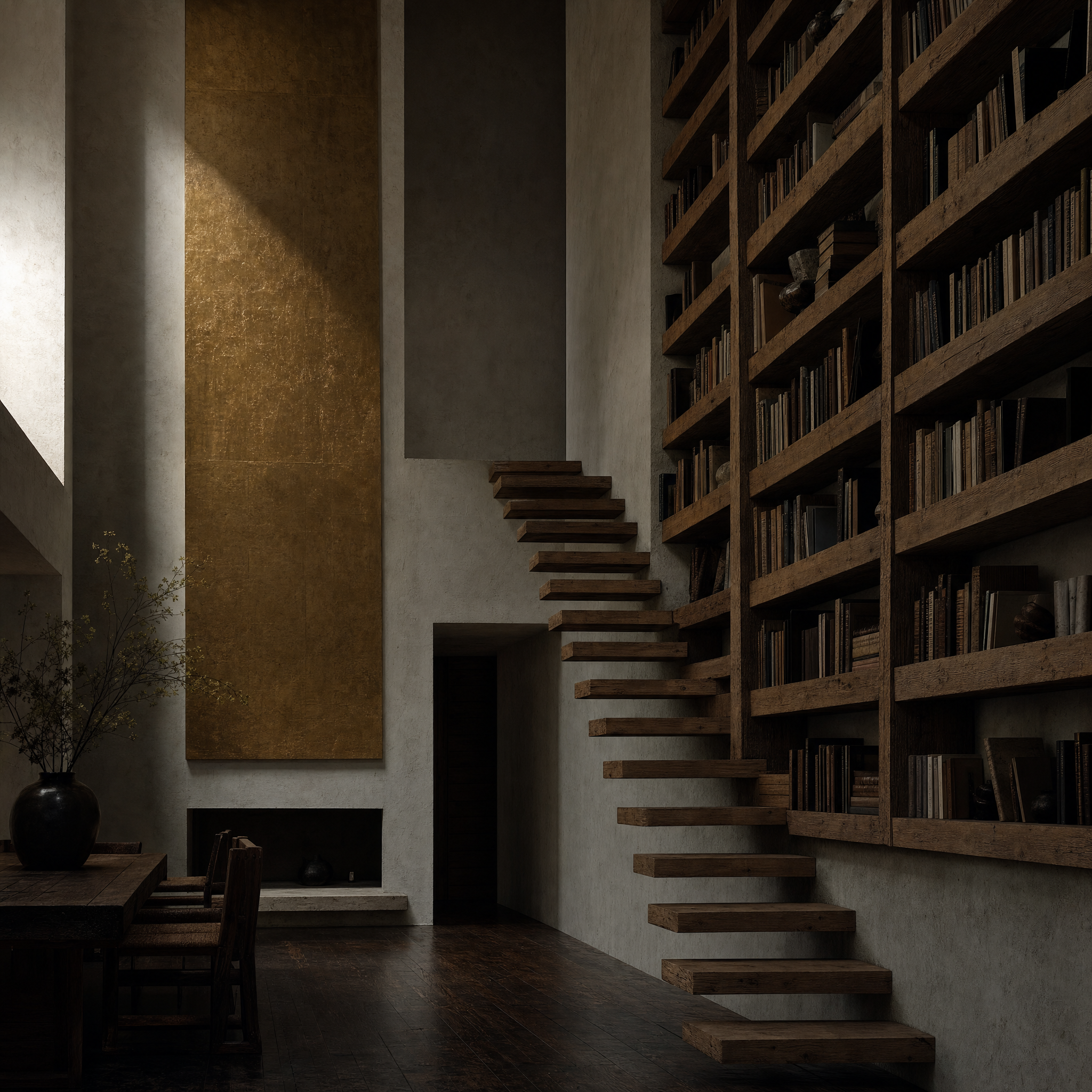
Inside, the withholding continues for one more room. The entrance hall is low, dim and pink-dark, and the house makes you wait in it. Then the living room opens to a window the height of the wall, divided into a cross, with the garden pressed up against the glass like a painting hung too close — and the whole method arrives at once. Colour here is not decoration. It is a structural material, used to make one distance feel nearer than another, and the light is handled as if it were a solid he could cut and place.
Two practical truths. The visit is small, timed and booked weeks ahead through the museum's own site, and no amount of charm at the gate will produce a ticket. And go in the morning: the house is tuned to a particular hour, and by mid-afternoon the rooms have given up their best trick, which is to change colour on you while you stand perfectly still.
He built the city's grandest address for other people, and lived here.
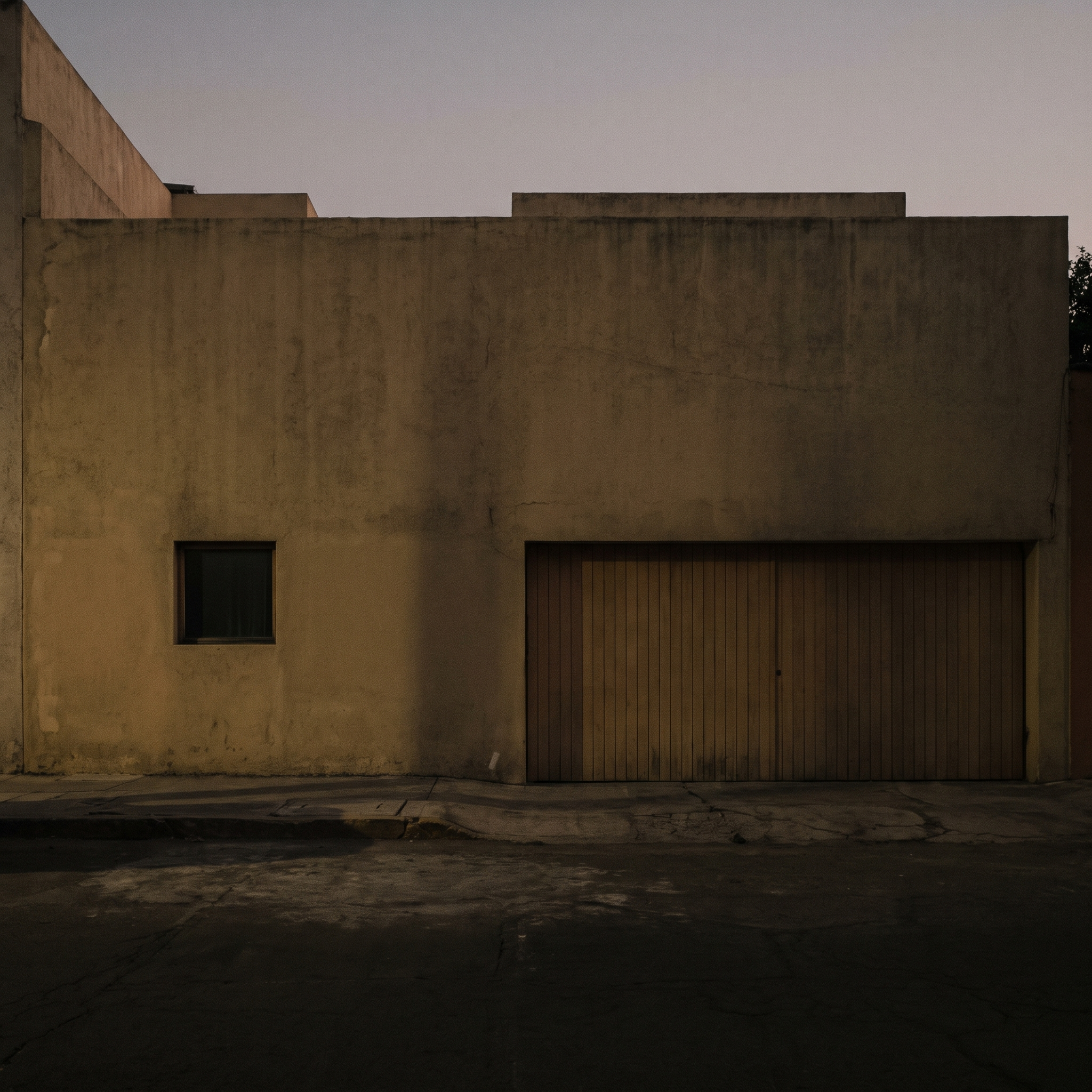
The dates make the point better than any argument about taste. The house went up in the same years Barragán was laying out the Jardines del Pedregal — the most successful piece of luxury development in the city's history, and his own scheme. He could have taken any plot in it. He chose a lot in Tacubaya, between a builders' yard and a vecindad, and put his own doors on a street with no view at all.
He lived and worked here until he died in 1988, and the house was kept exactly as he had it: number 12 the studio, number 14 the house, one facade over both. In 2004 UNESCO put it on the World Heritage list — the only individual property in Latin America to be inscribed on its own.
You feel the choice on the way out, when the door closes and Tacubaya is back — the traffic, the shop awnings, someone welding. He wanted both. The whole house is an argument that beauty is something you make privately, at your own cost, in a place nobody would have chosen for you.