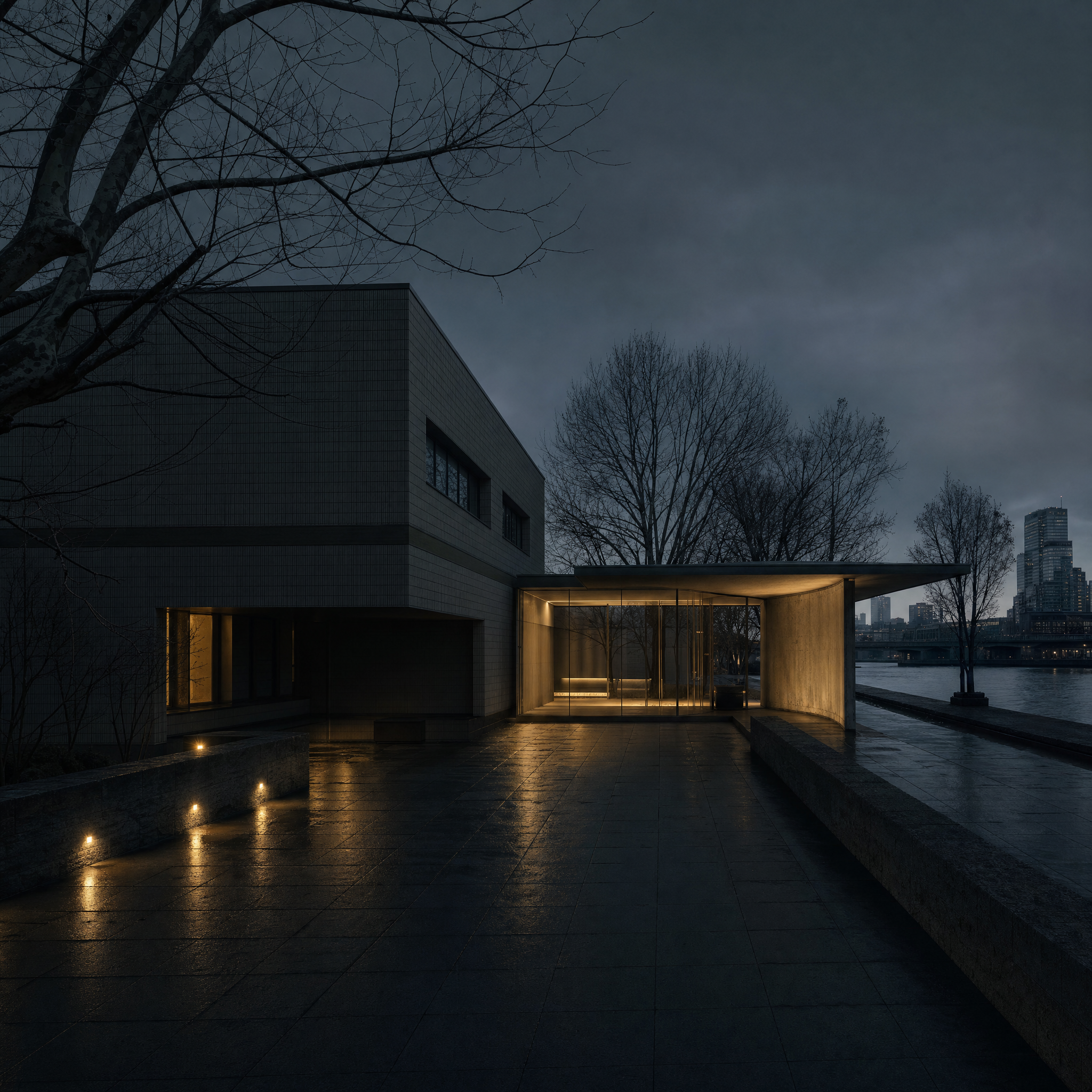
Almost every museum in the world has agreed, quietly and without much argument, that daylight is a hazard. This one disagreed in 1982 and built the case for it in concrete: a display room that takes light down from a skylight and puts it on the pots, so the glaze does on the shelf what it did in the kiln-yard. It was the first room of its kind anywhere, and it remains the reason I would fly to Osaka for a morning and go home again.
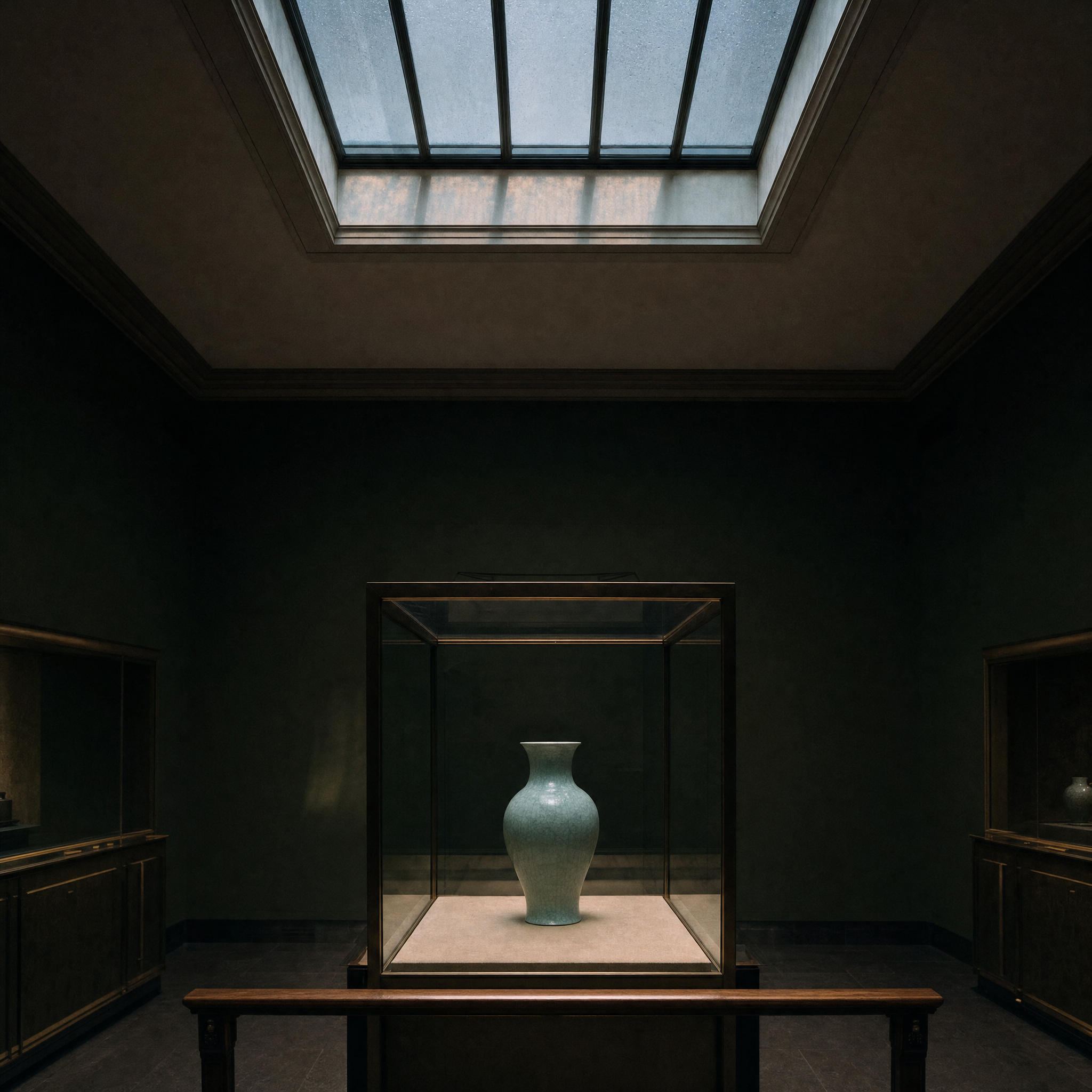
What it does to celadon is not a subtlety you have to be told about. I went in on a bright March morning, stood in front of one Chinese vase for what I later worked out was twenty-five minutes, and watched the green go from wet stone to something nearer sea glass as cloud came over the river. Under a spotlight that vase would have had one colour and one opinion. Here it has a day's worth. The staff have thought about this at every scale — the mounts are a pale suede that gives nothing back, and there are plain wooden armrests at the cases, put there so you can lean in and take notes without a guard materialising.
It is a small museum and you should not pad it out. Three hundred or so things are shown at a time from a collection that runs to several thousand, mostly Chinese and Korean, and the building holds two National Treasures which it is not shy about. Go at opening, do one slow circuit, have a coffee downstairs, and then do the circuit again — the light will have moved and the second pass is genuinely a different exhibition. That is the whole visit and it is enough.
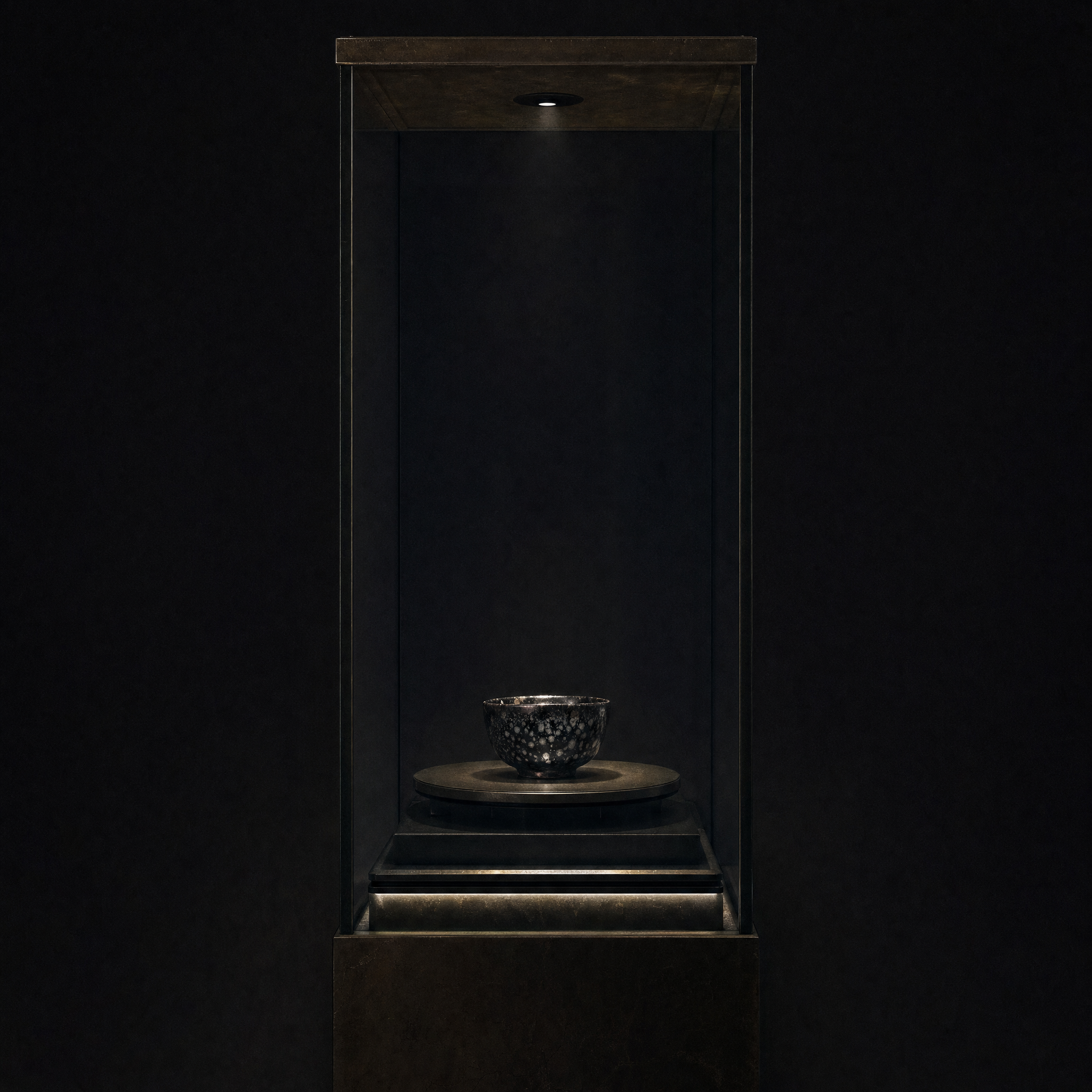
This collection exists because a country decided, out loud, not to sell it.
The Ataka Collection — some nine hundred and sixty-five pieces of Chinese and Korean ceramics — belonged to a trading house that failed. Ataka & Co. went down in the mid-1970s and was absorbed in 1977, and the pots became an asset on a bank's books. The obvious next step for an asset on a bank's books is an auction, and an auction would have scattered the thing that made the collection worth anything: its completeness.
What happened instead is unusual enough to be worth saying plainly. The fate of the collection was raised in the Diet. The Agency for Cultural Affairs asked that it be kept whole and kept in Japan. In January 1980 twenty-one companies of the Sumitomo Group agreed to give the whole of it to the City of Osaka, and funded a museum to hold it. The building opened in November 1982.
I think about that every time I stand in the daylight room. The lighting is the celebrated thing, and rightly. But the ordinary miracle here is administrative: a bankruptcy that ended with the public owning the pots, and a city that then spent real money working out how to look at them properly.