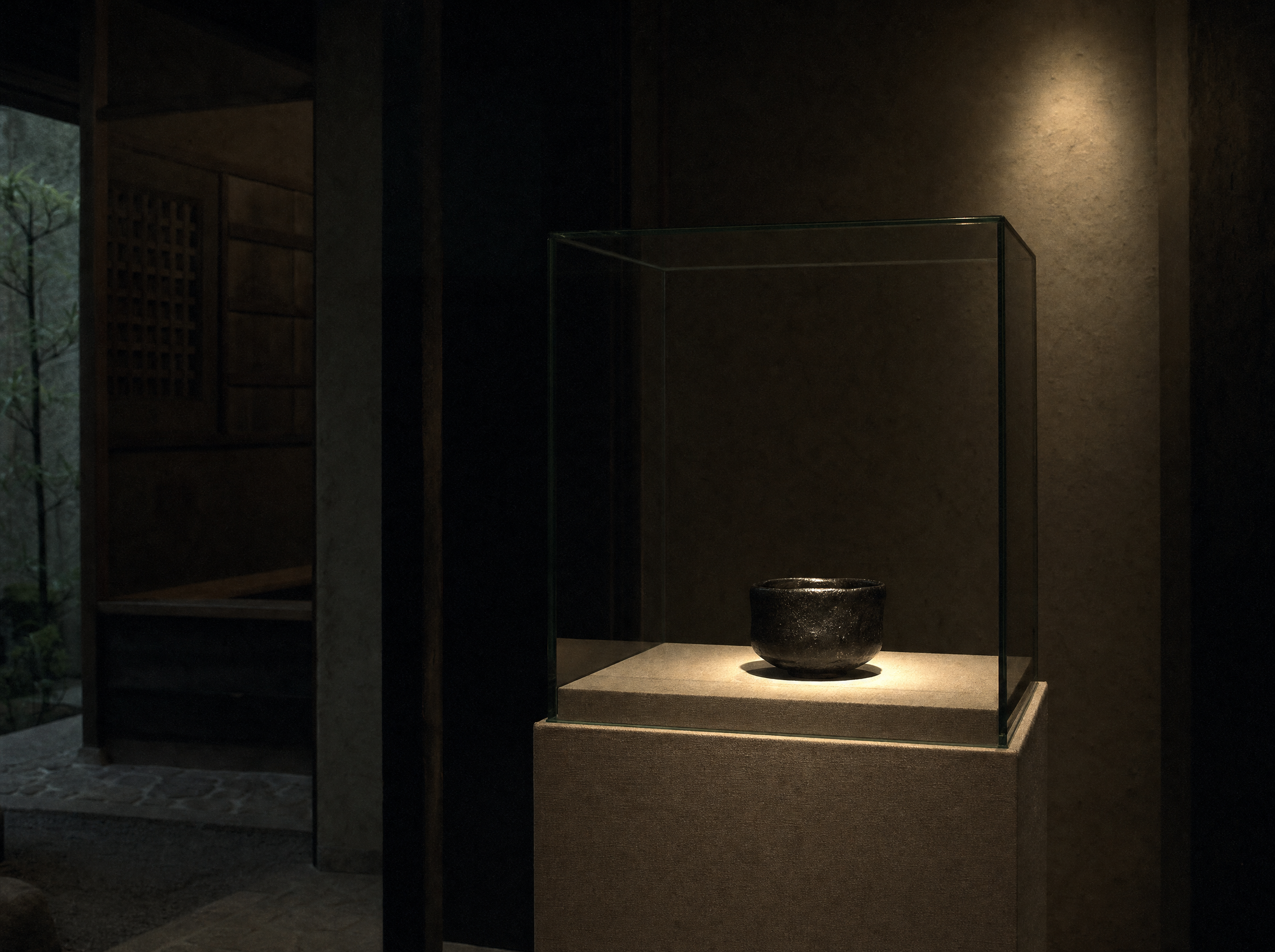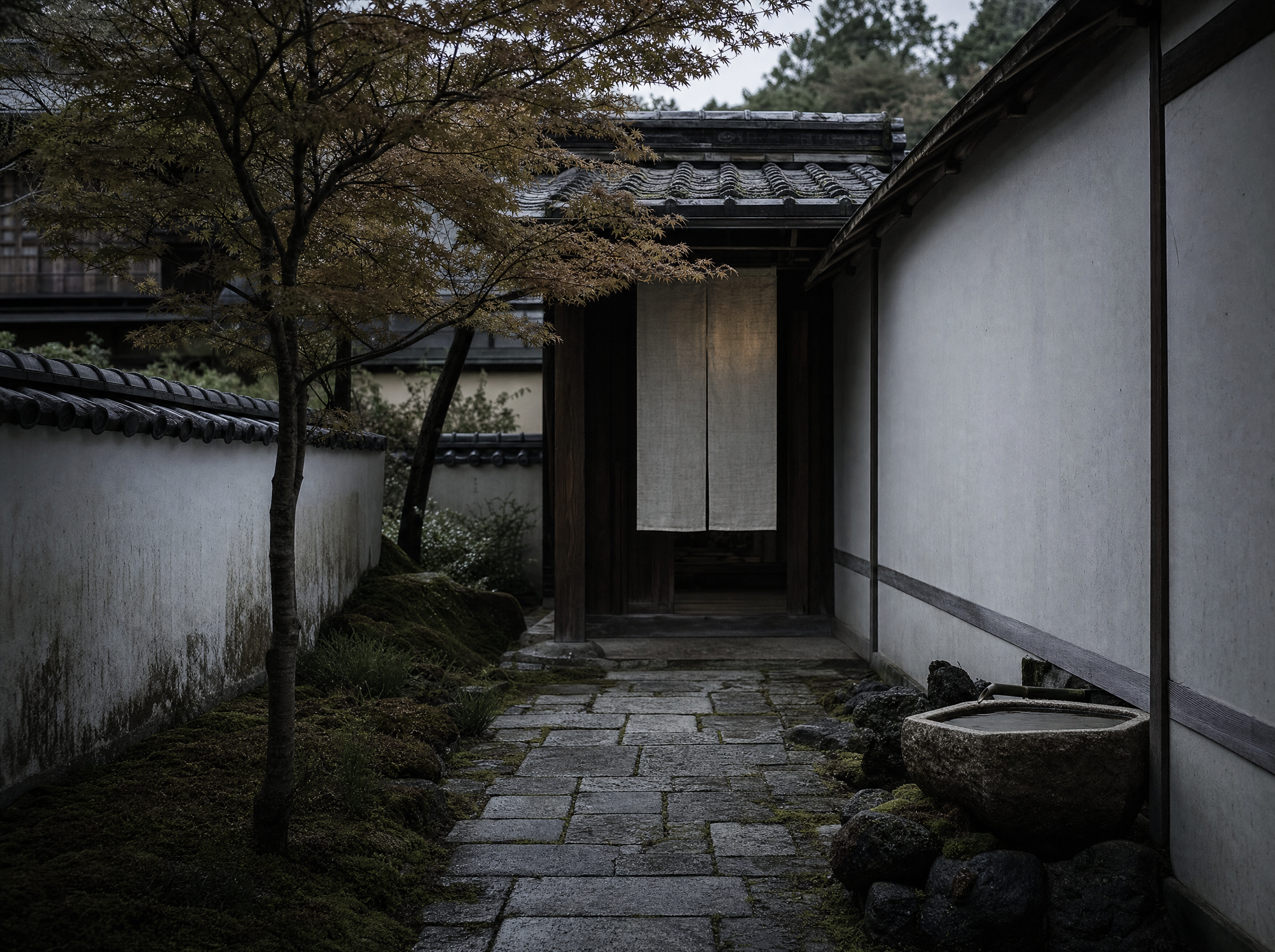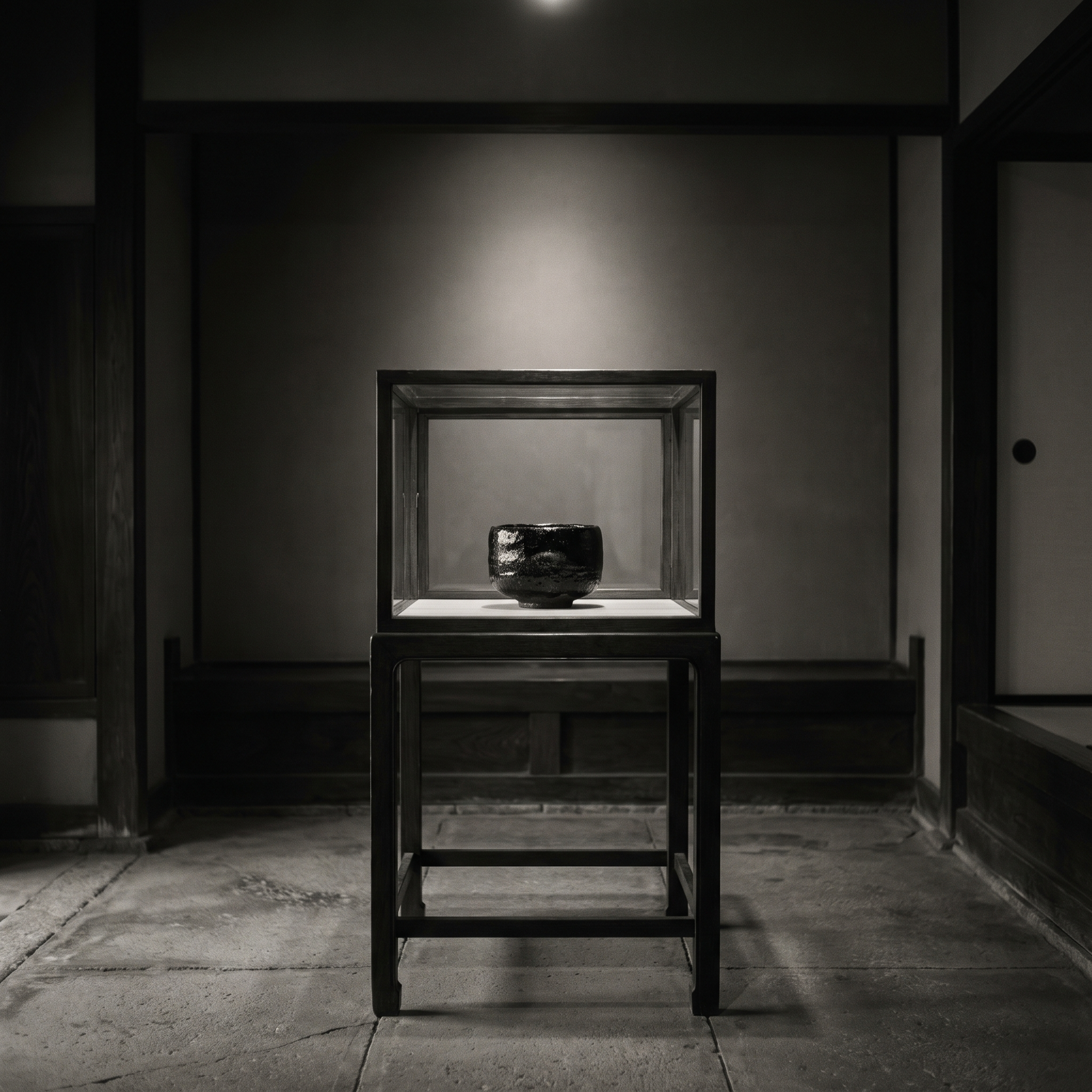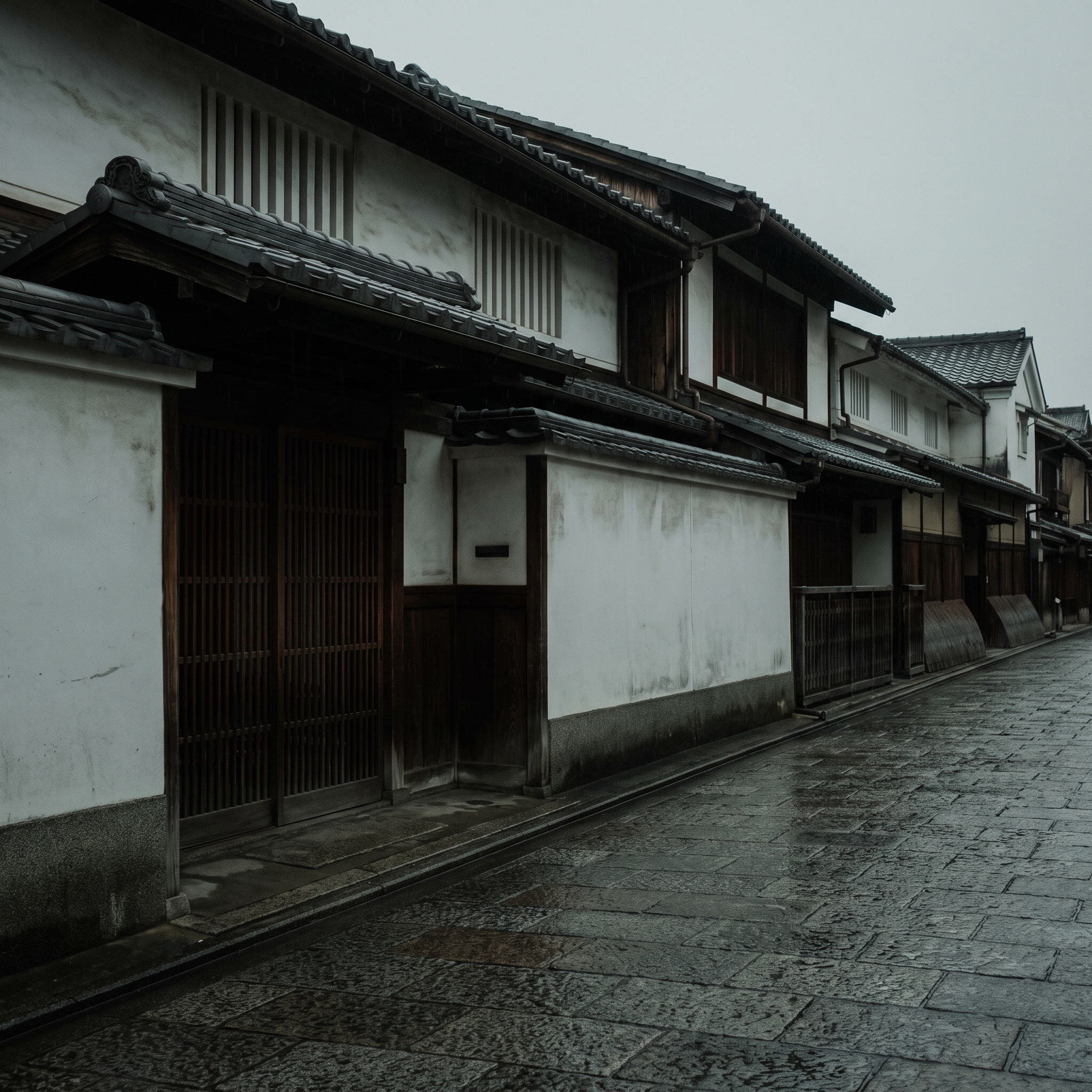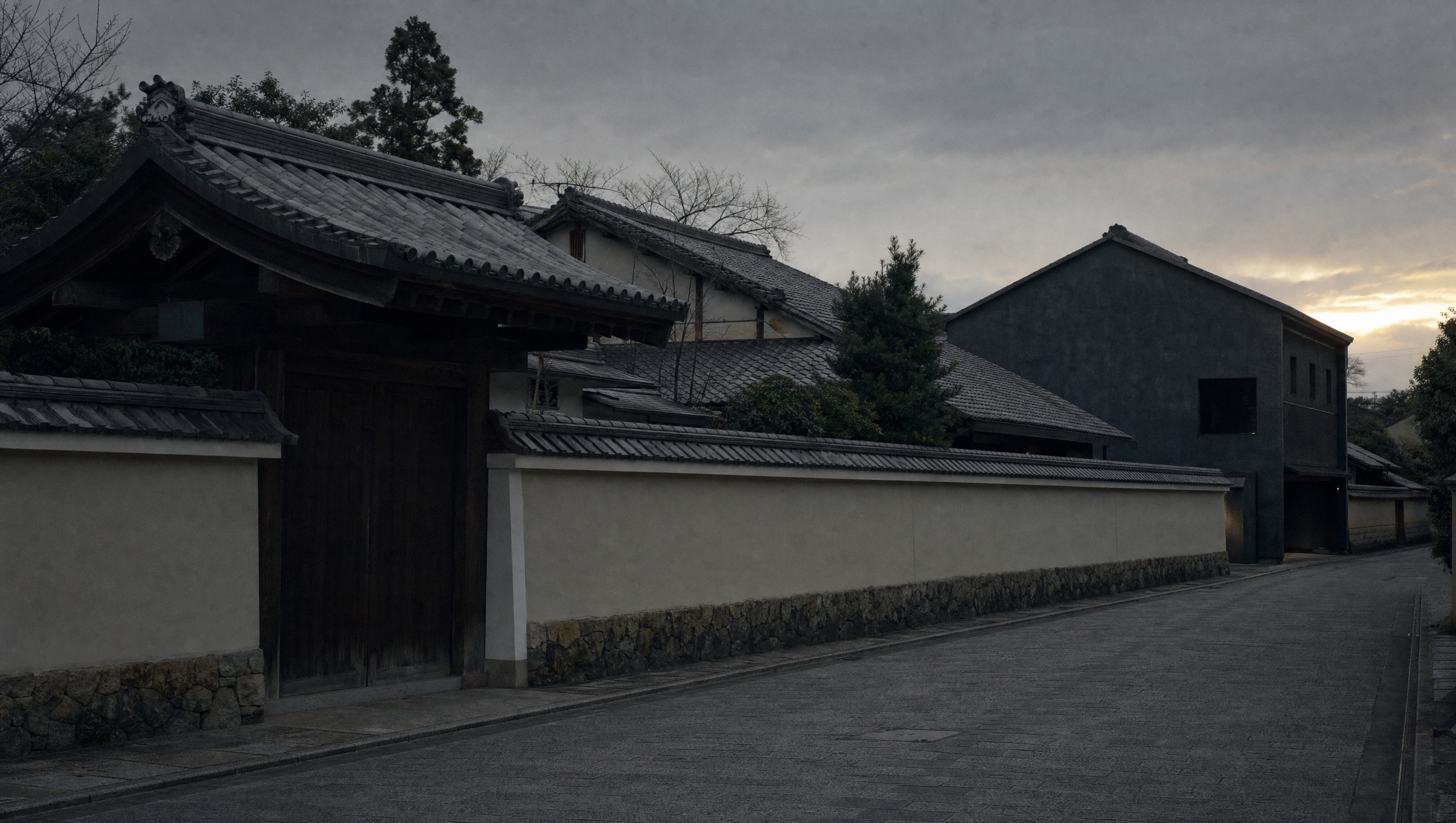
Chōjirō, working in Kyoto in the sixteenth century and taking his instruction in taste from Sen no Rikyū, made tea bowls by hand rather than on a wheel, in monochrome black or red, at a temperature low enough to be fired a few at a time. His descendants have been doing the same thing on the same site ever since. The museum was opened in 1978 by the fourteenth head of the family, Kakunyū, and it stands directly next door to the house where the family still lives and the kiln where they still work. The collection is what fifteen generations kept back: not the sold work, but the examples each head left behind so that the next one would have something to measure against.
That is what makes it unlike any other single-maker museum I know. It is not a shrine to a founder. It is a working reference library, and the argument runs down the wall in front of you: here is the bowl the sixteenth century agreed was perfect, and here, four hundred years later, is a descendant declining to repeat it. The rooms are small and dim and there are rarely more than forty pieces out. Three exhibitions a year, and they change the whole room between them, which is why the museum shuts for a fortnight at a time and why you should look before you travel.
Go in the last hour of the afternoon in late autumn, when the light through the north wall of Kyoto has gone flat and grey, and give it forty minutes rather than the twenty the size suggests. Look for the periods when they run the handling sessions, which allow a small number of visitors to take a bowl in both hands: it is the single most instructive thing offered by any museum in this book, and it costs the museum something to permit. I have queued for it and I would queue again.