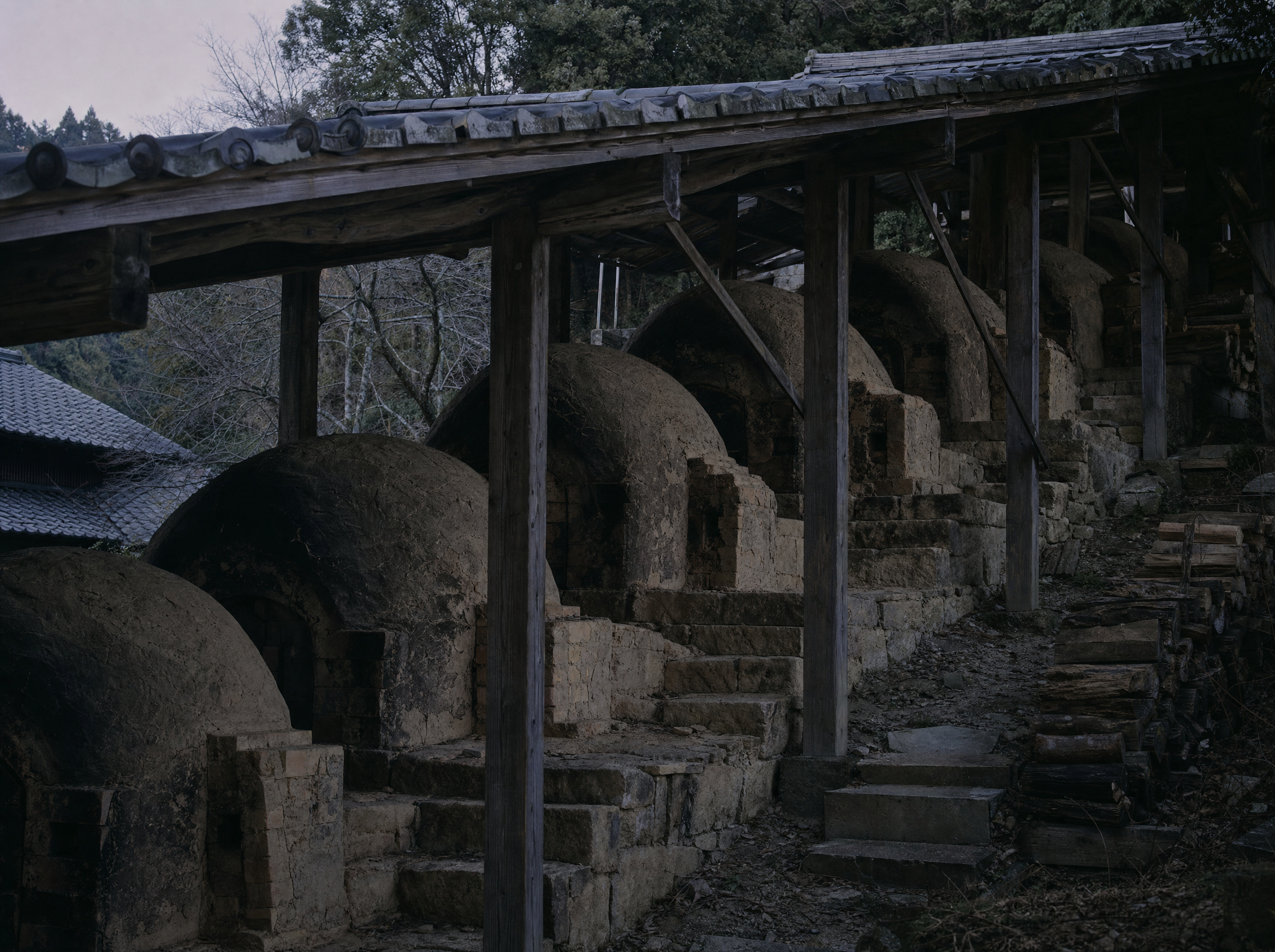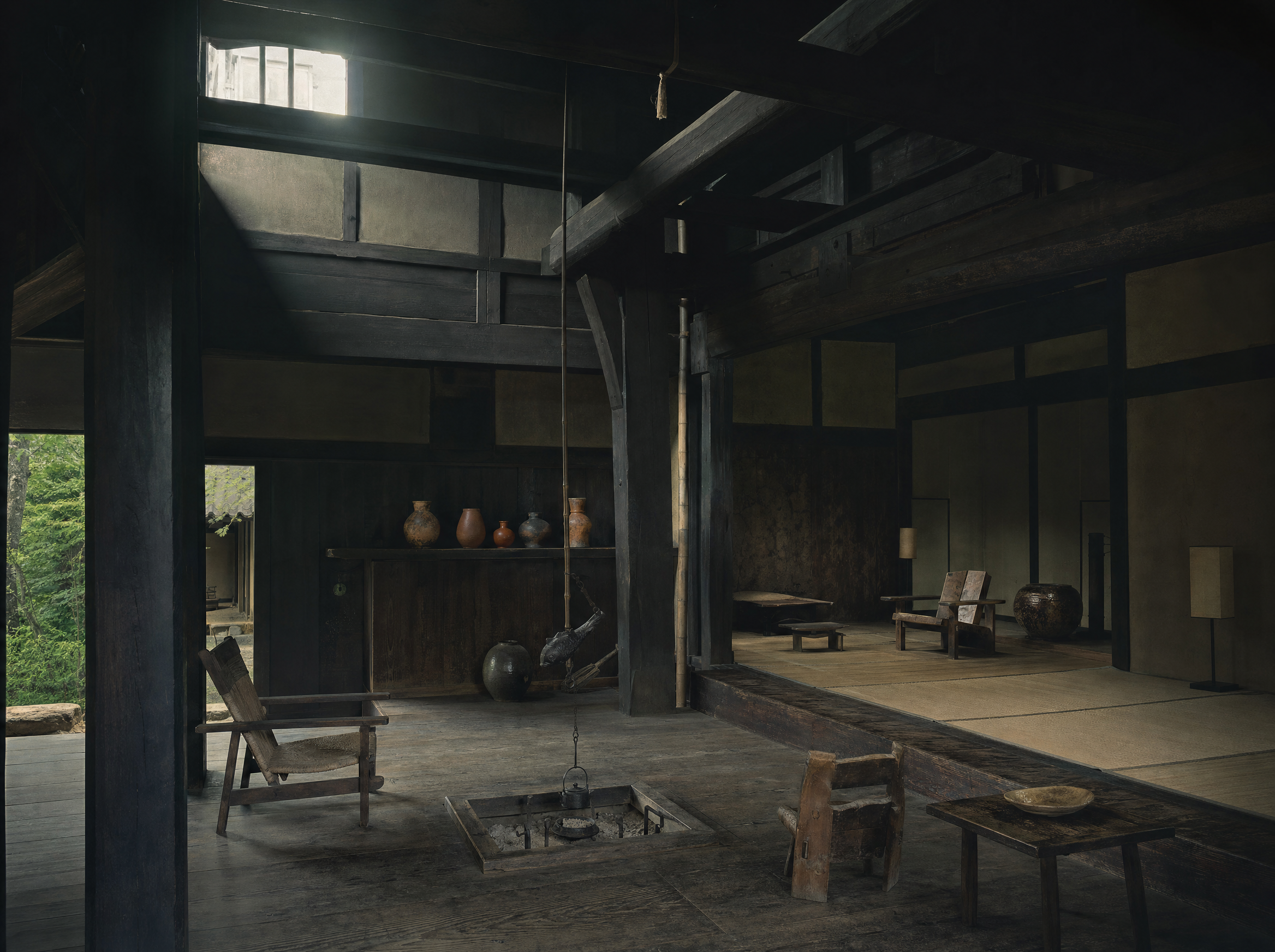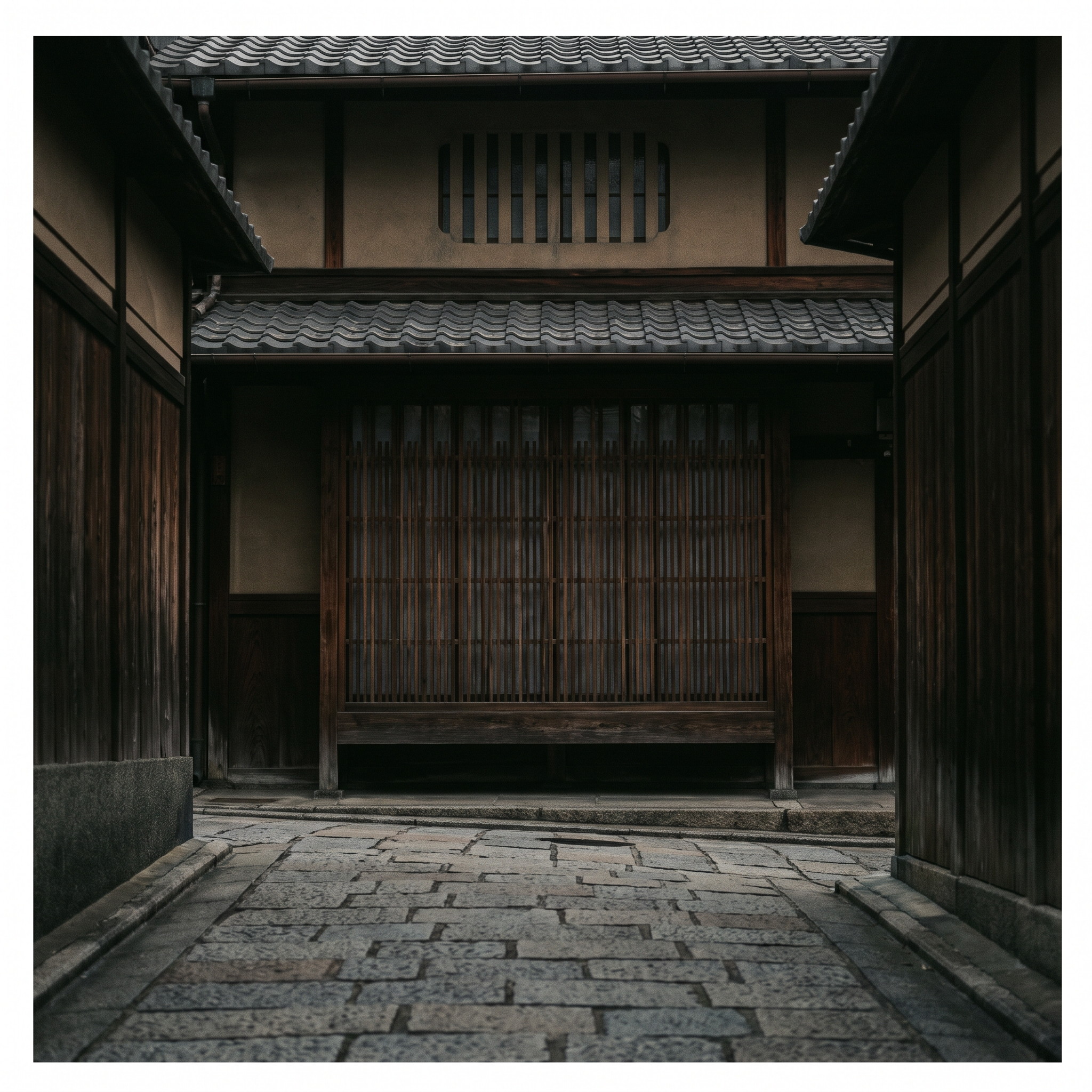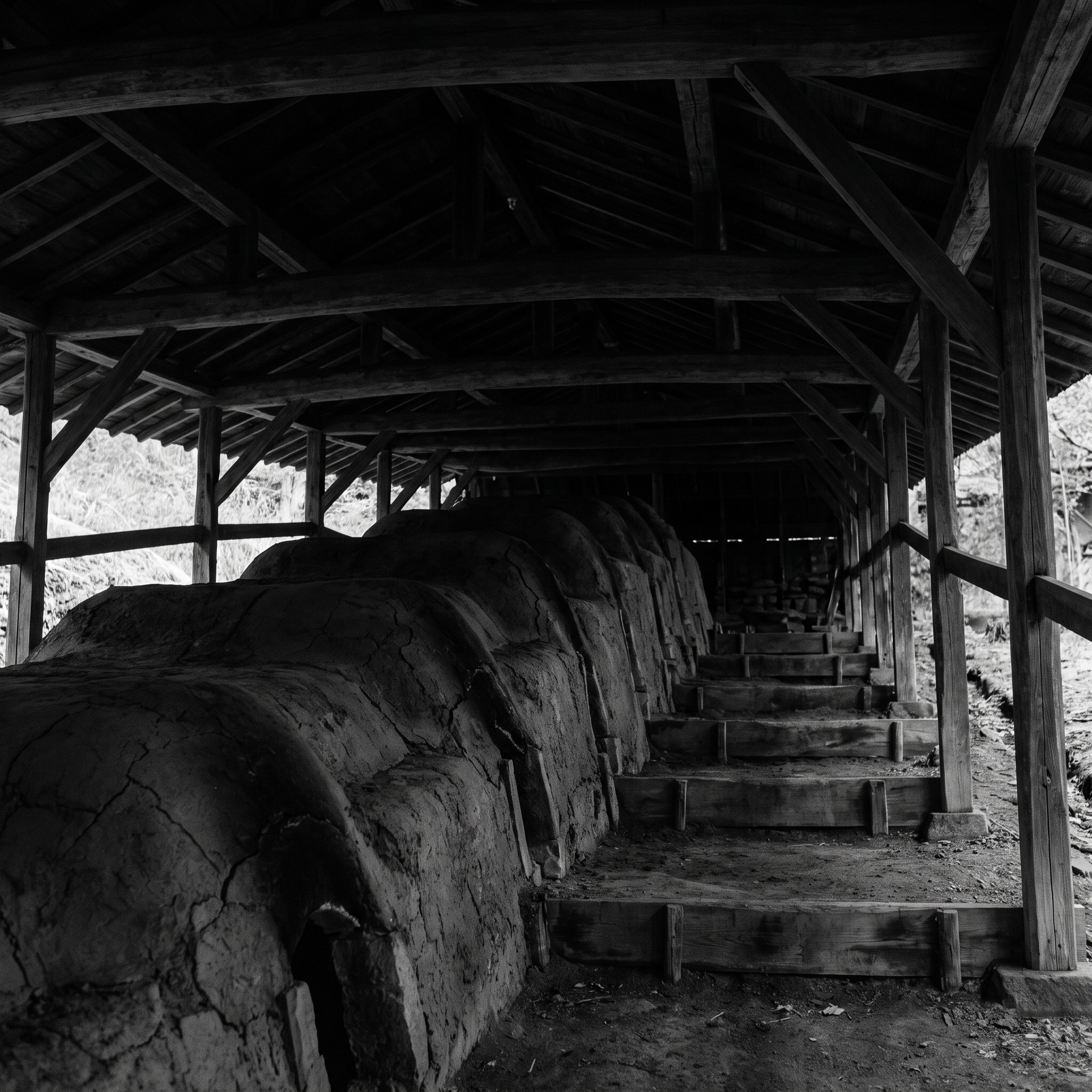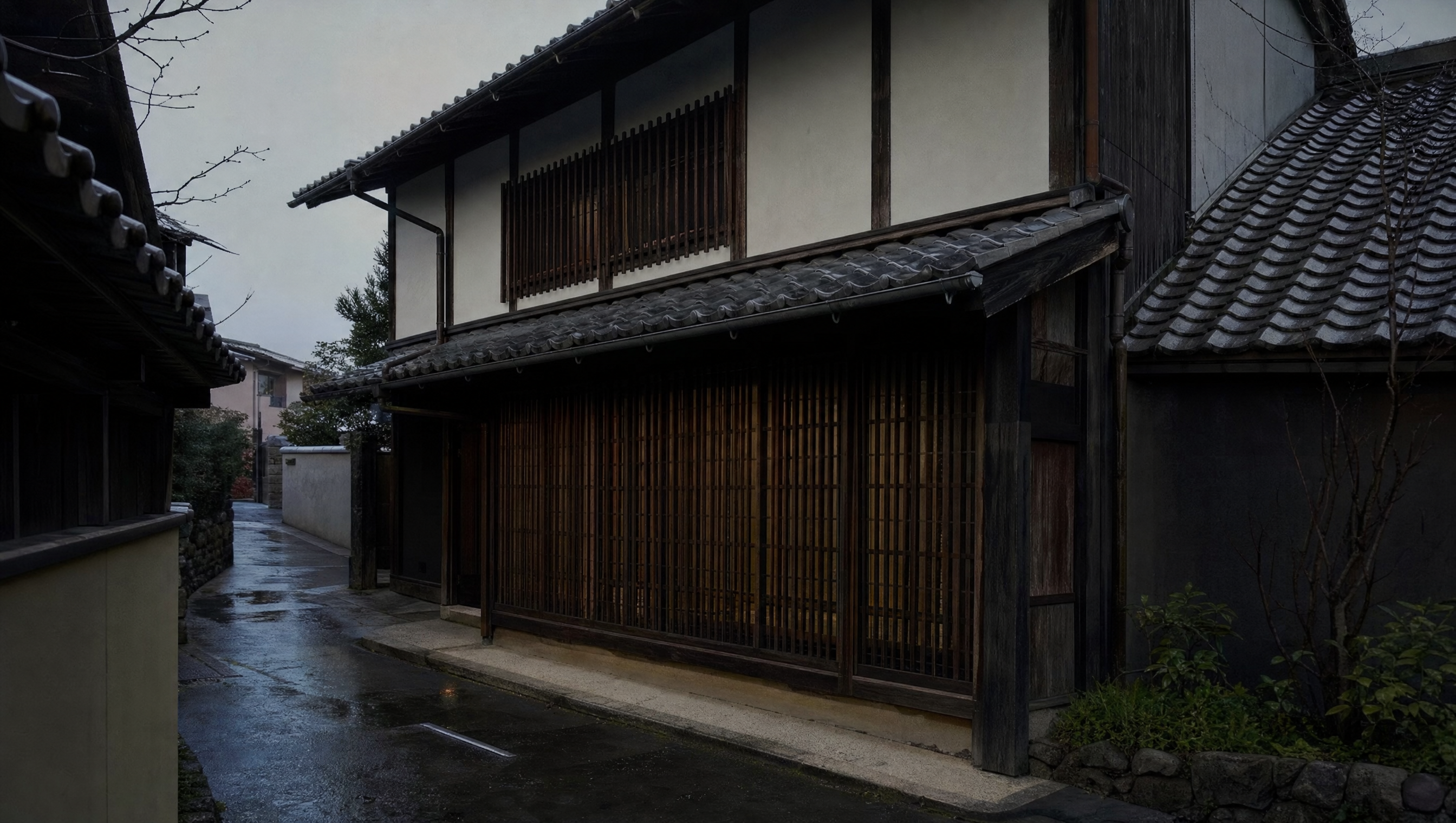
Kawai Kanjirō came to Gojōzaka in 1920, took over a pottery with a climbing kiln of eight chambers, and stayed for the rest of his life. In 1937 he designed the house that now stands on the lane and had his own family's carpenters brought up from Shimane to build it. He did not build a Kyoto machiya. He built a countryman's farmhouse in the middle of a city — high blackened beams, a sunken hearth in the floor, a working room and a living room that are the same room — and then filled it with chairs and tables and chests he had made himself, because nothing on sale was the shape he wanted.
He was one of the three men at the centre of the mingei argument, with Yanagi Sōetsu and Hamada Shōji: that the ordinary made well is worth more than the extraordinary made for show. He then declined to be made extraordinary himself. He turned down the Order of Culture in 1955. He declined to be made a Living National Treasure, and declined the Art Academy with it, and went on describing himself as a potter without a title. His own line for all of it was that living is working and working is living, and standing in that room you understand it is not a slogan; it is a floor plan.
What undoes people — it undid me — is that nothing is roped. The family still keep the house, it opened to the public in 1973, and the arrangement remains that you take off your shoes and sit in his chairs. I have not found the equivalent anywhere else in this directory. Go on a weekday in the first hour, go alone, and give it two hours rather than one; the kiln is at the back, up the slope, and everyone who hurries misses it entirely.