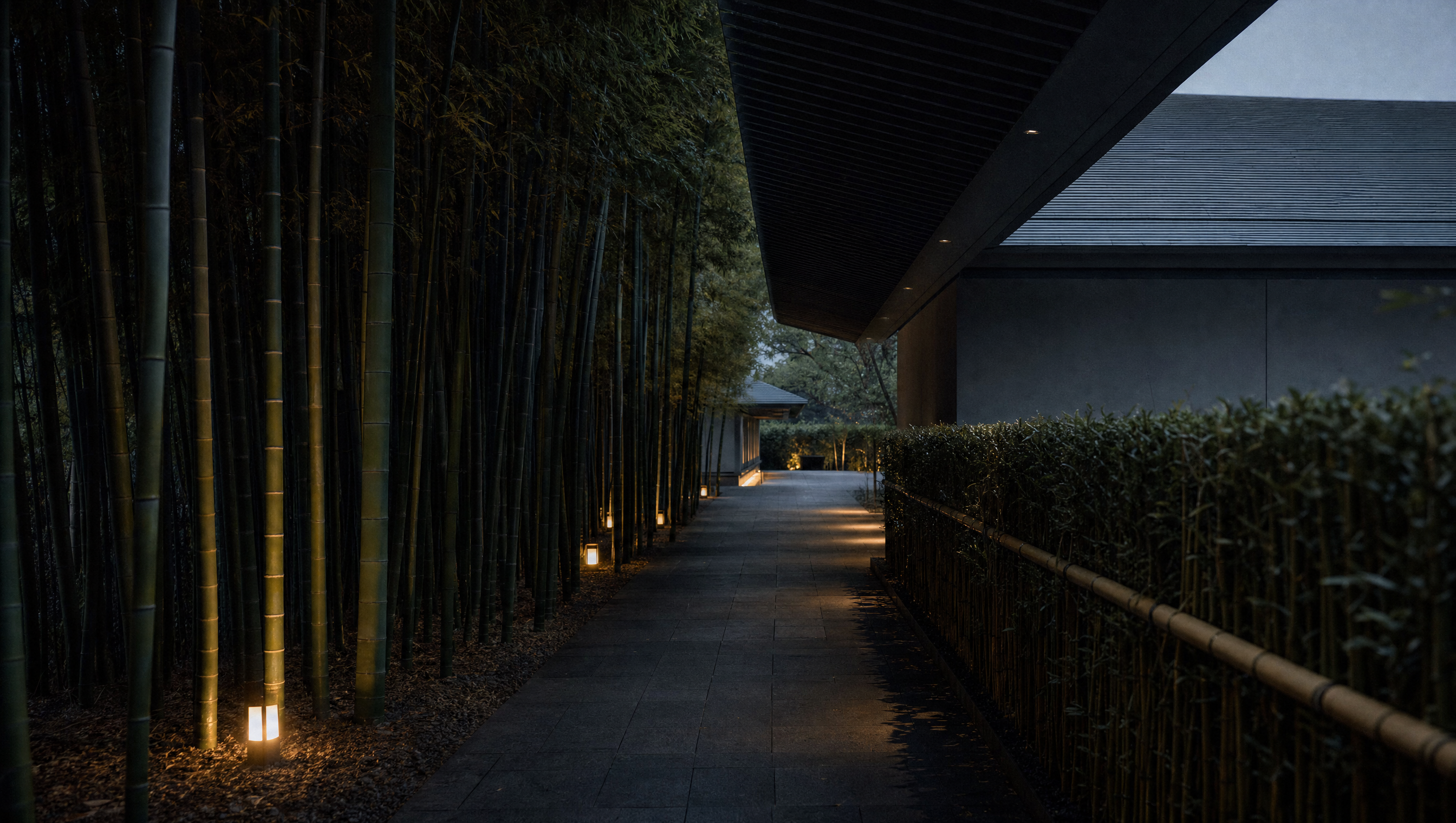
The entrance is a corridor. You come off Omotesandō, where the shopfronts are the loudest architecture on earth, turn in at the gate, and walk forty-odd paces along a stone path with a wall of living bamboo on one side and a low eave overhead, and by the time you reach the door the street has been taken off you. Kengo Kuma built this in 2009 and the building's cleverest room is the one you are in before you have paid. I have never seen a museum solve the problem of arrival so completely, and I have watched people fall silent halfway down it without knowing why.
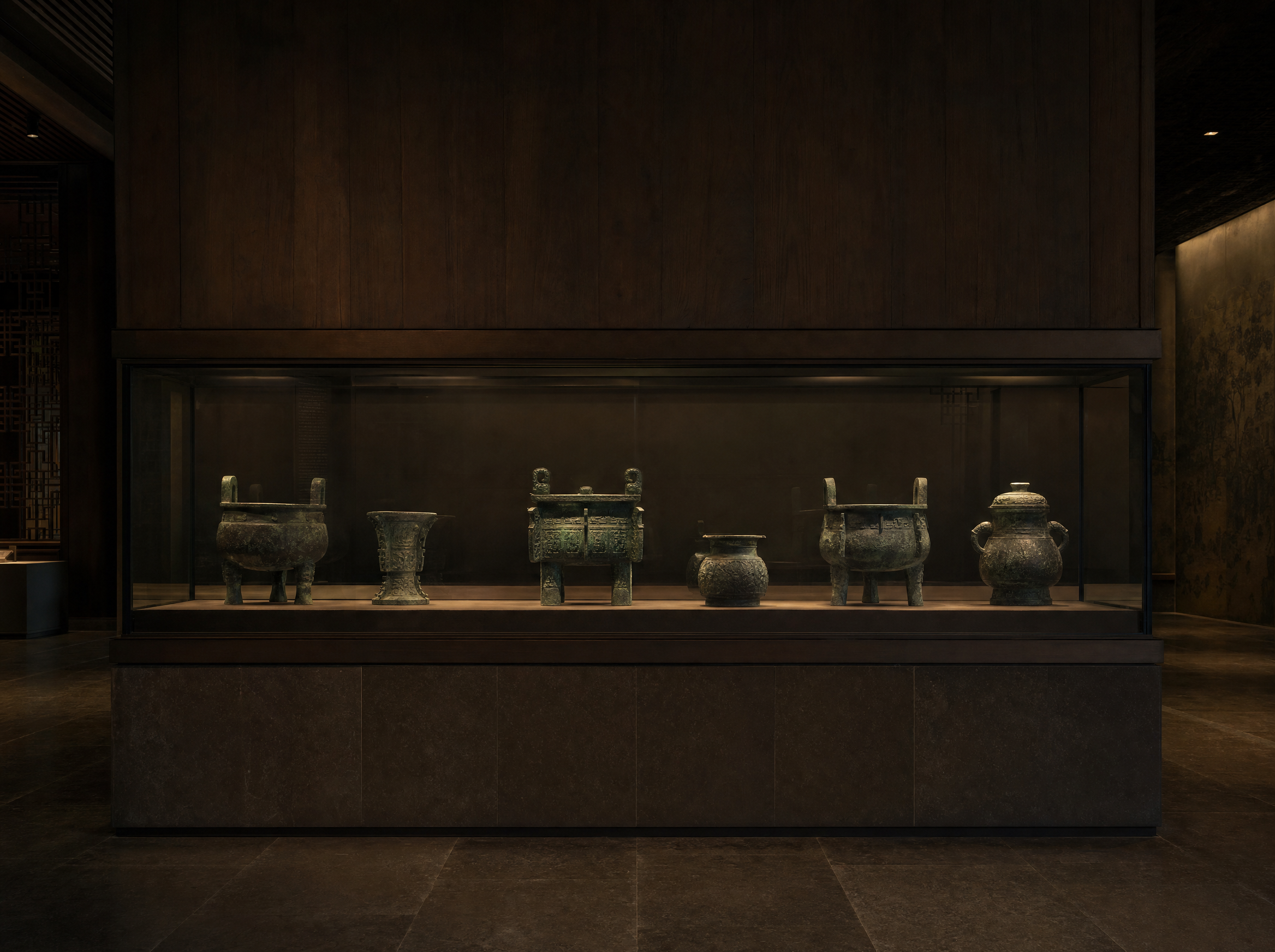
Inside, the thing to notice is height. Kaichirō Nezu made his money in railways and his collection in Chinese archaic bronzes, Buddhist sculpture, painting and — above all — the utensils of tea, and tea things are objects made to be held at a low table by a kneeling person. The cases here are set accordingly. You look level at a bowl instead of down into a cabinet, and the difference is not subtle: a tea bowl looked down upon is a specimen, and a tea bowl met at eye level is an offer. Seven National Treasures live in this building. The one everyone comes for is Ogata Kōrin's Irises, which is shown for roughly a month a year, from about mid-April to mid-May, timed to the kakitsubata coming up in the garden below.
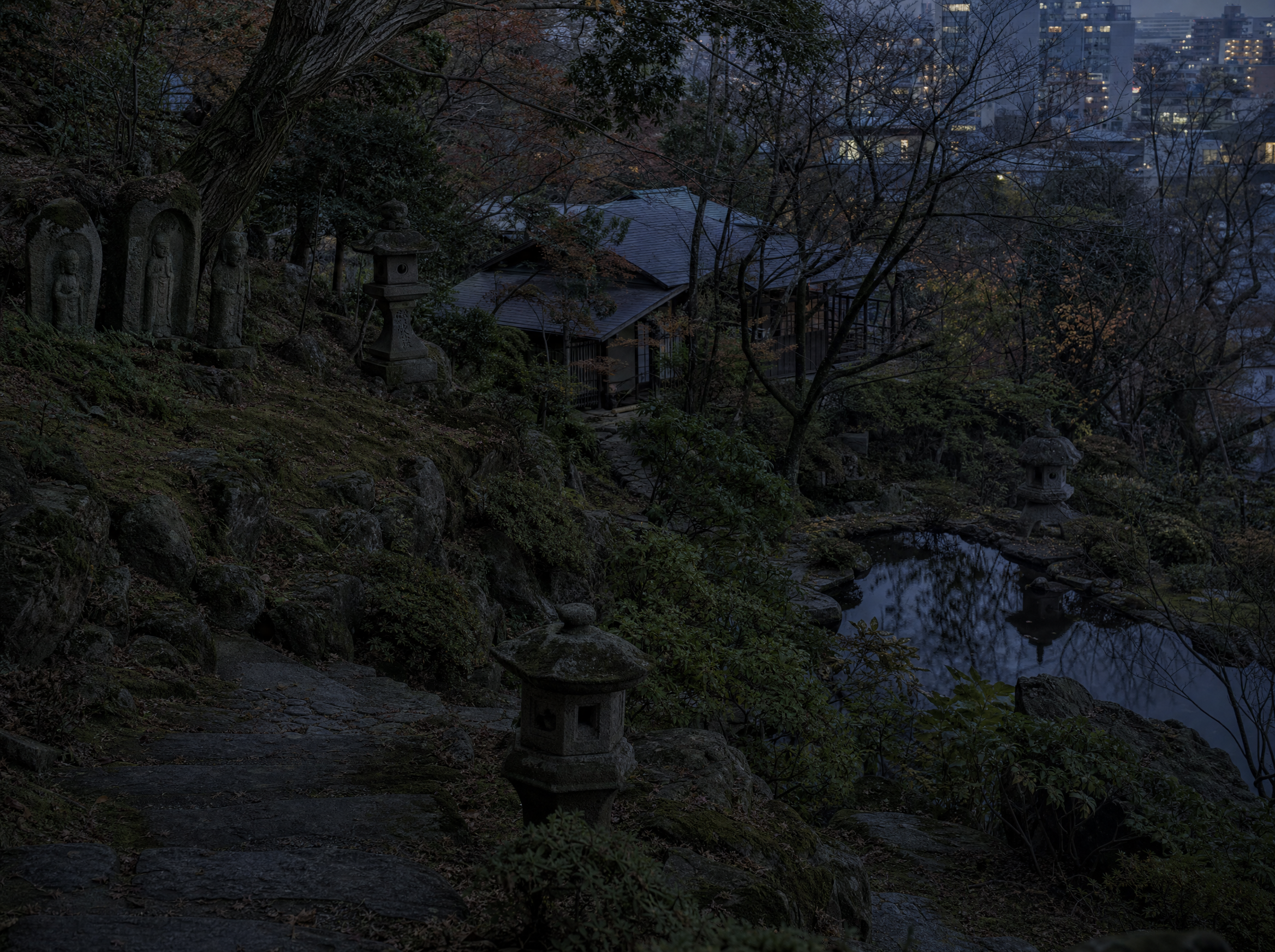
I came in early April and missed it by a fortnight, which I record here because it is the single most avoidable mistake available at this address. Go at opening; book the timed ticket the night before; and give the garden the hour it deserves rather than the fifteen minutes it usually gets. It runs down a slope behind the galleries — moss, stone lanterns, old Buddhist stone figures under the maples, teahouses you cannot enter unless you have come for tea — and it is not a courtyard you cross on the way out. It is the second half of the visit. The building's whole argument is that the garden and the objects are one thought, and the glass walls are there so that you cannot forget it.
He assembled all of it and did not live to see it open.
Kaichirō Nezu died in 1940. The museum that carries his name opened here in 1941, on the ground where he had lived, which means the man who spent a working life deciding what belonged beside what never once walked the route a visitor walks.
Nor is the building he knew still standing. The galleries you enter are Kuma's, finished in 2009 — a different roof, a different approach, a different argument about how the garden should be seen from indoors. Almost nothing here is the frame Nezu chose. Only the slope is his, and the things on it.
I find that steadying rather than sad. A collection that survives its own housing twice over is a collection that was actually about the objects. Sit on the bench above the pond before you leave and consider how few of them manage it.