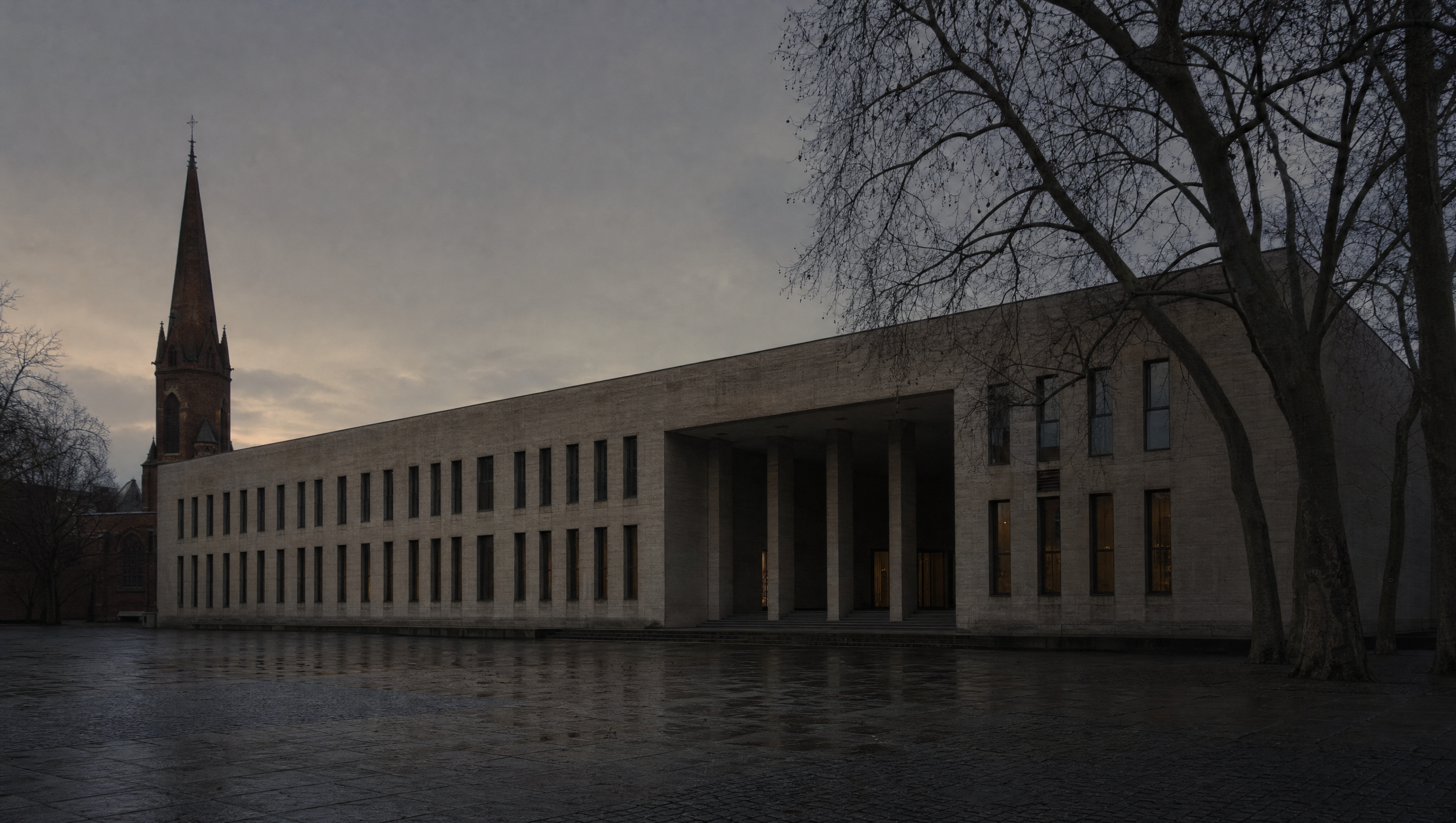
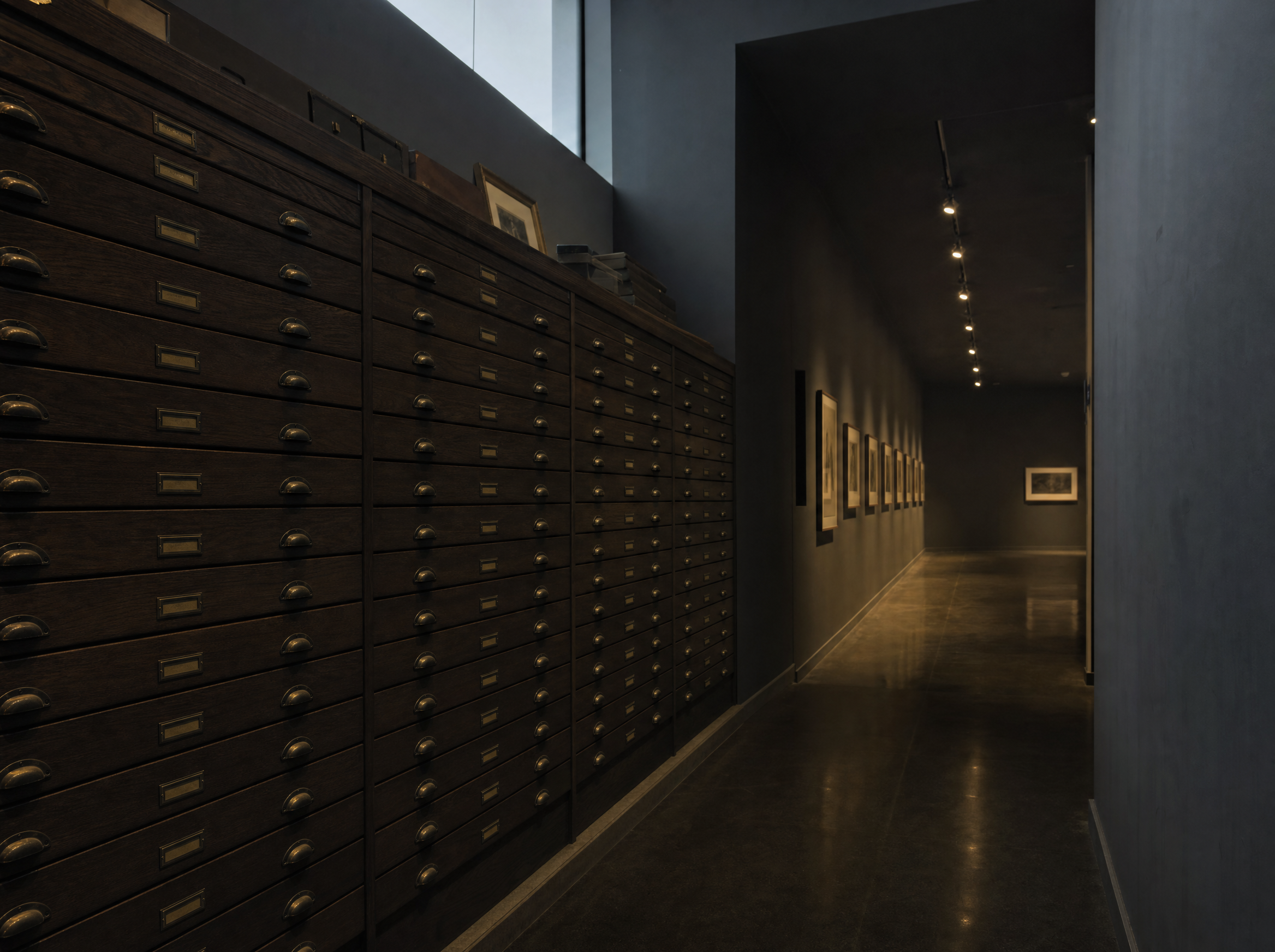
This is the largest collection of graphic art in Germany and you will see almost none of it. That is not a failure of the museum; it is the point of it. Paper does not survive being looked at. So the holdings — more than half a million prints, something near a hundred and ten thousand drawings, watercolours and books — live in the dark, and come out one at a time, to a table, for whoever has written ahead and asked. The galleries upstairs show a changing handful. The rest of the museum is a request form.
I had never been made so conscious of my own vagueness as I was writing that first letter. "Something by Menzel" is not a request; it is a mood. You learn quickly to name the sheet, or at least the year and the kind of thing, and the moment you do, the whole institution turns towards you. I have never met kinder pedantry. They correct your list, then they improve it — if you want that, you will want this, which is two boxes along — and the improvement is always right.
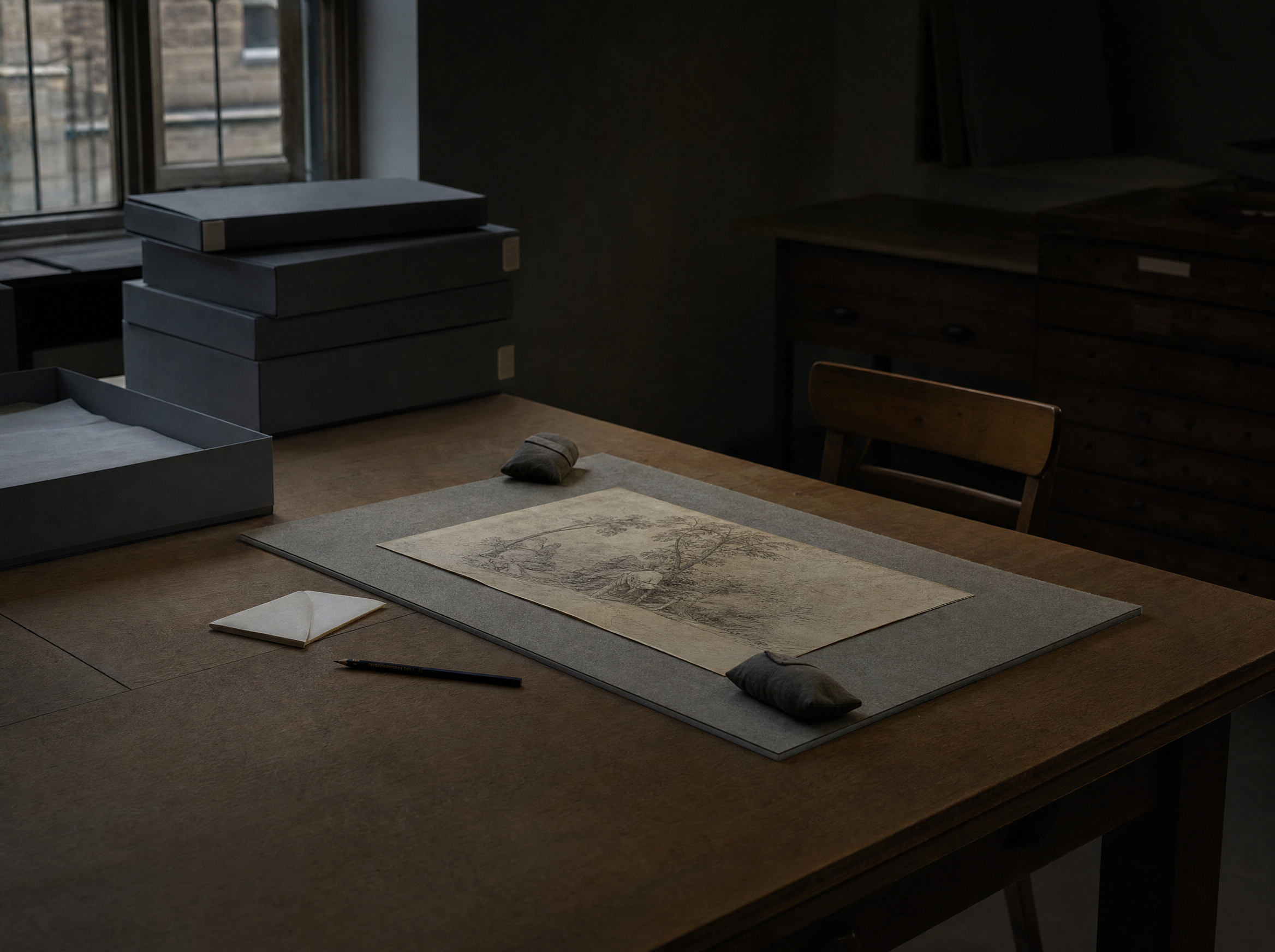
Then the sheet arrives and the room goes quiet in your head. No glass, no cord, no crowd breathing at your shoulder; a mat, two weights, and a Dürer at the distance he drew it from. I sat down at ten with six things on a list and left at one with nine, having got through four. Bring a pencil. Bring the confirmation. Bring less ambition than you think you need, because the eye gives out long before the interest does, and a sheet looked at badly is a sheet you cannot un-look at.
no camera past the desk,
and quite right too
not mine to photograph,
and not mine to describe for you
The collection was cut in half for forty-five years, and this building is where the halves were put back.
Founded in 1831, stripped under the Nazis of the work they had decided was degenerate, and then — after 1945 — divided, like the city, between East and West. Two print rooms, two staffs, two sets of boxes, one collection, for the better part of five decades.
The reunited holdings opened here at the Kulturforum in 1994, in a building that is deliberately unremarkable from the plaza: pale, low, plain, all its ambition spent inside on stable air and dark storage. It is easy to walk past. Botticelli's drawings for the Divine Comedy, bought in 1882, are somewhere behind that wall.
I find I do not mind the plainness at all. A place that spent that long in two pieces has earned the right to build itself a quiet box and put everything it loves inside, in the dark, where it will last.