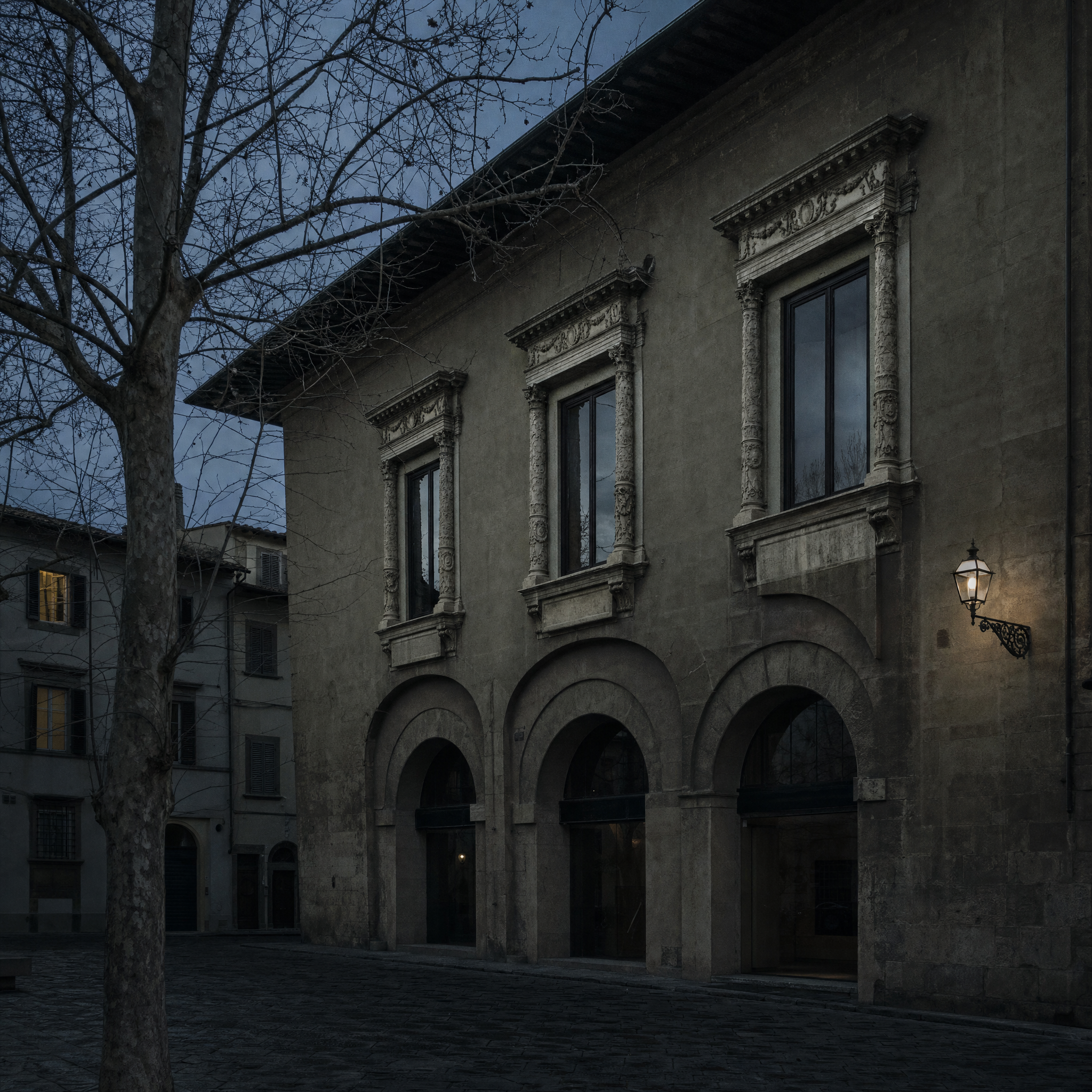
Stefano Bardini sold Italy to the rest of the world for forty years, and this building is the room he sold it from. He took the site on Piazza de' Mozzi in 1881 and rebuilt it as a gallery with restoration workshops behind — not a house, a premises. The great window frames on the first floor are altars remounted from a demolished church in Pistoia; the ceilings and door surrounds came off other buildings that were coming down. He was assembling the shop out of the same material as the stock, and he did not think that was a contradiction.
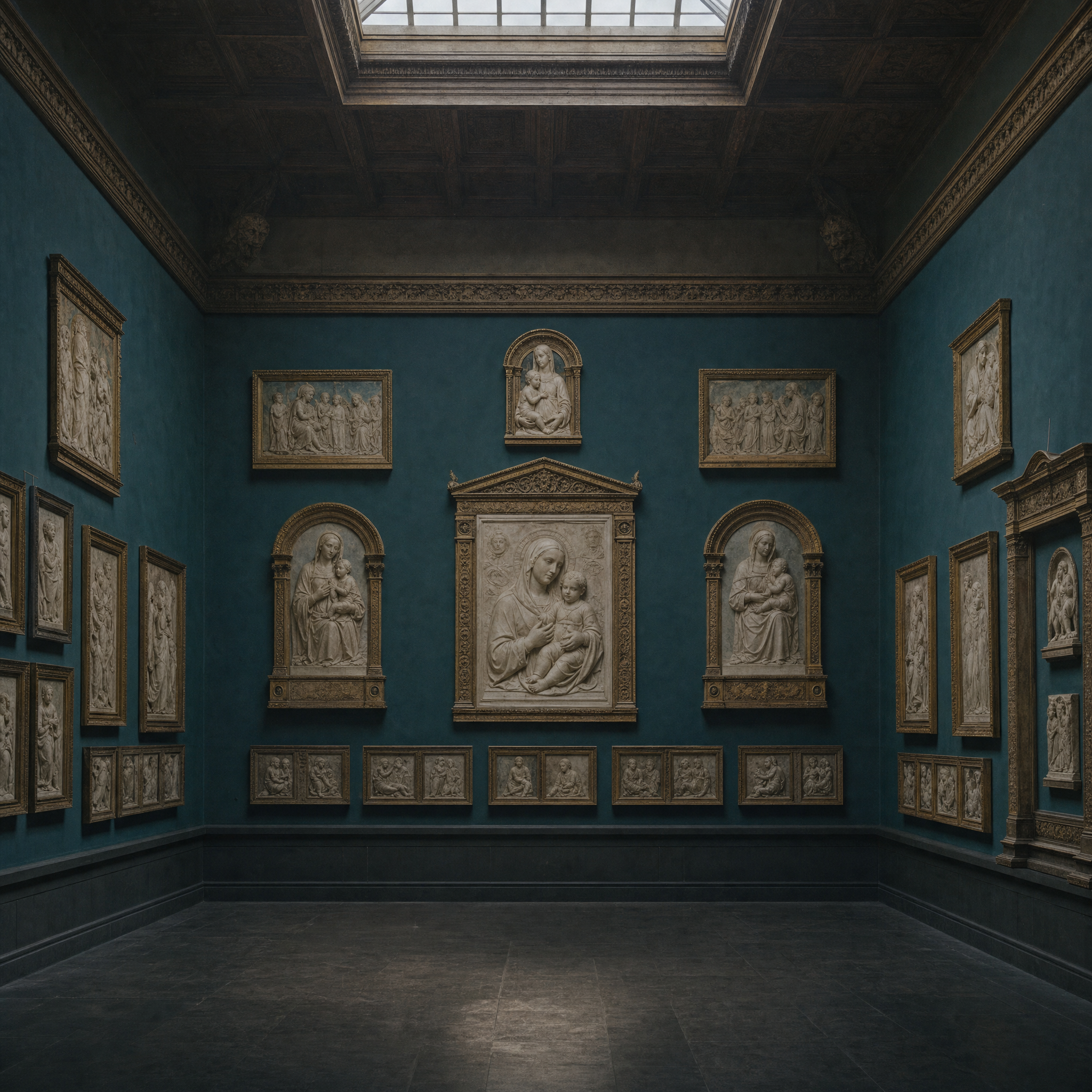
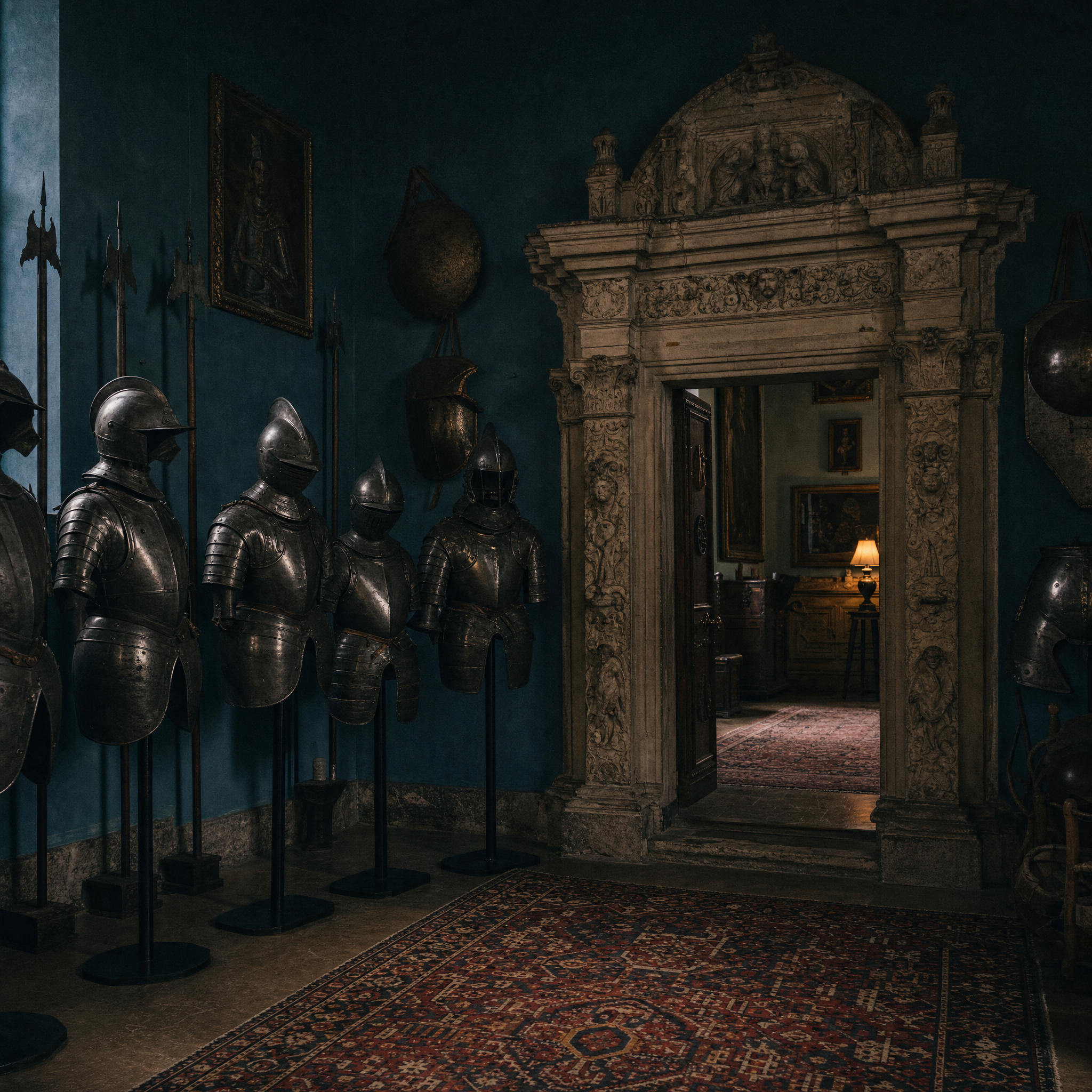
What survives is the arrangement. Everything hangs a little higher and a little more symmetrically than a curator would allow, because it was hung to be wanted — a relief on its own field of colour, an armoury ranked like a chorus, a doorway framing the next room so that you walk toward the thing he wished to sell you. When he died in 1922 he left the building and what was still in it to Florence, and Florence, to its enormous credit, did not tidy it. I have walked through better collections. I have not often walked through a better-arranged one.
Go in the flat hour after lunch, on a day when it is actually open — it keeps a short and seasonal week, and I have watched people arrive on a Wednesday and be turned around at the door. Two hours is right; there is no café and no reason for one. Come out onto the square afterwards rather than doubling back over the bridge, and let the Oltrarno keep you for the rest of the afternoon.
took off other people's buildings
— no photograph kept
His taste furnished other people's houses long before it furnished his own museum.
Bardini's clients were the great house-collectors of the age — Boston, Paris, Berlin — and what they bought was never only the object. They bought the way he had shown it to them: the spacing, the height, the colour behind. Walk the directory and you keep meeting his blue in rooms he never entered.
He left the building and its contents to Florence in 1922. The museum then spent the best part of a decade shut for restoration and only came back in 2009 — his own rooms the last of his rooms to reopen, long after the copies abroad had been welcoming visitors for a century.
There is no tragedy in it, and I would not pretend one. It is only the ordinary fate of a man who was very good at making other people want things: the wanting travelled further than he did.