Directory · Plate 018 A Renaissance house with the radiators hidden in it. ashcroftmanor.com/bagatti-valsecchi
ASHCROFT MANOR
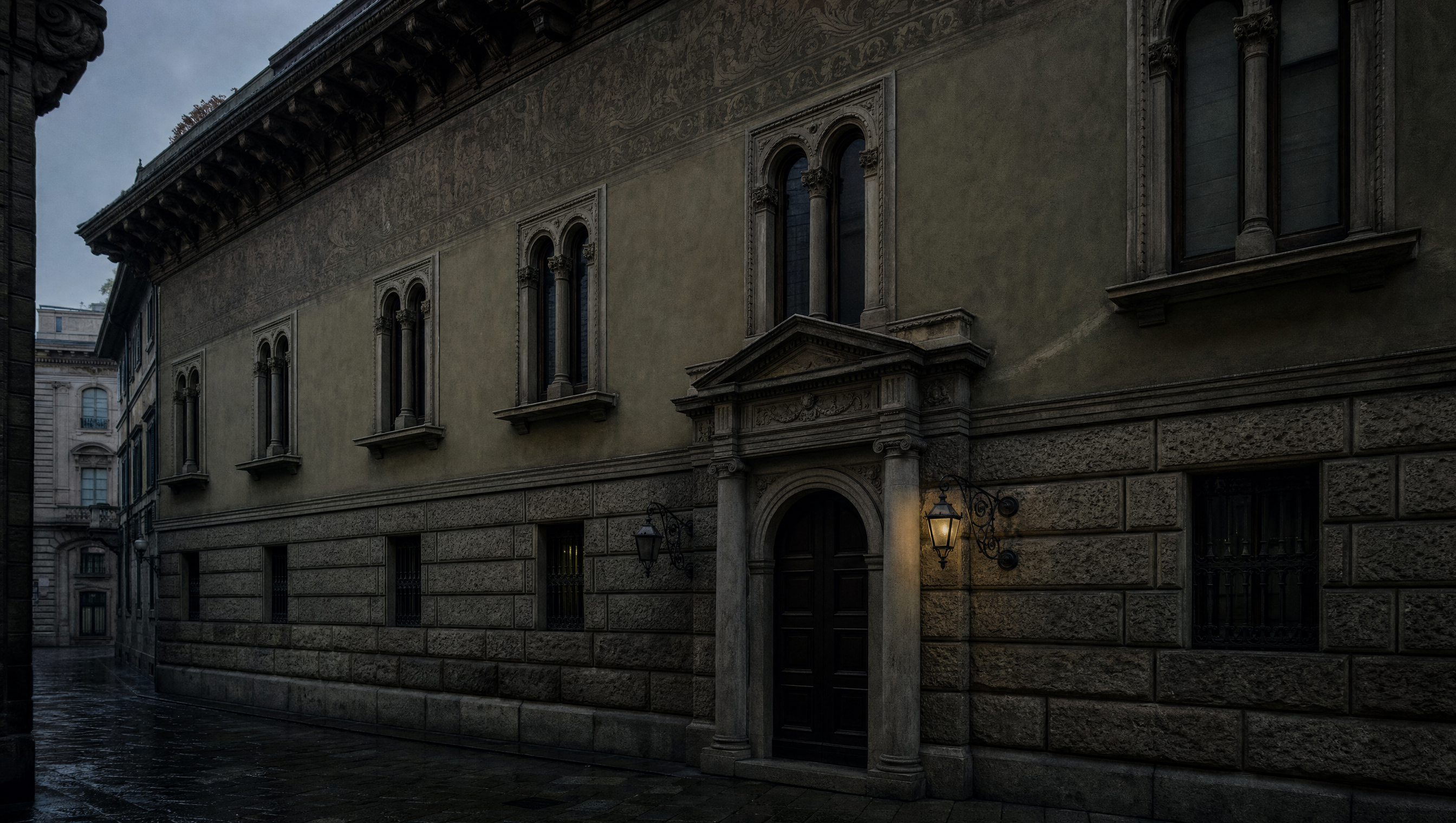
The neo-Renaissance facade on Via Gesù at dusk: rusticated stone below, paired arched windows and sgraffito above
Plate 018 · Collector's house · Visited

Museo Bagatti Valsecchi

Via Gesù 5 · Quadrilatero · Milan

Not a Renaissance house. A house about the Renaissance, and better for it.

The Directory  /  Continental Europe  /  Italy  /  Milan  /  Plate 018
FIELD NOTES

Fausto Bagatti Valsecchi (1843–1914) and his brother Giuseppe (1845–1934) both read law and neither of them practised it. What they did instead, through the 1880s, was rebuild the family house on Via Gesù as a High Renaissance Lombard palazzo — completed in 1883, with the exteriors reworked and reworked again until 1887 — and then fill it with the fifteenth and sixteenth centuries. Bellini, Zenale, Giampietrino; armour, textiles, maiolica, inlaid furniture. Not a period room set up by a museum. A period house, built to be lived in, by two men who preferred four hundred years ago.

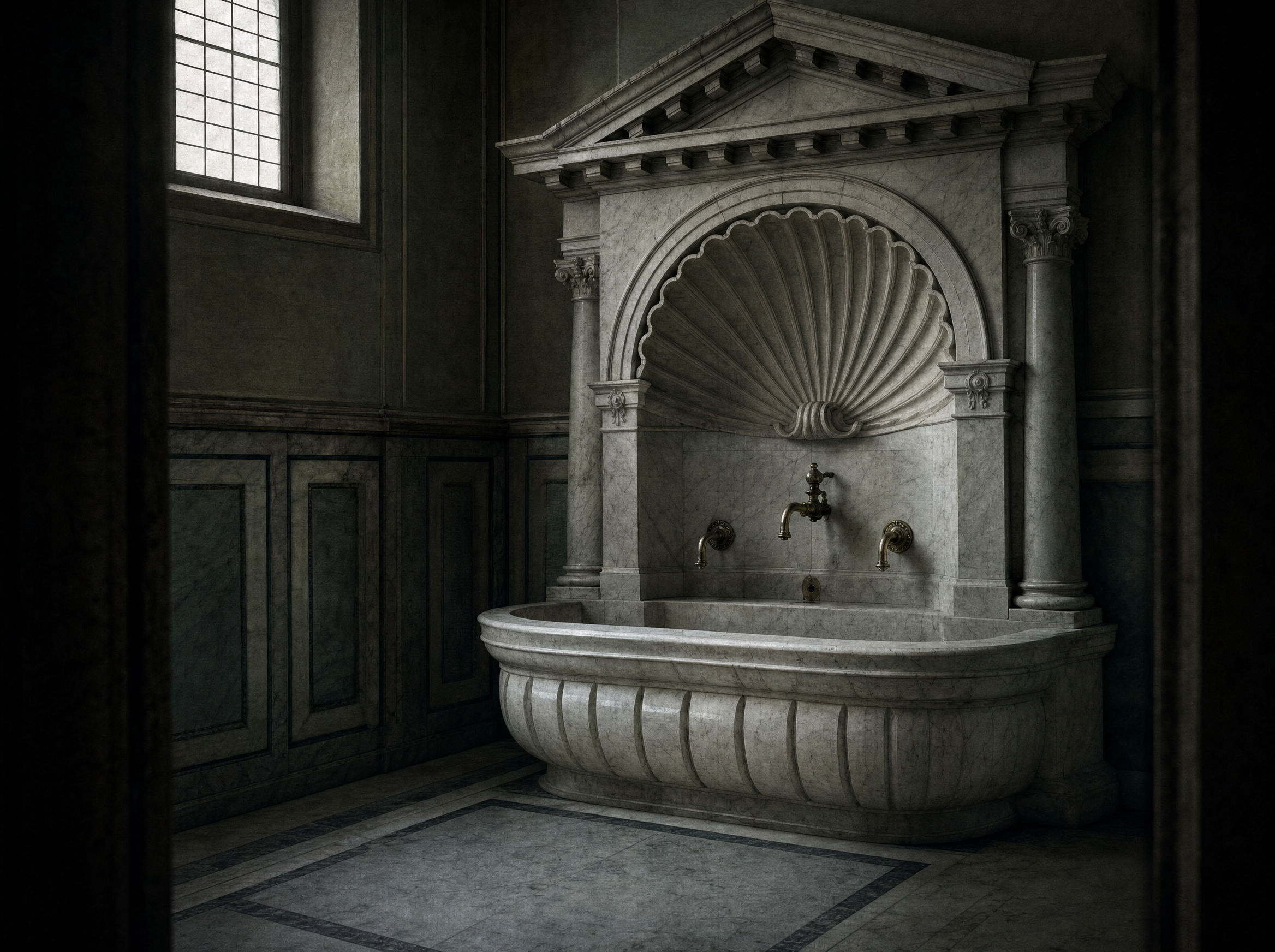
The joke — and they knew it was one — is the plumbing. Central heating, running water and electric light all went in, and all of it was hidden inside Renaissance-looking joinery. The shower is concealed in a white marble washing-fountain with carved shells, so that what looks like a Botticelli backdrop will in fact produce hot and cold water. I have never seen a better argument that a house can be a costume without being a lie: they wanted the effect, they wanted the comfort, and they refused to give up either.

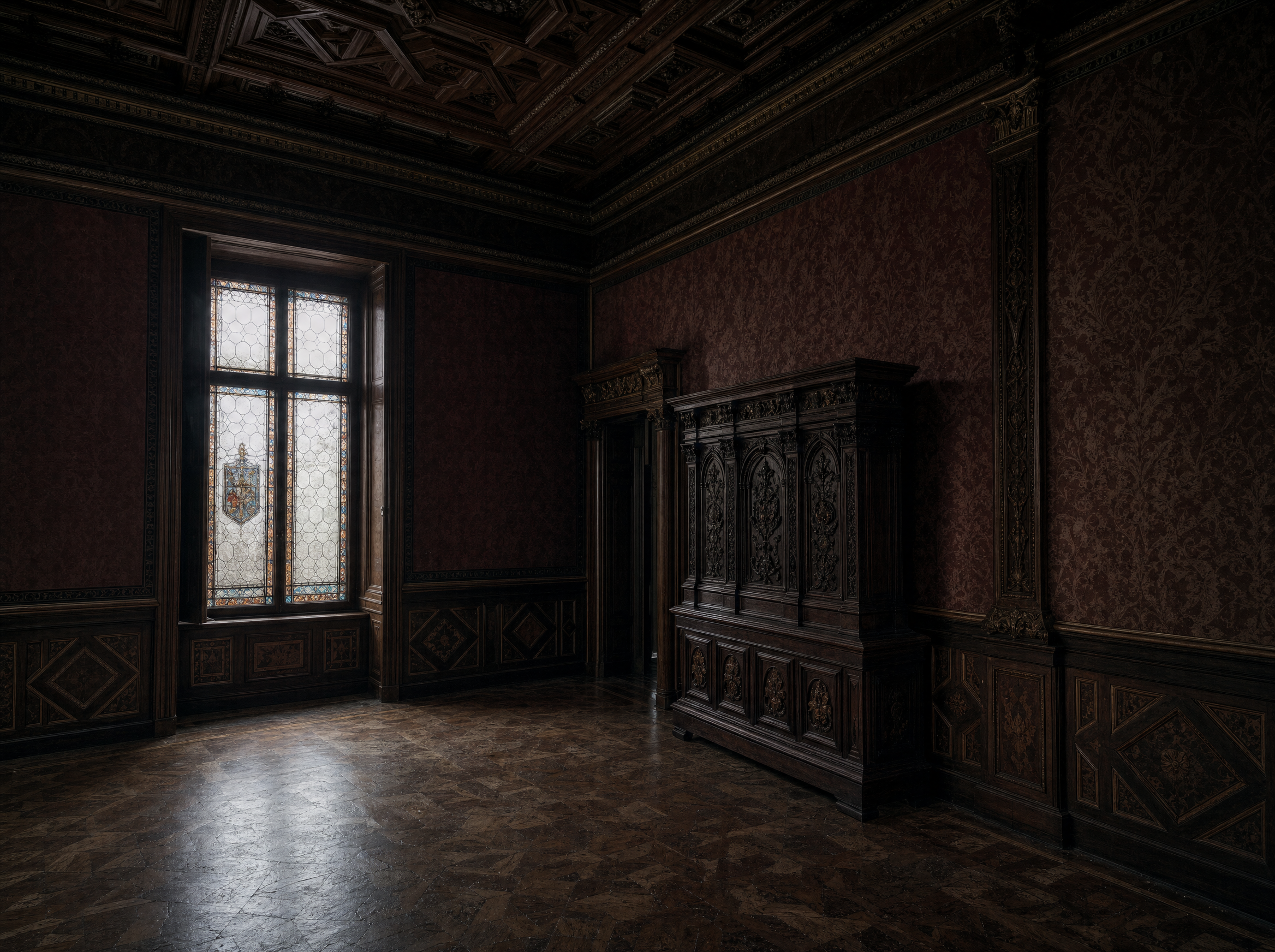
Go on a winter weekday and it is close to empty; the shops downstairs are the busiest pavement in Italy and nobody comes up. Give it longer than you think, because the objects are not the argument here — the carpentry is. Every panel, boss and coffer in these rooms was made in the 1880s to look older than it is, and the fun of the visit is deciding, room by room, which things are real and which are the brothers showing off.
What to look at, in order
{{ l.no }}
{{ l.what }}
{{ l.why }}
A room on the piano nobile: carved walnut coffering, inlaid panelling, damask gone brown in the dim light
The piano nobile · as the brothers left it

Everything here was carved in the 1880s to look four hundred years old, and most of it succeeds. Look at the joins, not the objects.

The bathroom: a marble washing-fountain with a carved shell niche, the shower concealed inside it
Plate 018b · The bathroom. The shower lives inside the fountain.
PLATE NOT YET STRUCK
THE ARMOURY
018c
Plate 018c · The armoury. I have no plate of it yet; the light defeated me.
PLATE NOT YET STRUCK
THE LIBRARY
018d
Plate 018d · The library and its scientific instruments. Next visit.

Pair it with

Three more houses that dressed up as another century.
Florence
Museo Stefano Bardini
The same decade, the same appetite, and a dealer's blue walls. Bardini staged the Renaissance to sell it; the brothers staged it to live in it.
London
Leighton House
A Victorian who built himself somewhere else entirely and kept the drains modern. Exactly this idea in another accent.
Antwerp
Museum Plantin-Moretus
The genuine article for comparison: a family house and workshop handed over whole, nothing staged. Take it as the control experiment.
← Plate 017 · Poldi Pezzoli Last visited in person: January 2026. Corrections gratefully received. Milan →