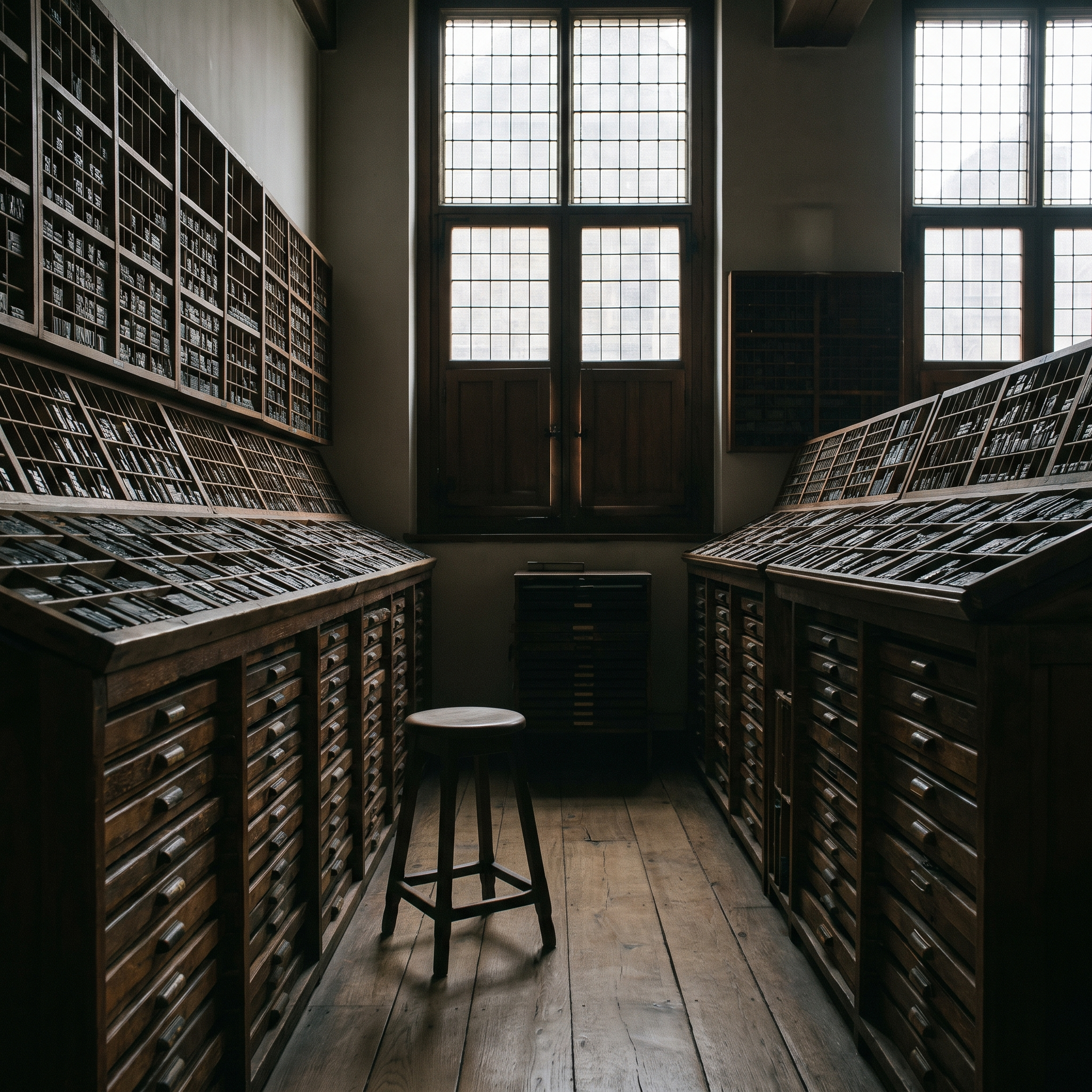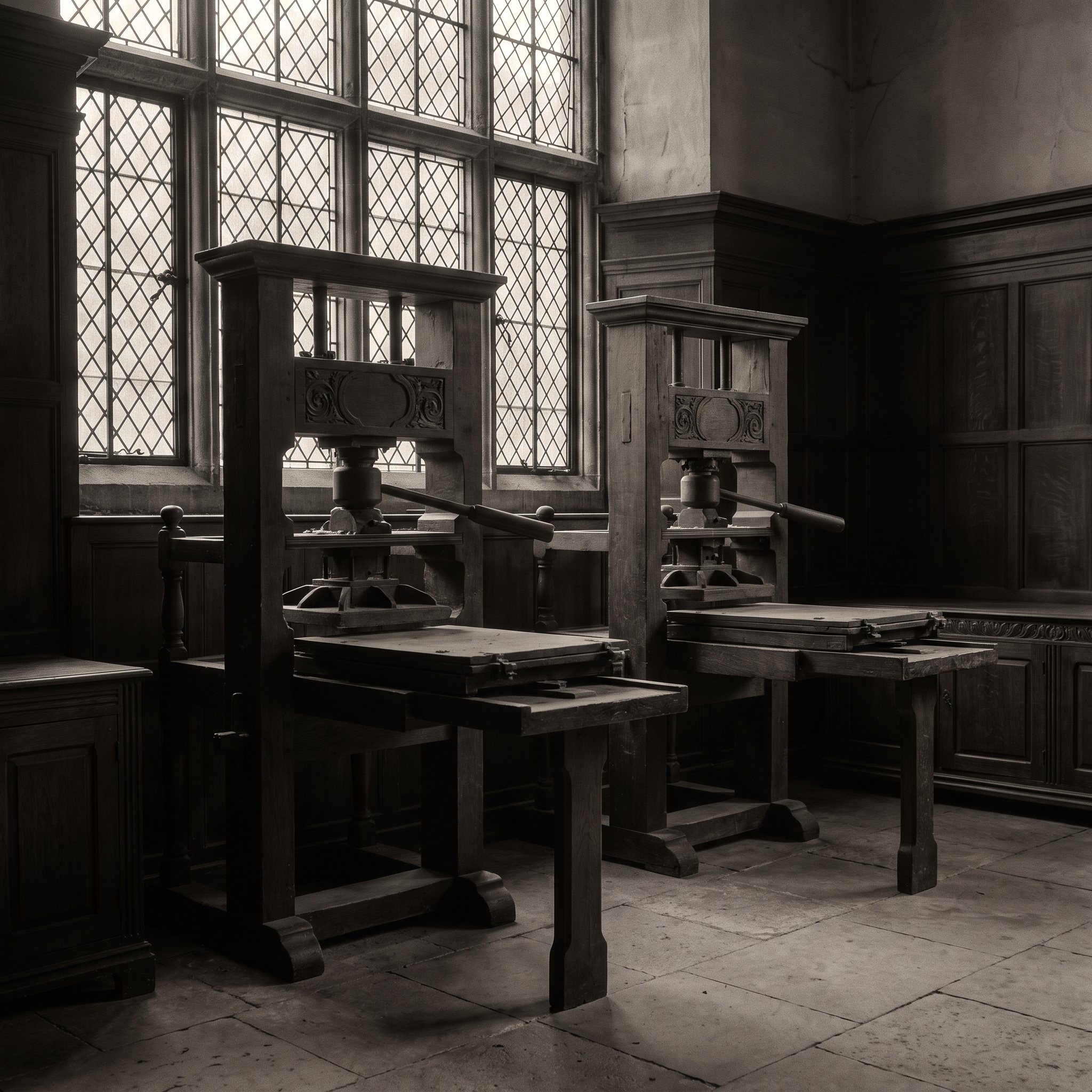
Christophe Plantin moved his printing works onto the Vrijdagmarkt in 1576, and the extraordinary thing is that nothing has since been required to leave. The presses are here. The type foundry is here, with something on the order of ten tons of hand-cast lead type made on these premises. The proofreaders' table is here, set by the window because correctors needed daylight and knew four languages apiece. Three centuries of one family's business — Plantin, then his son-in-law Jan Moretus, then Moretus after Moretus — did not get dispersed into vitrines. It stayed in the rooms it happened in. UNESCO put the whole complex on the World Heritage list in 2005, and separately entered the firm's archive in the Memory of the World register, which is the polite institutional way of saying: this is not a display, it is the evidence.
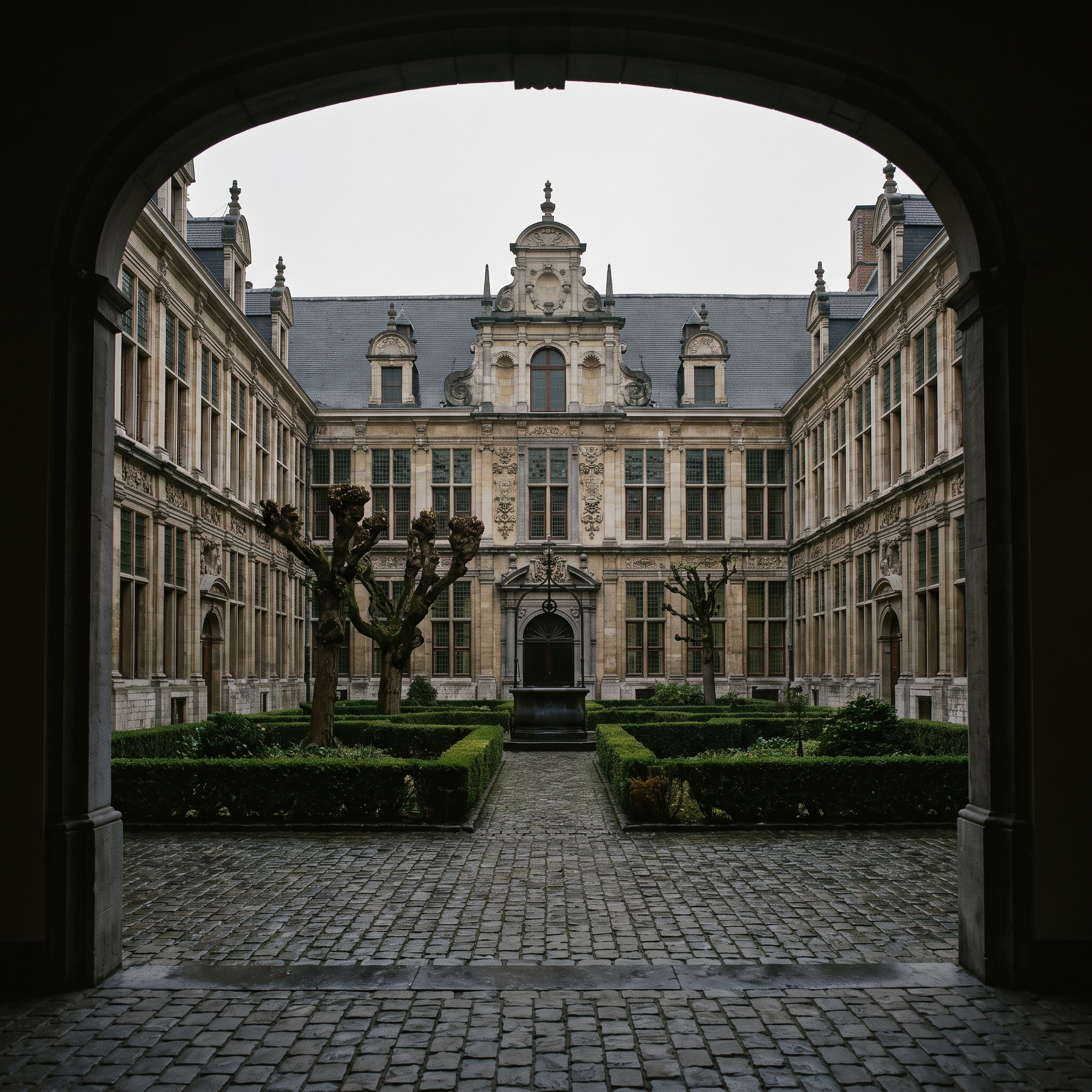
You notice the smell before you have looked at anything. Ink, oil, old paper and cold plaster, arriving all at once in the first workshop, and it does not fade as you go — you simply stop remarking on it and then remark on it again outside on the cobbles. I had come for the two hand presses, which the museum calls the oldest surviving in the world, built around 1650, and I did stand in front of them for a long time. But the rooms that undid me were the ones nobody sells you a ticket for: the corridor of type cases, the small dim office, the courtyard garden where the house turns its back on the square and quietly becomes a home.
Give it the whole morning. I went in meaning to spend an hour among presses and came out reading label copy about matrices with the enthusiasm of a convert. Take the domestic rooms seriously — the Lipsius room, the library, the portraits Balthasar I Moretus commissioned from Rubens, who was a friend of the house and drew its compass mark. Those rooms are not the filler between the good bits. They are the argument that a workshop and a family were, for three hundred years, the same address.
Ten tons of lead, cast on the premises, and the cases still ranked by the hand that reached for them.
Every case is worn deepest at the letters used most. You can read the language off the furniture before you read a single page.