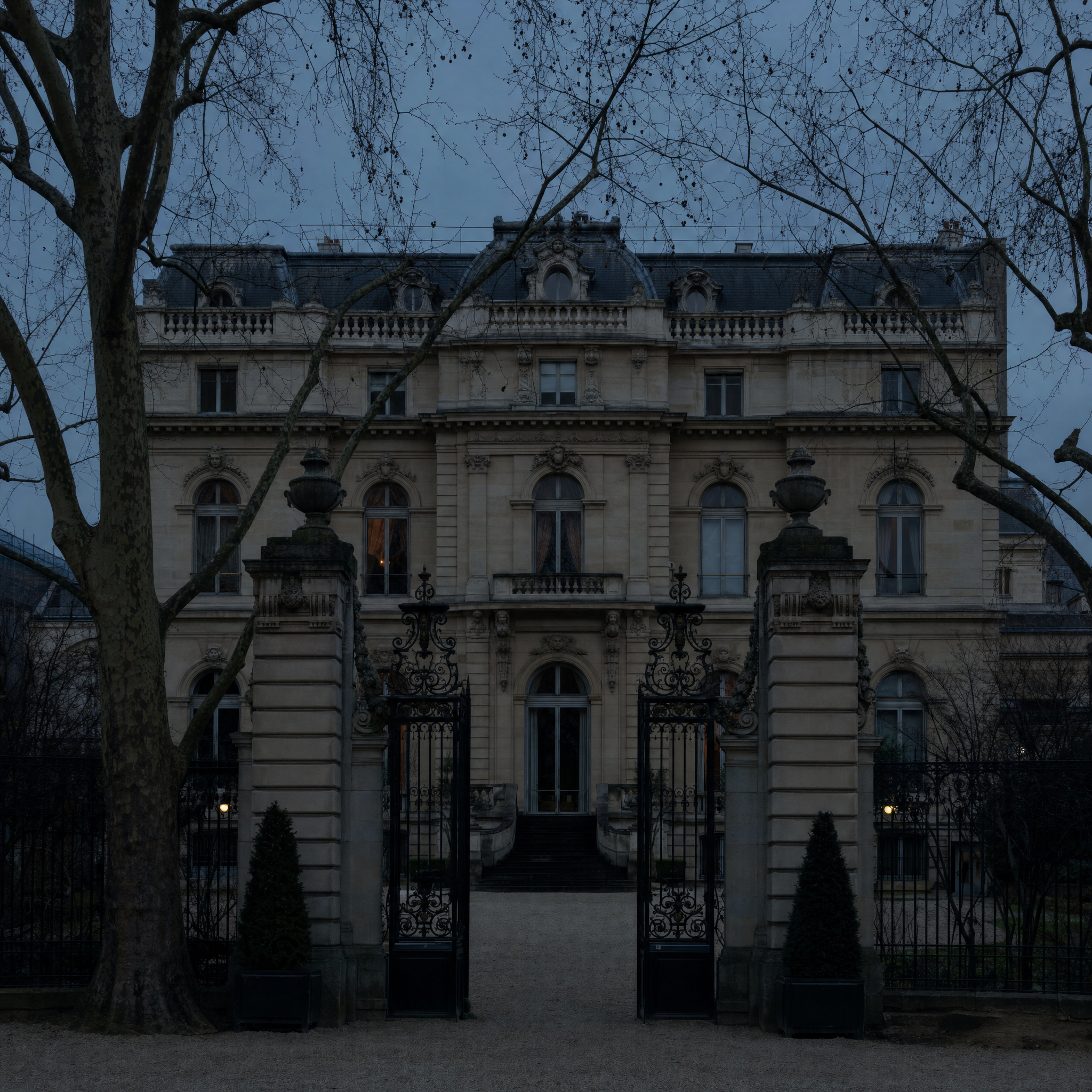
Édouard André was a banker who started buying pictures in 1860 and then had Henri Parent build him a house to put them in, between 1869 and 1876. He commissioned a portrait of himself from a painter named Nélie Jacquemart, and in 1881 he married her. What you walk through is the result of that arrangement — his money and his eighteenth century, her eye and their shared appetite for Italy, and a plan drawn for a couple who meant to receive on a scale that required a building rather than a drawing room.
The house is famous for two performances. The first is the double spiral staircase rising into the winter garden, which is pure display and knows it: marble, glass, plants, and a set of sightlines arranged so that guests could watch each other arrive. The second is upstairs — the Italian Museum, which is genuinely a different house. The state rooms below are French, gilt and sociable, and built to be walked through in company. The rooms above are Florentine and quiet and want you on your own. The change in temperature between the two floors is the most interesting thing on the premises.
Go in January, before eleven, when the boulevard is grey and the ticket queue has not yet formed. It opens every day of the year, which in this city is close to unheard of and sounds like a convenience — it is in fact a warning. On a Sunday afternoon the house is very full indeed. Allow two hours, then lunch. The tearoom is the original dining room, with the Tiepolo still on the ceiling, and it is the only correct use of a dining room I have found in a museum anywhere.
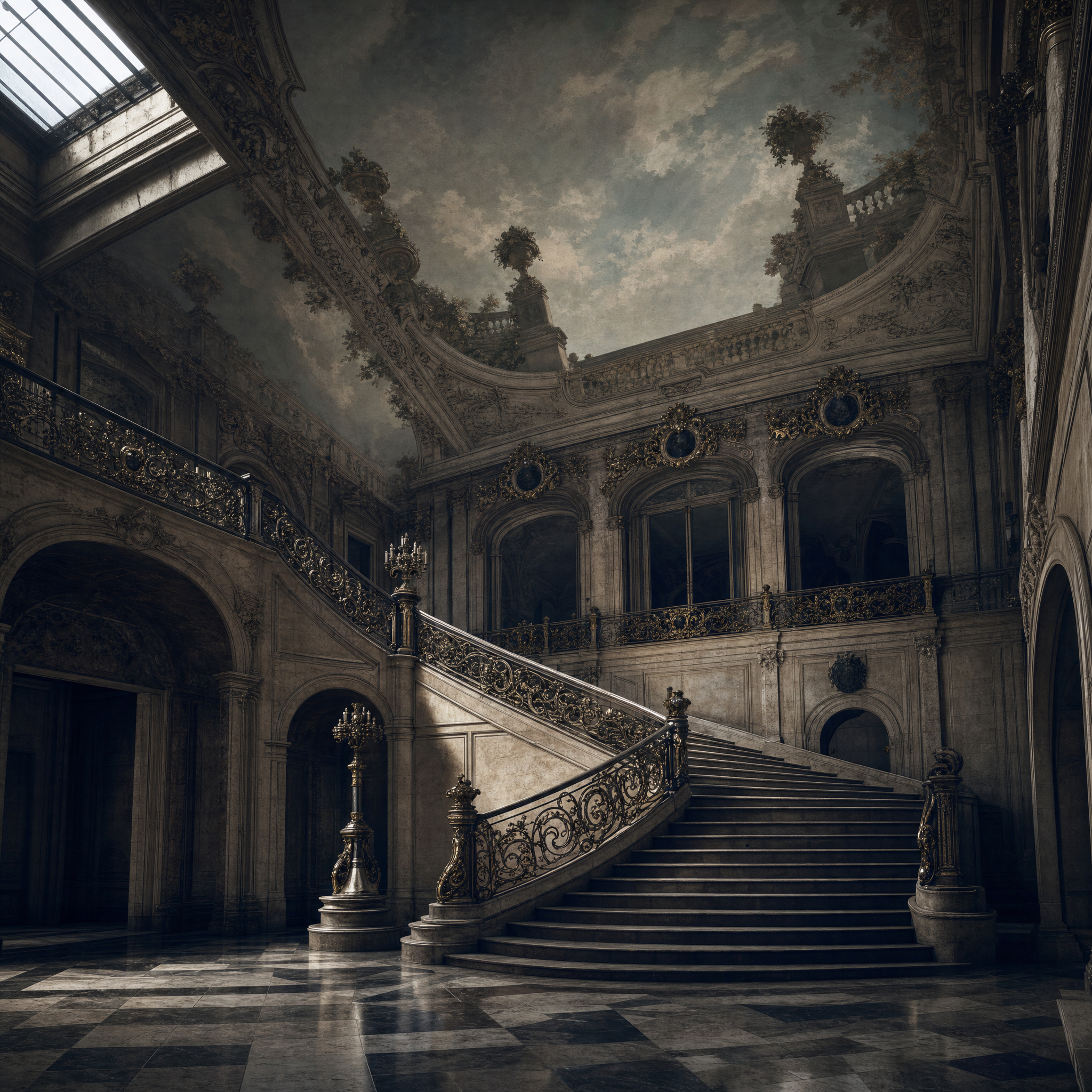
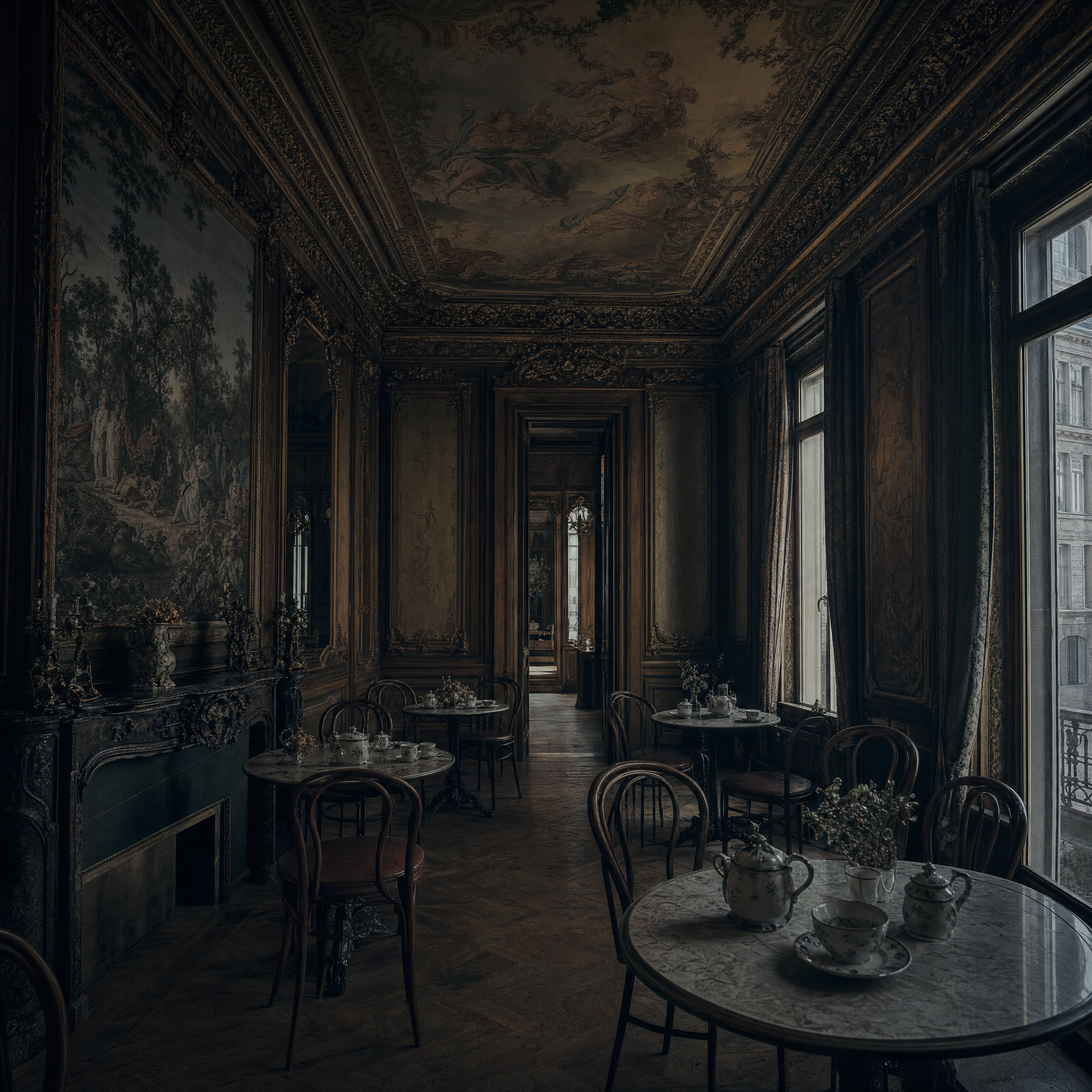
plate not yet made
She left the house to the nation and told it exactly where to put everything.
Nélie Jacquemart died in May 1912. Her will left the mansion and everything in it to the Institut de France, on the condition that the collection be shown to the public — and she specified the exact placement of the works, object by object, so that no future curator could improve on her arrangement. The museum opened on 8 December 1913.
It is a stricter instruction than it first appears. She was not preserving her own taste; she was preserving a conversation. Half these rooms are her husband's choices, made before she met him, and she kept them in place for eighteen years after his death and then fixed them there permanently.
She outlived him by eighteen years and could have done anything she liked with these rooms. What she chose to fix in place was not her own taste but the version of the house the two of them had made together. That is the more generous of the two decisions in this building, and nobody puts it on a label.