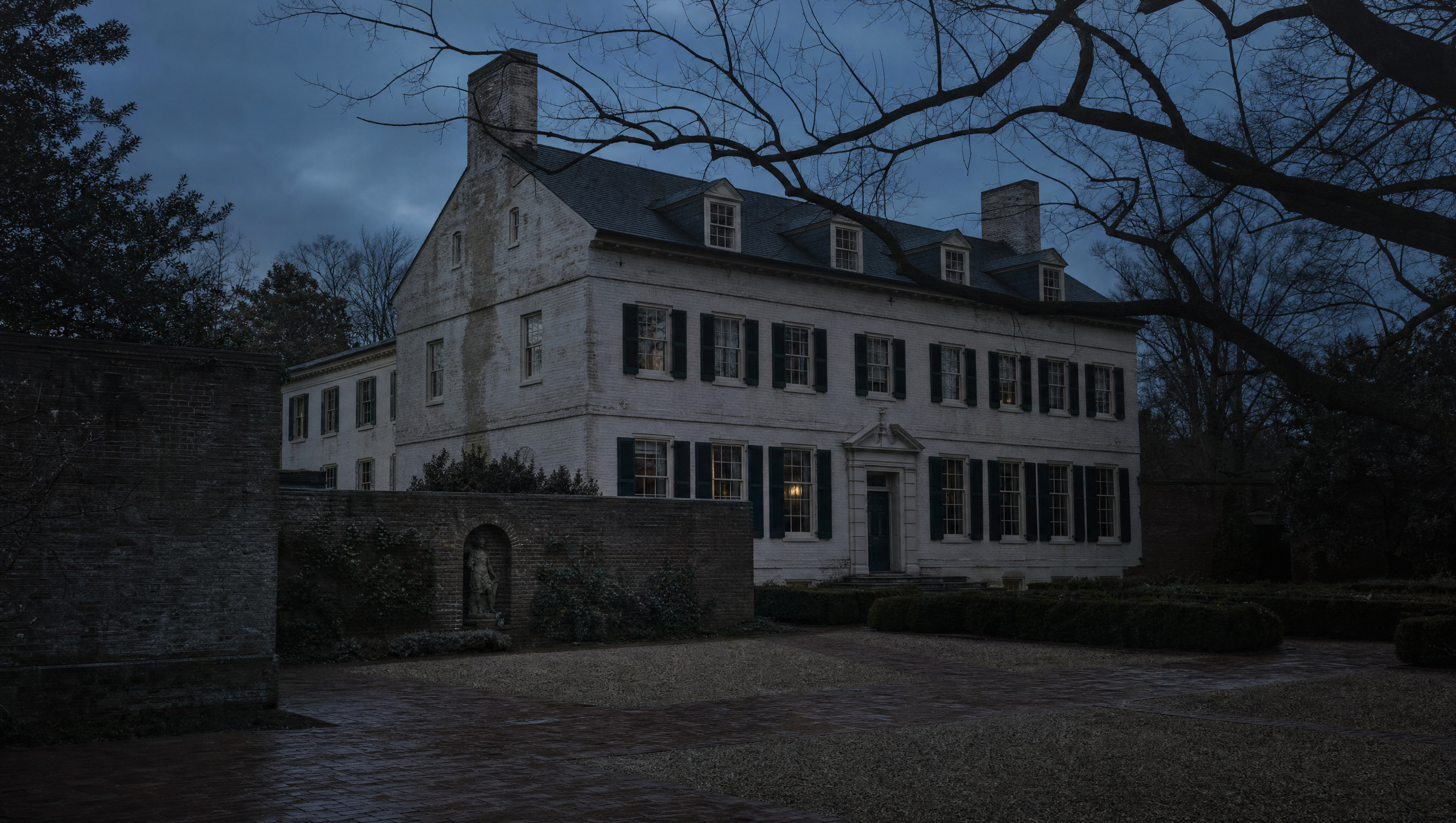
This is three institutions wearing one address, and nobody warns you. Mildred and Robert Woods Bliss bought a run-down Georgetown house in 1920 and spent twenty years turning it into an argument: a garden made with Beatrix Farrand from the early 1920s, a Byzantine collection of goldsmiths' work and silver, a Pre-Columbian collection of jade and gold, and in 1940 they handed the upper sixteen acres to Harvard and moved out. The house you walk into was given away by people who were still alive to watch what happened to it. That is a rarer act of nerve than leaving it in a will.
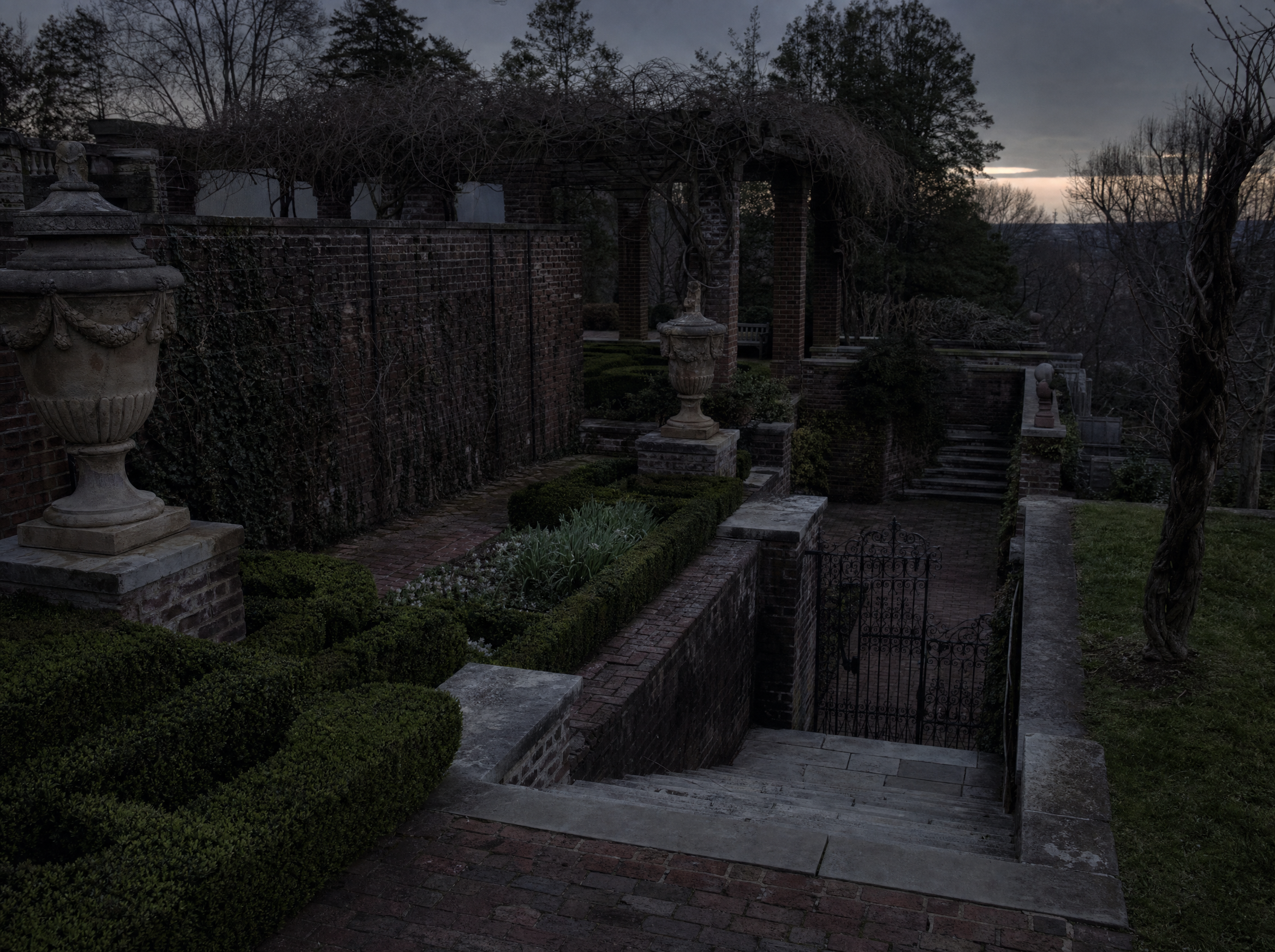
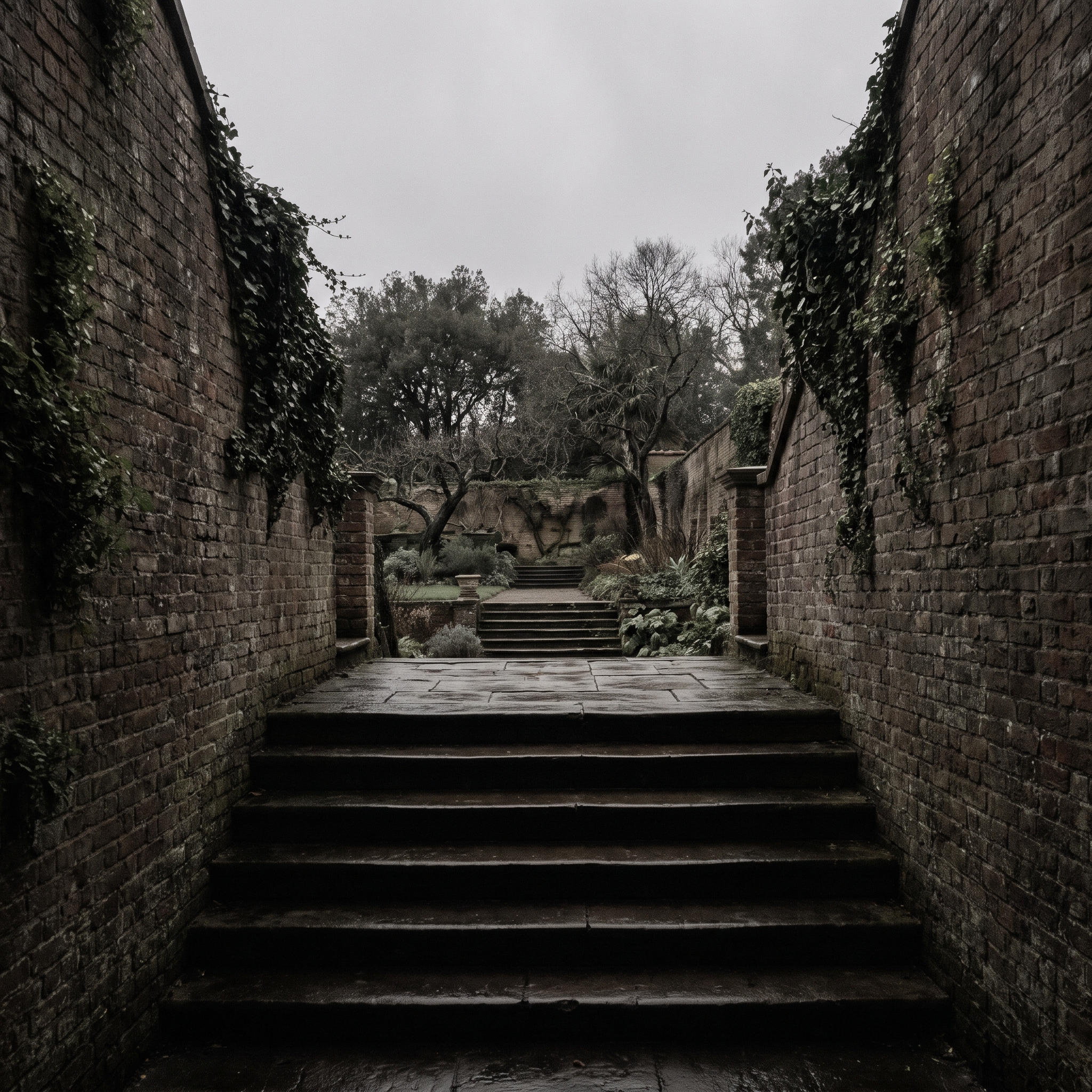
Farrand's garden is the reason I keep going back, and it is not a garden in the English sense at all. It is a descent — terrace giving on to terrace, each one walled, each one finished, so that you are always in a room and never in a view. Brick, box, worn stone steps, an ironwork gate that frames the next thing before it lets you through. I did it in April, uphill from Dupont, and I got the order wrong the first time: go down and keep going down, and let the formality loosen as you drop. The top terraces are drawing rooms. The bottom of the garden is where the house forgets to be grand.
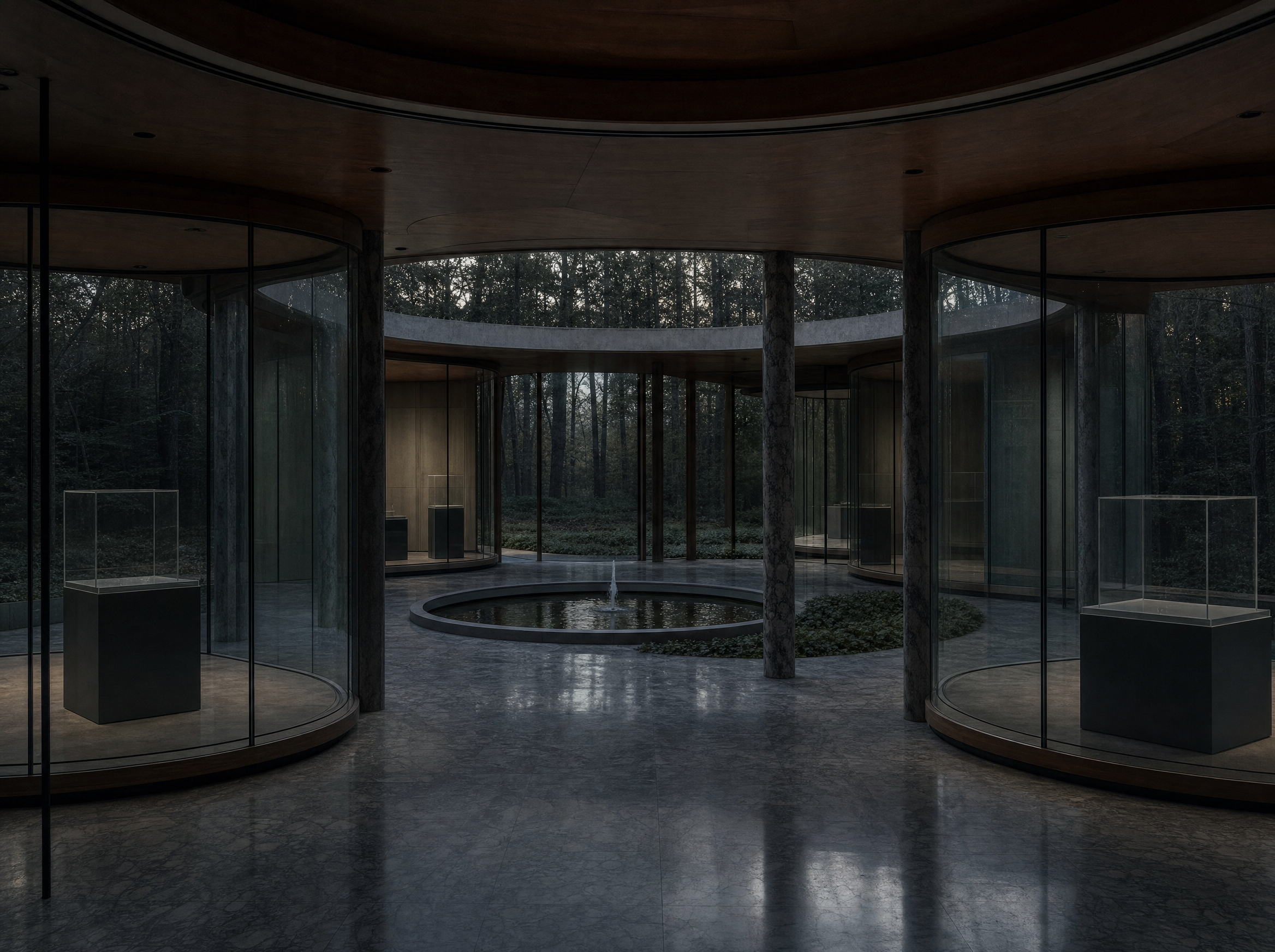
Then the museum, which is free, and which almost nobody in this city has been told about. The Byzantine cases are exactingly lit and unhurried — the sort of display that assumes you can read an object without being shouted at. And out at the edge, Philip Johnson's pavilion of 1963: eight small circular rooms of curved glass around an open courtyard, the collection standing in clear cases with the woods pressed up against the walls. It should not work. It is the best half-hour in Washington. Do not do it on the same ticket as the garden without sitting down in between; the two collections are cold in the way good silver is cold, and the garden is where you warm up.
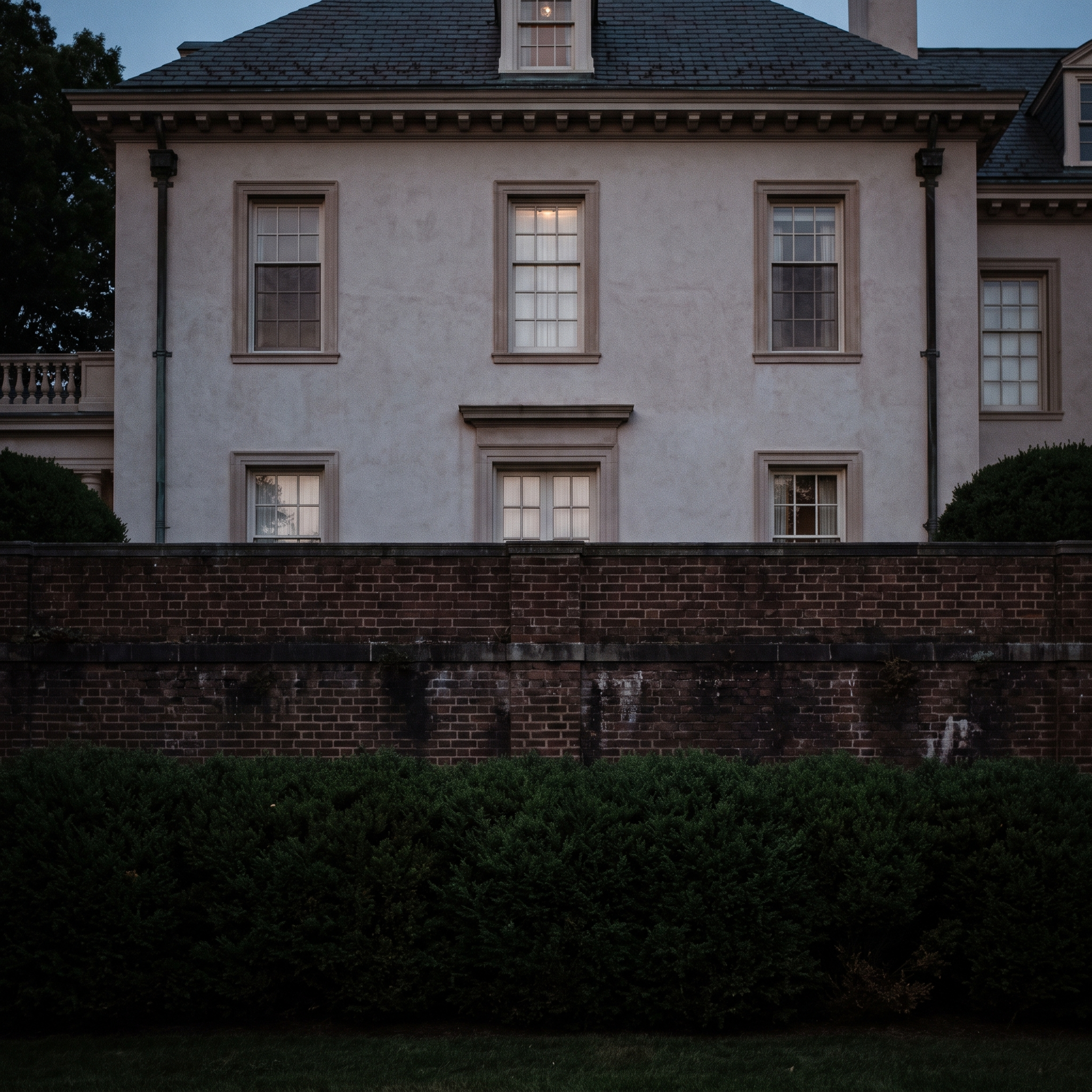
The United Nations was drafted in a room built for chamber music.
The Music Room was added in 1929 for the Blisses' own use, and in May 1938 Nadia Boulanger stood in it to conduct the first performance of the concerto Stravinsky had written for their thirtieth wedding anniversary. It is called Dumbarton Oaks. That is the sort of thing this house did before lunch.
Six years later, in the late summer and autumn of 1944, delegations from the United States, Britain, the Soviet Union and China met in that same room. The proposals they wrote there became the frame of the United Nations Charter. No plaque in the garden prepares you for it, and the room itself declines to make a fuss.
I find I cannot walk the terraces afterwards in quite the same frame of mind. A garden arranged as a sequence of private rooms, and in the middle of it a room where the world was rearranged. Sit on the wall by the orangery for a minute before you go back down the hill.