There is a barometer in the back passage at Ashcroft, hung at eye height between the boot room and the door to the yard, where I pass it perhaps nine times a day. It does not work. It has never worked in my ownership and it is not going to. I keep it there deliberately, in the way other people keep a photograph of themselves at nineteen, and everything I am about to tell you about buying at auction was learned from it on a Wednesday in March 2019.
I am not against auctions. Rather more of this house came out of a saleroom than out of a shop, and the pleasure of a country sale on a wet Tuesday viewing day is a pleasure I would defend in company. But an auction is a machine for converting your own excitement into somebody else's money, and it is very good at it. What follows is what I have decided, over eleven years and a certain amount of tuition, to bid on; what I look at properly and then leave on the wall; and the one piece of paperwork that stands between those two things.
I. The regrettable Wednesday
A general house sale, two counties away, four hundred-odd lots of the kind that come out of one family and go into eighty. Viewing was the Tuesday. I was in somebody else's reserve collection on the Tuesday, and so I did what I had spent four years telling other people not to do: I bought from photographs. There were eight of them. All eight were taken from the front.
The lot was a mahogany wheel barometer, banjo-cased, with a silvered register and a thermometer, catalogued in that beautifully non-committal phrase which means whatever the buyer later decides it meant: in need of some attention. I left a commission bid with the office. I set the figure at twenty to nine that morning, in a car park, on the back of a receipt.
I won it at the top of my bid, which ought to have told me everything. A room full of dealers had looked at that barometer on the Tuesday and declined to want it at that money, and I had beaten all of them by the simple method of not being there.
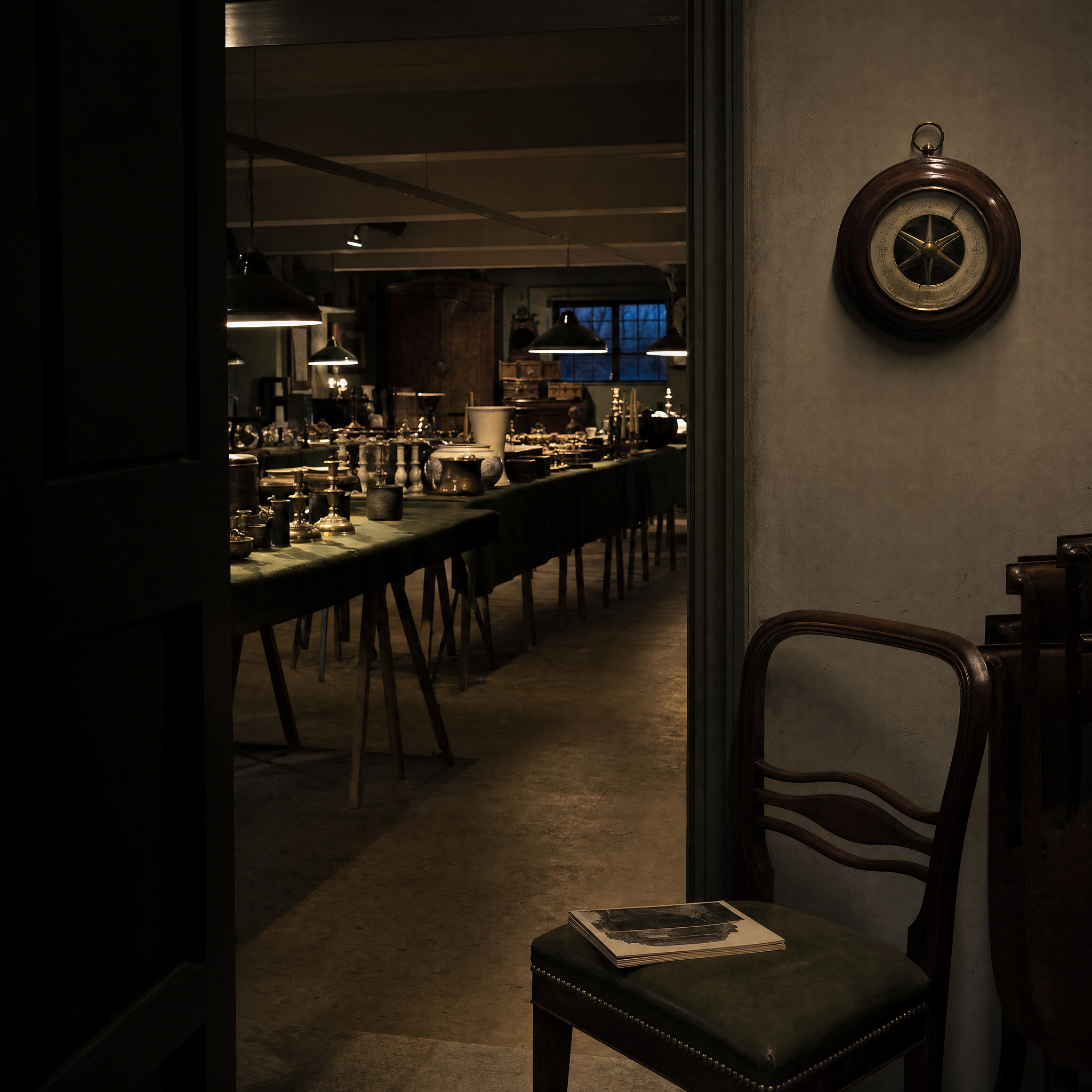
What arrived — or rather, what I went and fetched — was a marriage. A good early case with a later dial in it, a tube that had been replaced at some point by somebody in a hurry, and a register plate resilvered so recently and so brightly that it read, against three inches of honest patinated mahogany, like a new tooth. None of this is visible from the front. All of it is visible in thirty seconds with the thing off the wall and turned over, which is a service the eight photographs had not provided.
Then the second lesson, which was logistical and which I had simply never thought about. Salerooms will not pack and send a filled mercury tube, and no ordinary carrier will take one. If you buy a mercury barometer you are, in every practical sense, agreeing to go and get it. So: a Saturday, a round trip of some two hundred miles, and a banjo case lying flat on the back seat under a blanket — which, as any restorer will tell you with visible pain, is exactly how you let air into a tube.
And the arithmetic, which is the part that actually matters. Buyer's premium at most British salerooms sits around twenty per cent of the hammer, with VAT charged on the premium on top, so the number you shout is roughly twenty-four per cent short of the number you pay. Add the fuel, add the day, add the restorer's estimate for putting right the tube and the dial, and I had spent something like a third more than the figure I had written on the back of a receipt in a car park — and the figure on the receipt had been invented in four minutes.
I did not lose a great deal of money. I lost the argument I have with myself about being a serious person, which is considerably worse, and I hung the thing in the back passage rather than in a room where it might have been mistaken for a success.
II. What I bid on
One test governs all of it: I bid on objects whose condition I can read myself, standing in front of them, in under a minute. Not objects I can value — valuing is easy and mostly irrelevant — objects whose faults are on the outside. Everything I have ever regretted has had its faults on the inside.
Plain brown furniture. Oak and mahogany, country rather than smart: chests of drawers, side tables, a coffer, the sort of dining chairs that come in sixes with one wrong. It has been unfashionable for twenty years and remains the great scandal of the trade, in that a two-hundred-year-old chest of drawers can still be bought for less than a new one made of compressed sawdust. Look at colour first, then turn it over. The underside and the back are where a piece stops performing.
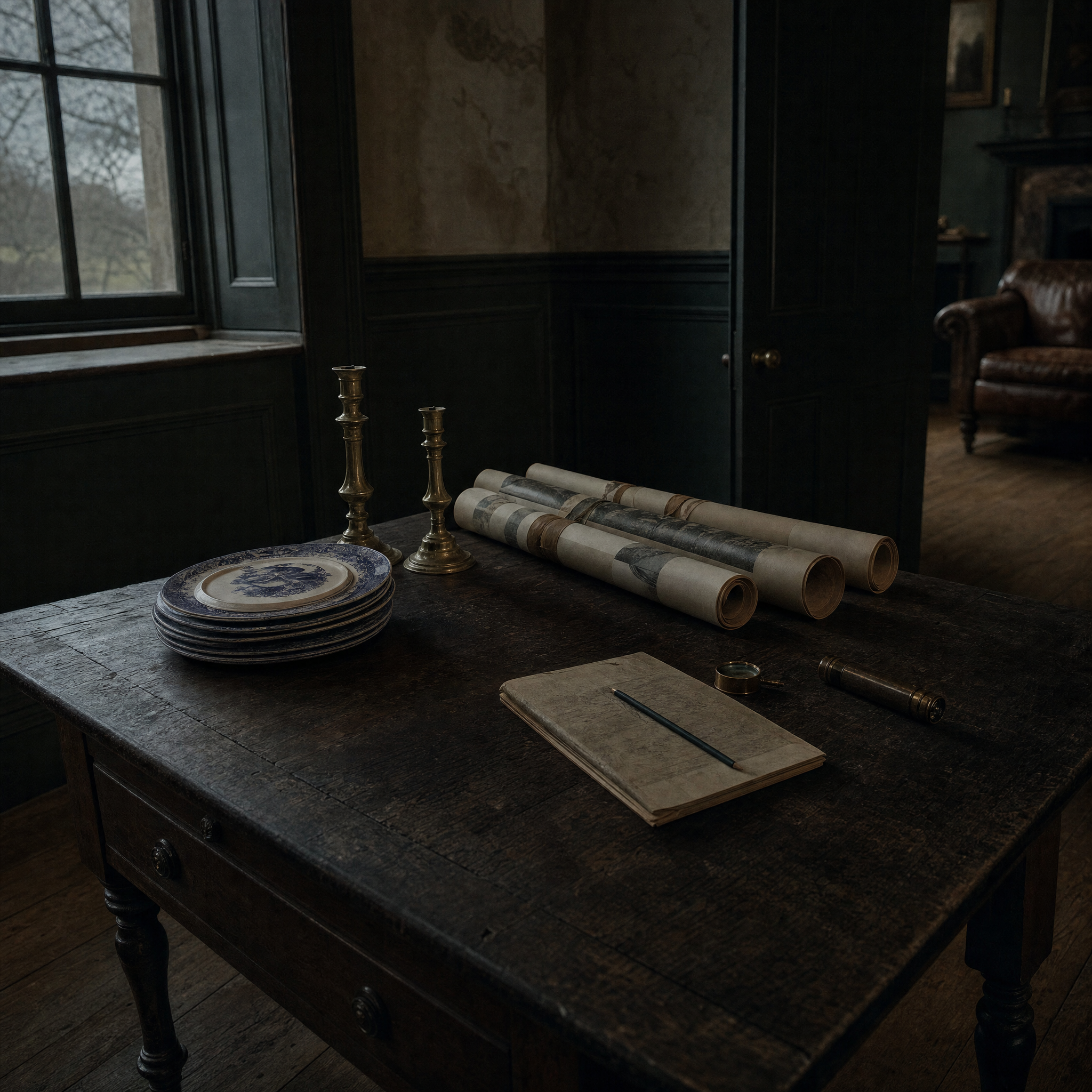
English blue transferware. Made in vast quantity, used hard, and — the crucial thing — damaged only in ways you can see with a thumbnail and a window. Nobody is faking a Victorian meat dish, because there is no money in it. There is a longer argument for how to collect it without your dining room becoming a gift shop, and the saleroom is where nine-tenths of it should be bought, in the deeply unglamorous box lots at the end of a sale.
Brass and copper. Candlesticks, coal buckets, fenders, and old table lamps, which go cheaply for the excellent reason that everyone assumes they are a fire. They are, until they are rewired, which is neither difficult nor expensive and which I have never once skipped. Half the lamps I argue for in my case against the overhead light came off a trestle table for less than the cost of their shades.
Prints, in quantities. Topographical views, architectural engravings, botanical plates — usually catalogued as a folder or a box and sold as one lot because cataloguing them individually would cost more than they will make. One good impression pays for the box. The rest go into the frames that also came out of a box.
Plain textiles and plain useful things. Linen sheets, blankets, a stack of unremarkable glass tumblers, brass curtain rings, the treen and the boxes and the small wooden objects that live in the bottom of a lot with a nailbrush. These are not investments. They are the reason this house looks lived in rather than assembled, and they cost about what a takeaway costs.
III. What I only watch
These are not categories I think less of. Several of them are the best things in any sale. They are the categories where the object on the table and the object you are buying are two different objects, and where I have no way of closing the gap myself.
Clocks and barometers. Obviously. What you can see is a case; what you are buying is a movement, or a tube, and the difference between a charming project and an expensive one is a conversation with a restorer you have not yet had. I stand in front of longcase clocks at every sale I attend and I have not bid on one since 2019.
Silver. A commodity market in fancy dress. Weight and hallmark, and men with a great deal more information than me doing sums in their heads at the back. I will buy a single spoon because I like the spoon. I will not compete for a canteen.
Pictures with a ladder in the catalogue. The trade's wording is precise and worth learning, because it descends: attributed to, then studio of, circle of, follower of, manner of, and finally after. Each rung is a formal way of saying, with lawyers present, that they do not believe it is by him. Buy the picture you would hang if the label were blank, at a price that would not sting if it were.
Upholstery and giltwood. With the first you are buying a frame you cannot see and a stuffing you would rather not meet; with the second you are buying somebody's decision about regilding, made either eighty years ago or, worse, last spring. Both are perfectly good purchases for people who own the relevant skills. I own a folding rule.
Ivory, and its neighbours. The Ivory Act 2018 came into force in June 2022 and the exemptions are deliberately narrow — items made before 1947 with less than a tenth ivory by volume, portrait miniatures painted on ivory before 1918 under 320 square centimetres, certain instruments made before 1975 — and each of them wants registering. I do not want to be the person keeping that paperwork current, and I am glad the door is as narrow as it is. I watch those lots go past and feel nothing except relief.
IV. The discipline of the maximum
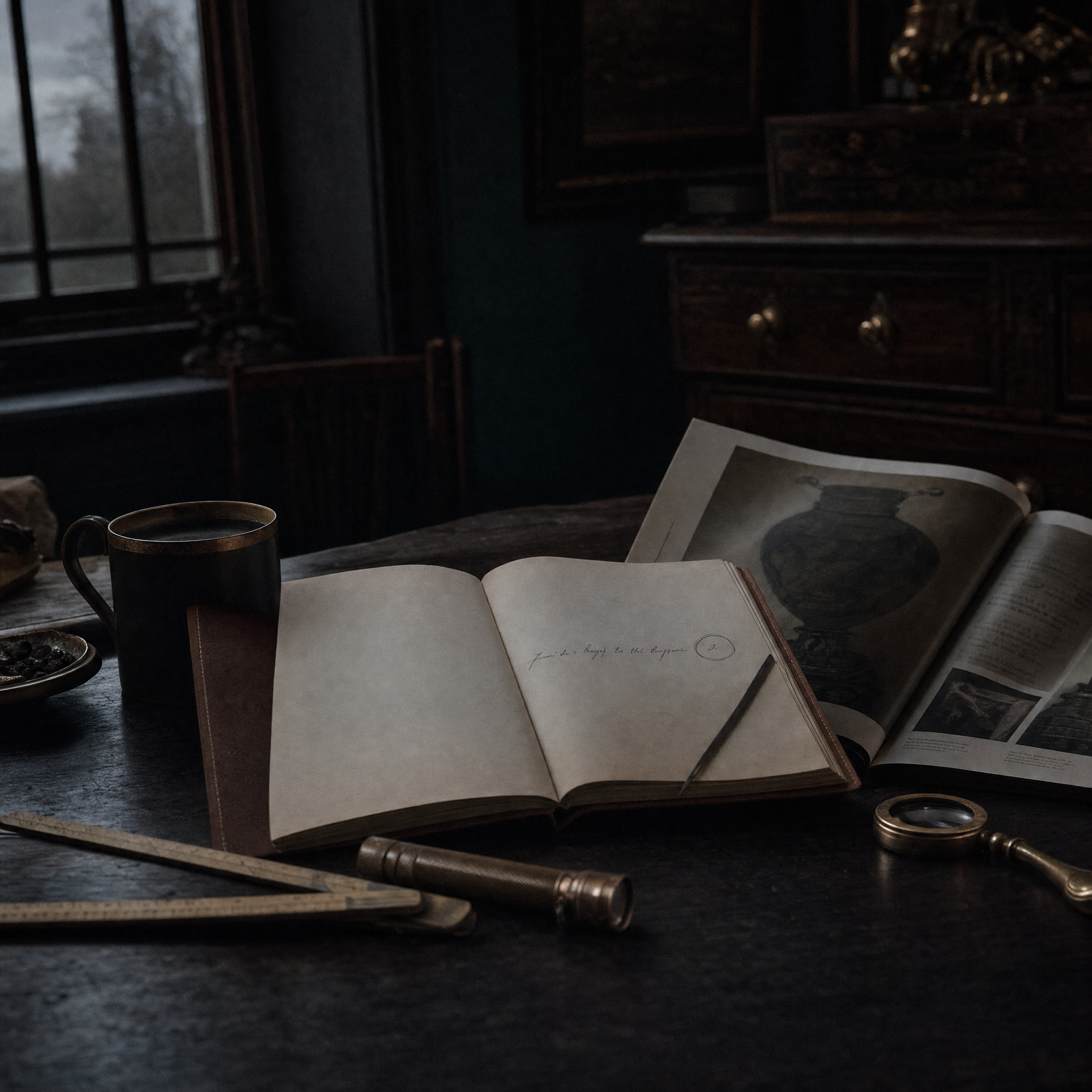
Write the number at the viewing, with the object in front of you and your hand on it, and write it in the notebook rather than in your head. A number held in the head is not a maximum; it is a mood. And write it gross: not what you will bid, but what will leave the account. Hammer, plus the premium and the VAT on the premium, plus getting it home, plus whatever the man who mends things has told you it will cost to make it usable. That last figure is the one people leave out, and it is the one that ate the barometer.
Then understand that the room is designed, quite legitimately, to renegotiate with you. The increments are the auctioneer's and not yours; the moment he offers to take a half-increment near the top he has found the shape of somebody's resolve, and it is usually not the dealer's. The opening bids may be nobody at all: bidding off the wall, or off the chandelier, is lawful in this country below the reserve — the auctioneer may run up to it on the seller's behalf, but not at it and not beyond — and it is not a scandal, it is arithmetic. It only becomes a problem if a brisk start persuades you that you are in a fight. Half the time, at the beginning, you are not.
The right feeling on being outbid is mild relief. If it is grief, the number was wrong before the sale began.
Two practical mercies. If you know you will be weak on a lot — and you will know, because it will be the one you thought about in the car — leave a commission bid and go and stand somewhere else. The office executes it to your figure and no further, and you cannot argue with a form. And if a lot fails to sell, do not walk away sadly: go to the office afterwards and make an offer. Unsold lots are frequently available after the sale, and the seller who has just watched their coffer go unwanted is in a considerably more reasonable frame of mind than they were at ten that morning.
All of which is a long way of saying: decide in advance where you are not allowed to go, and then let the room do whatever it likes. This is the same discipline as keeping the china off the wall, and it works for the same reason. A fence you built when you were calm will hold when you are not.
V. What the watching is for
People assume the watching is the sad half — the abstinence you perform in order to earn the buying. It is the opposite. Standing at a viewing for two hours and going home with nothing is the only free education in this trade. I have looked properly at longcase clocks for eleven years without buying one, and I can now tell you within a fairly narrow band what a plain oak thirty-hour case will make in a wet February in the Midlands, which is knowledge I acquired at a cost of nothing and several cups of very bad tea.
It also keeps the admiration clean. There is a particular pleasure in liking an object very much and having no plans for it, and it is not available to people who buy everything they like. Soane, who bought on a scale none of us will approach, was buying towards a system he could have described to you at length; absent the system, the acquiring is just appetite with a paddle in its hand. Most of what I love in a saleroom belongs in somebody else's house, and I have come to think that recognising which is which is most of what a curator actually does.
I am better at reading a building than a saleroom, and I know exactly why: a house is not bidding against me. It stands still while I look at the skirting for a full minute, and everything it is hiding is written into it somewhere for anyone patient enough. An auction gives you a Tuesday to be that patient in, and then withdraws the offer at eleven o'clock the following morning. The whole discipline is a way of compressing patience into a form that survives contact with a fast room.
There is a sale on Thursday. Two lots I want — a chest with its original feet and a box of unsorted engravings — and, in the same sale, a rather good bowfront barometer that I intend to look at closely, take off the wall, turn over, and put back. The numbers for the first two are already written down. The barometer does not get a number. A dealer I have stood beside at a hundred viewings put it better than I have managed in two thousand words, over the tea urn on the morning after the regrettable Wednesday: You didn't buy a barometer, love. You bought eight photographs of one.

Bea is a curator and writer, and keeps the Museum Directory. Offers for the barometer are received warmly and declined.
No prices are quoted here, because premiums, VAT treatment and collection terms differ by saleroom and change. Read the conditions of sale for the house you are bidding in — they are short, and they are the contract.