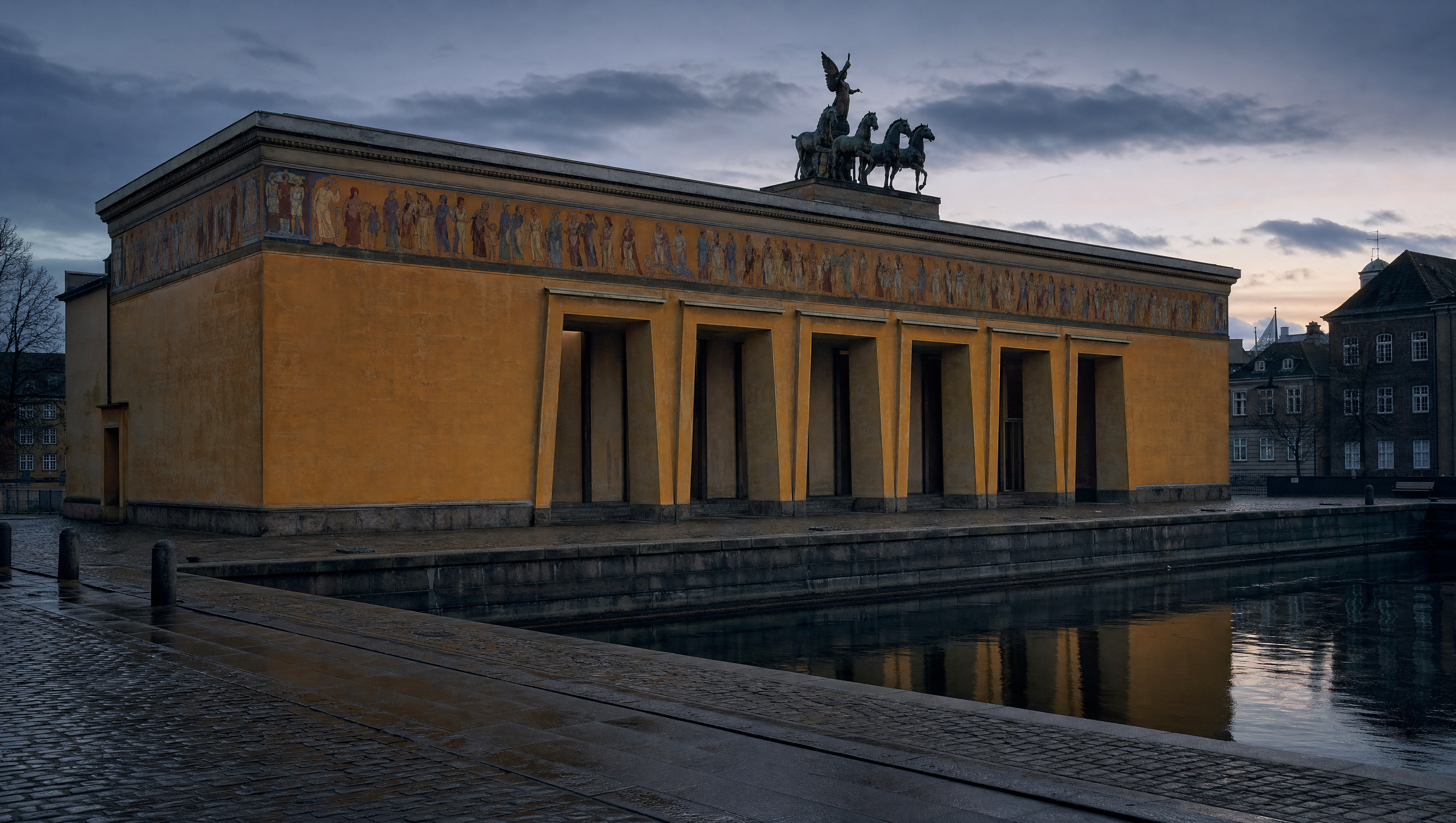
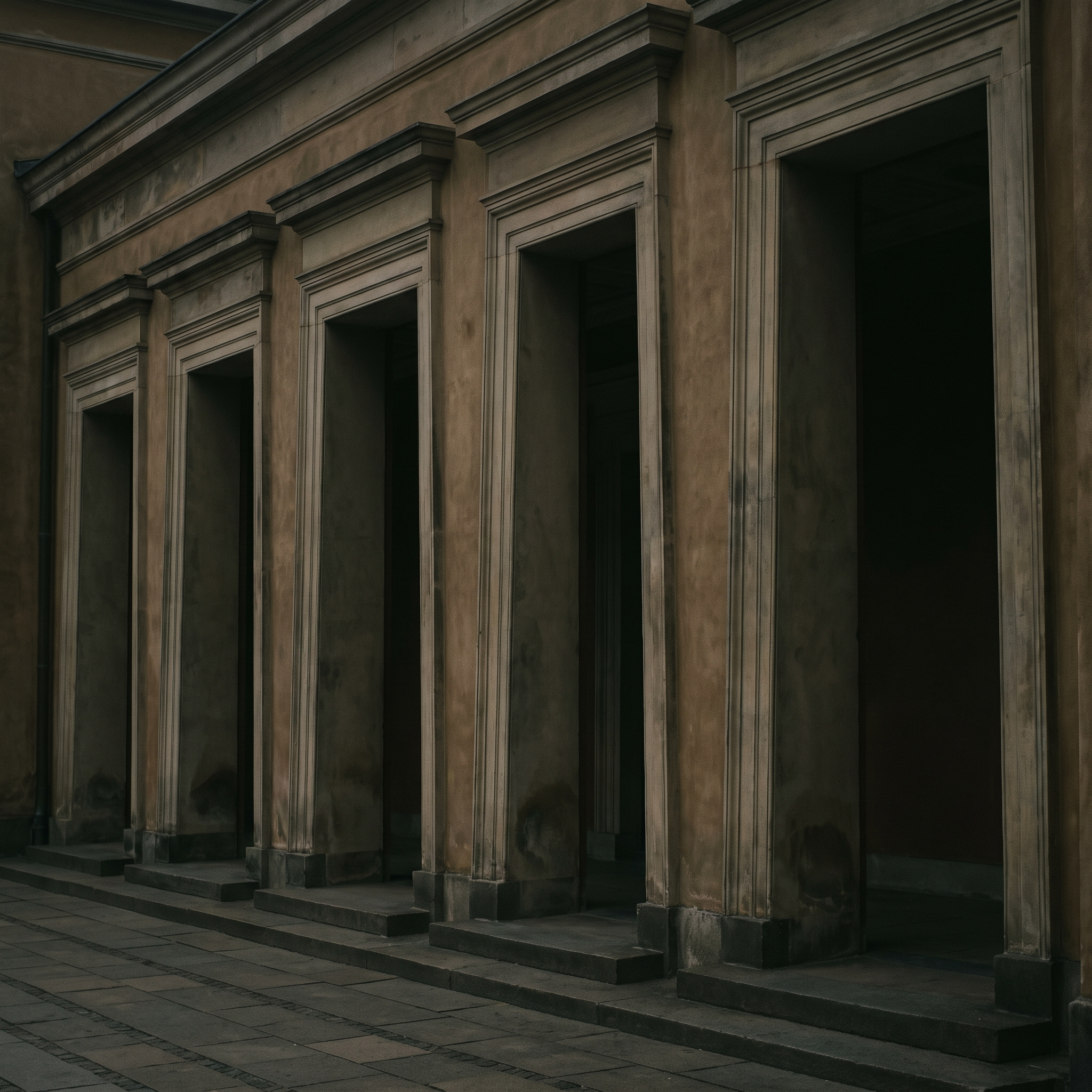
Bertel Thorvaldsen came home from Rome in 1838 having spent forty years there, and Copenhagen — by public subscription, which is the detail I keep returning to — built him this. Michael Gottlieb Bindesbøll raised it between 1839 and 1848 inside the walls of the royal carriage yard behind the Christiansborg chapel, which is why the plan is a hollow rectangle rather than anything a temple would recognise. It was Denmark's first public museum building, and it was begun for one man's work while that man was still alive to watch it go up. He did not see it finished: he died in 1844, four years short of the opening.
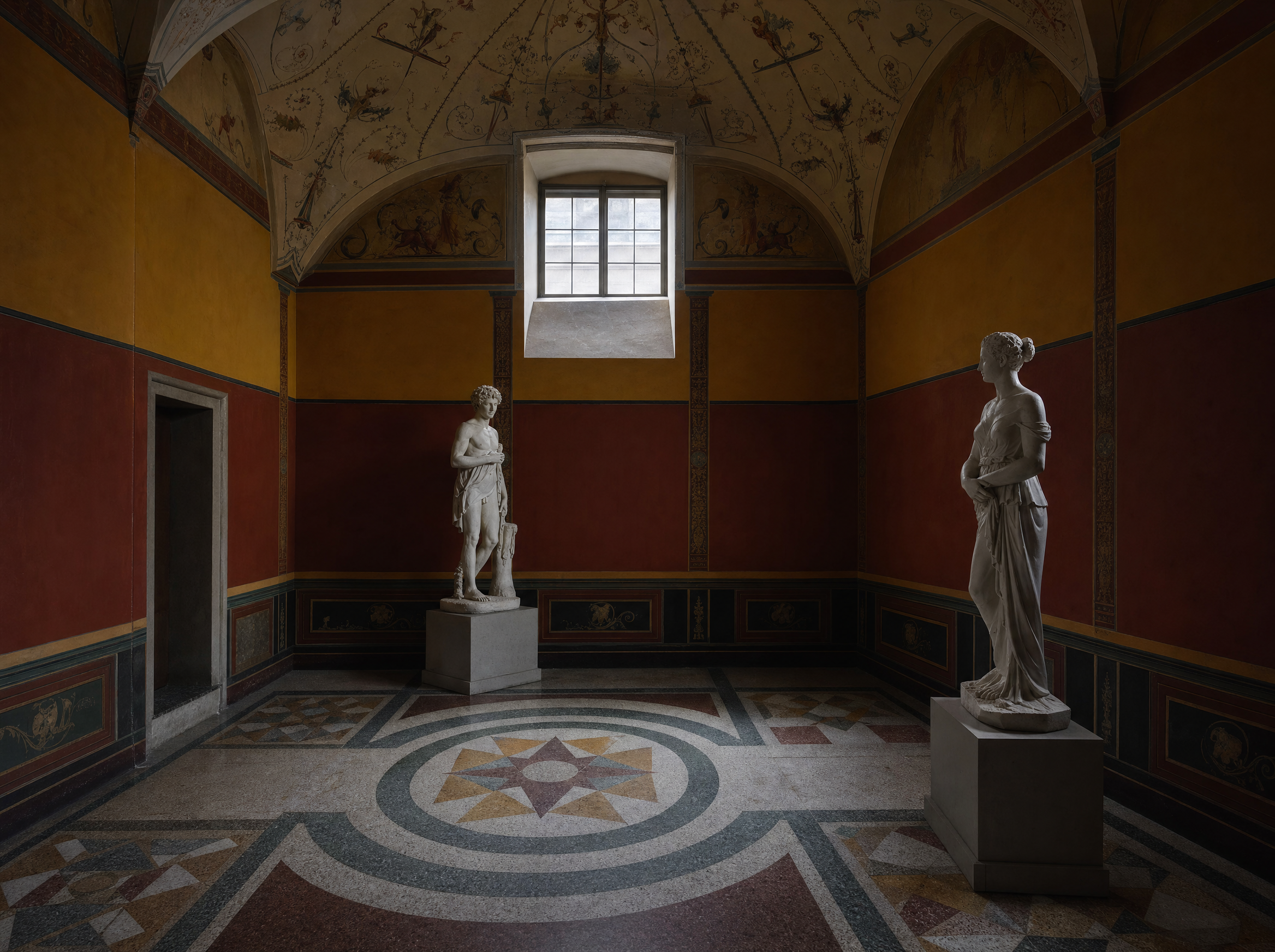
What no photograph prepares you for is the colour. Bindesbøll had been to Pompeii and Herculaneum and come back convinced that the ancients painted everything, so the outside is ochre-yellow with a long frieze by Jørgen Sonne running round it — the whole city turning out to meet Thorvaldsen's ship — and the inside is a sequence of small chambers in deep saturated reds, ochres, greens and blues, ceilings worked in Pompeian grotesque, floors laid in mosaic and terrazzo. The sculpture is white. That is the entire argument of the building and it takes about eleven seconds to understand and an hour and a half to stop enjoying.
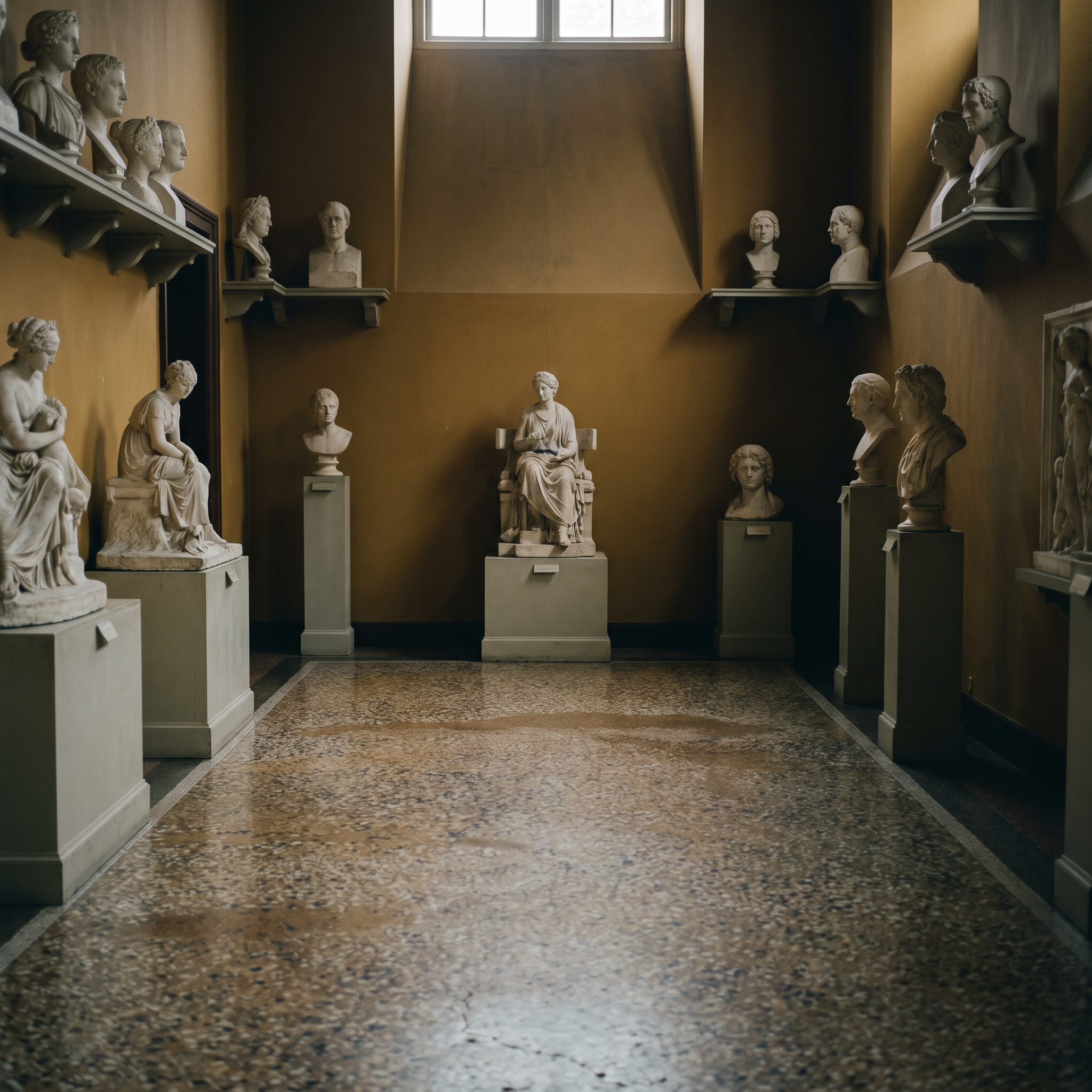
I went at opening on a July Tuesday and had the ground-floor corridor to myself for twenty minutes. Two warnings. First: it is largely plaster. These are Thorvaldsen's own models, the things the marbles were made from, and if you have come for finished masterpieces you will be briefly disappointed and then, if you are honest, more interested — you are standing in the workshop, not the drawing room. Second: do not treat the courtyard as a shortcut to the café. He is buried in it, under a plain slab, at the dead centre of his own building. Everything you walked through was arranged around that rectangle.
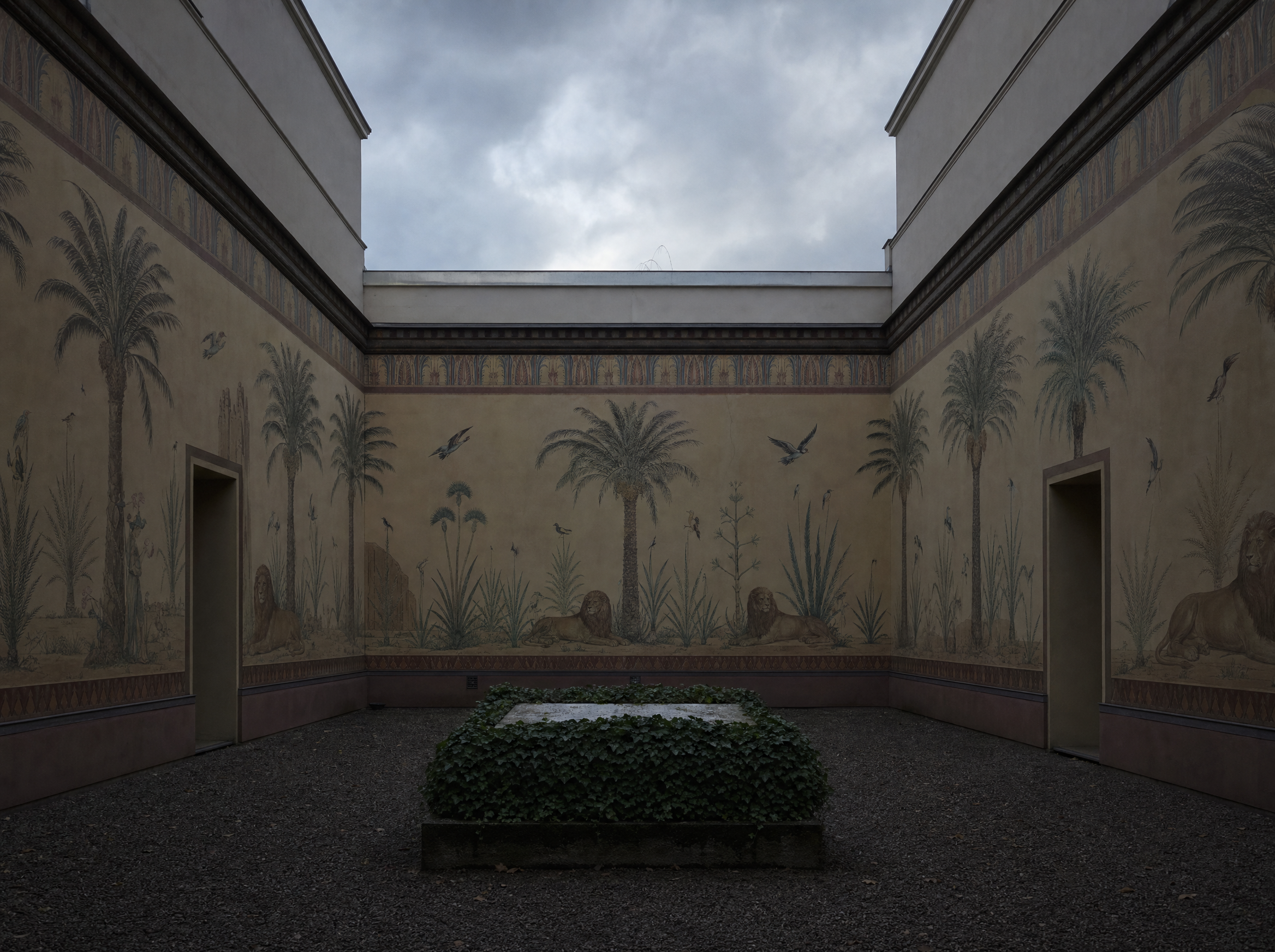
The last room has no ceiling, and he is under the floor of it.
Thorvaldsen gave the whole of his work and his own collections to the city, and in return the city built the house and let him be buried in the middle of it. He died in 1844; the museum opened in 1848; the grave in the courtyard is the joint the two halves turn on.
There is no pathos in it, which is why it lands. The slab is plain and low, the walls around it are painted with palms and lions and birds in the lightest Egyptian manner, and the whole arrangement is closer to a garden than a tomb. He was not a man arranging his grief. He was a man arranging his estate, and the arrangement happened to be beautiful.
Walk the courtyard once clockwise before you go back inside. The upper floor reads completely differently afterwards, and I do not entirely know why.