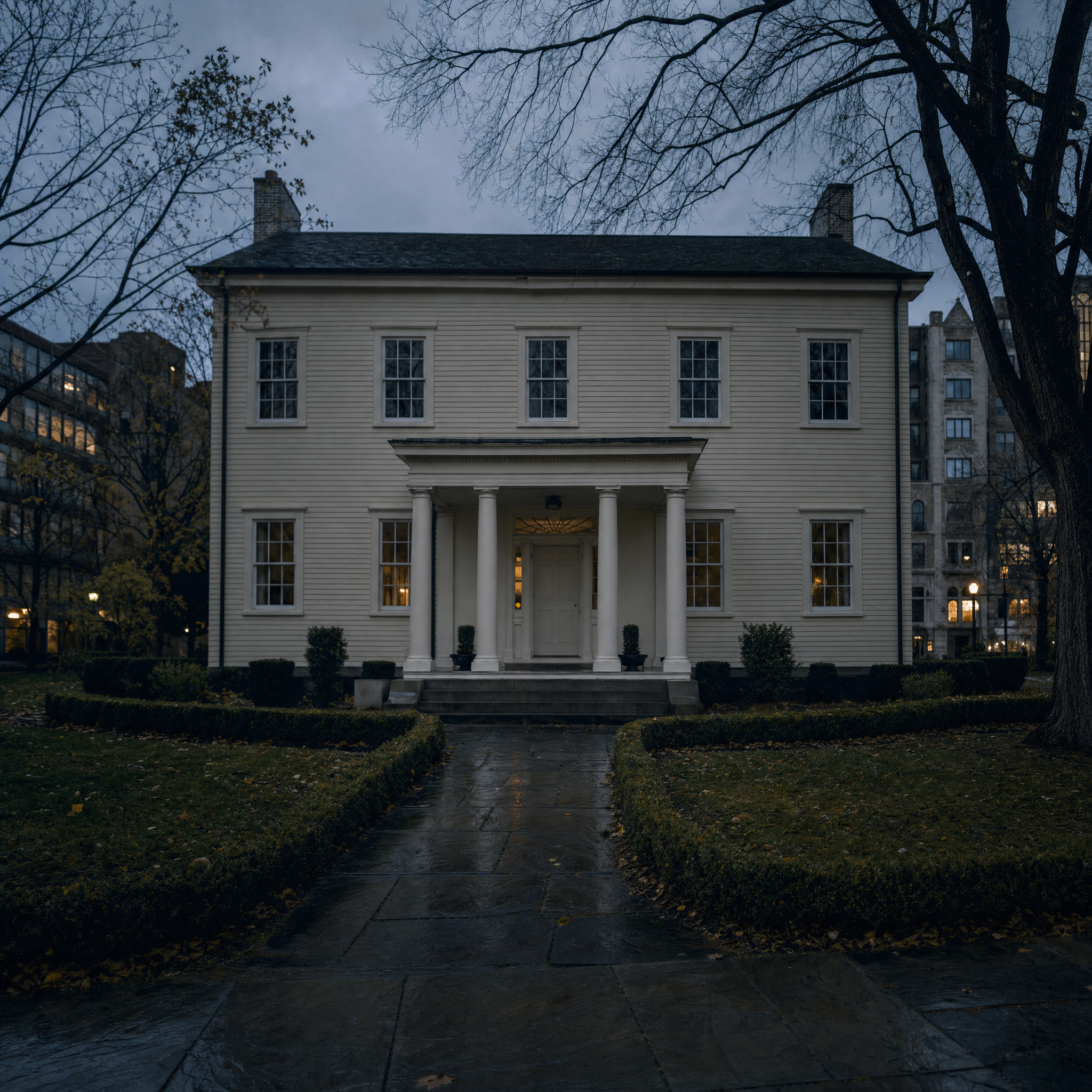
I walked up Pike Street in October fully prepared to be polite about it, and was disarmed inside four minutes. The house was built about 1820 for Martin Baum, sold in 1830 to Nicholas Longworth, and is downtown Cincinnati's oldest wooden residence still standing where it was put. That last clause is doing a great deal of work. Everything around it has been demolished twice over; the house simply declined to go.
Then you step into the entrance hall and find eight landscapes painted directly onto the plaster. Longworth commissioned them from Robert S. Duncanson, who painted them in 1851 and 1852, and who went on to become the first Black American artist with a genuine international reputation. They are not framed pictures brought in later. They are the wall. I have seen a great many painted interiors and I was not ready for the scale of these, or for how casually they are hung about with a house's ordinary business — a doorcase here, a stair rail cutting a horizon there.
The rest is Anna Sinton Taft and Charles Phelps Taft's collection, given to the city in 1927 and open since 1932: Turner, Rembrandt, Gainsborough, Goya, Whistler, Sargent, French Renaissance enamels, medieval ivories, Chinese porcelain — a little over eight hundred objects, and none of it queued for. Go on a weekday morning at opening. It is Sundays and Mondays that are free, which is worth knowing and also worth avoiding if you want the rooms to yourself.
Pictures at house height
Nothing is hung at gallery height. You meet the Turners at the height a family met them, which is a different painting entirely.
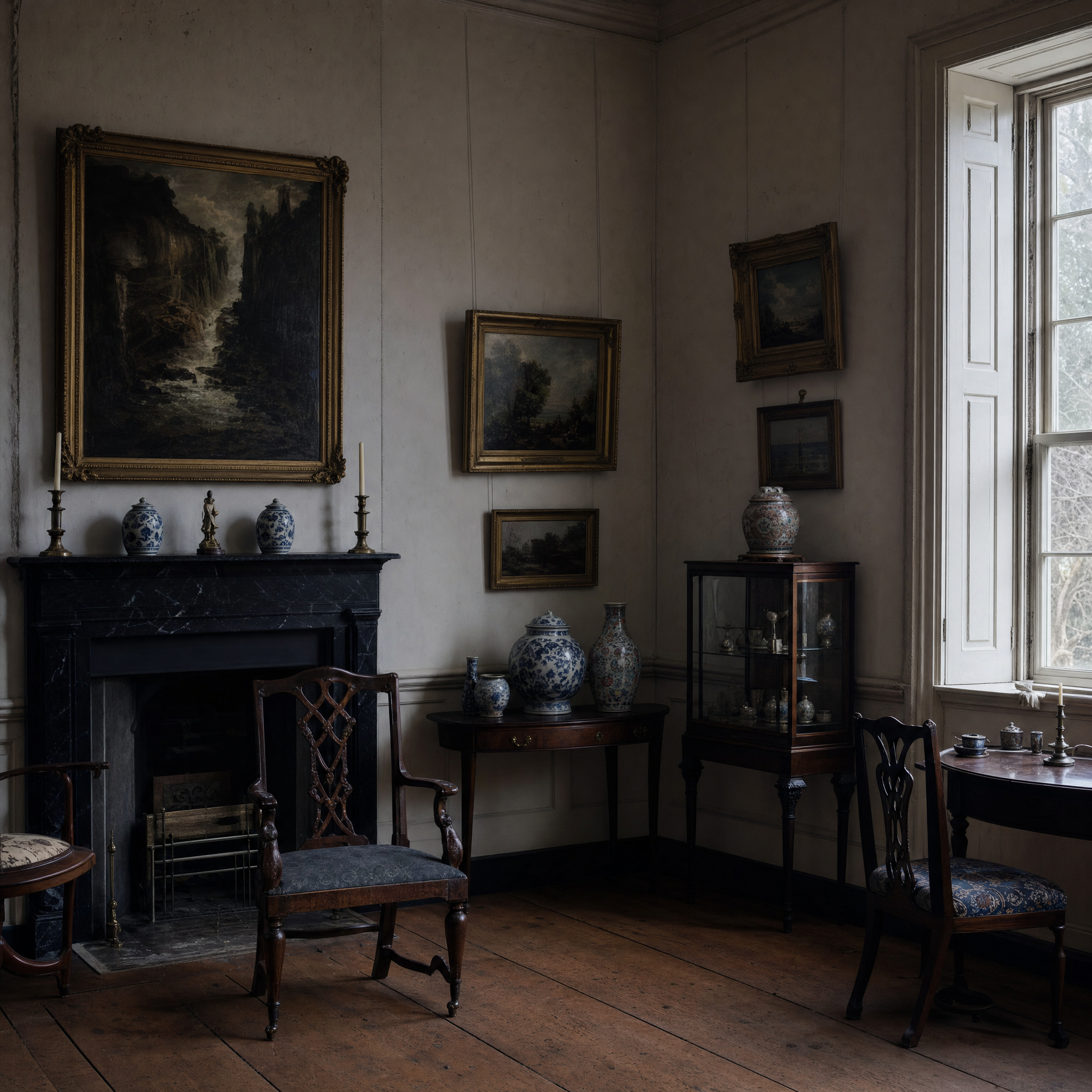
the entrance hall, 1851–52
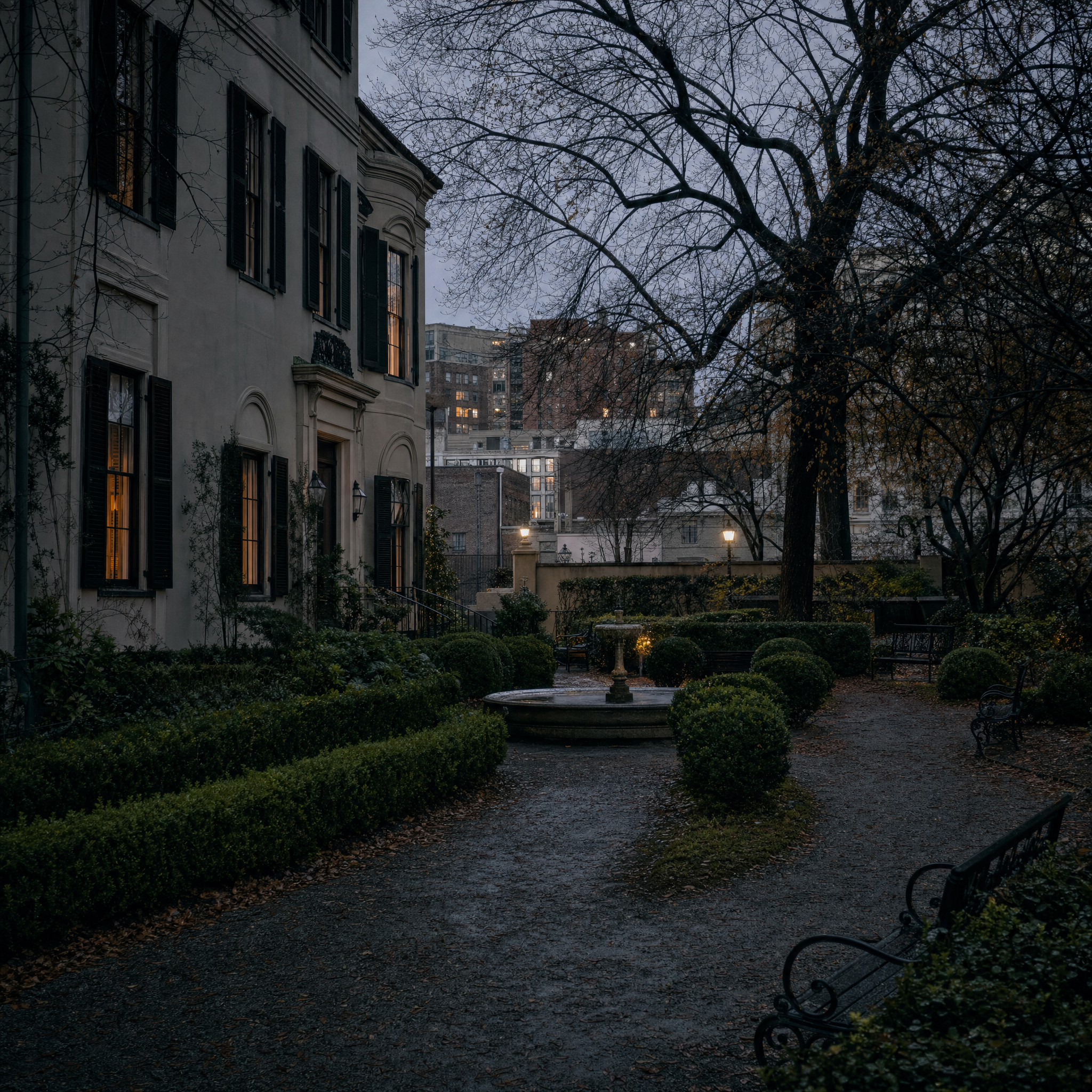
Go back to the hall on your way out, and stand in it a second time.
A free Black painter was given eight walls of a rich man's entrance hall in Cincinnati in 1851, and painted landscapes on them — in a river city a few hundred yards from a slave state, ten years before the war. The murals are now held to be the most important pre-Civil War domestic murals in the country, and in 1976 the house and the murals together were made a National Historic Landmark.
What strikes me is not the commission, which was one man's taste, but the survival. Painted walls are the first thing an owner changes. These are plaster in a wooden house in a downtown that has rebuilt itself around them for two centuries, and they are still here, and you can walk in off Pike Street and look at them.
I went round the collection first and the hall last, which was the wrong order. Do it twice instead. It costs you four minutes and it is the thing you will still be thinking about at the airport.