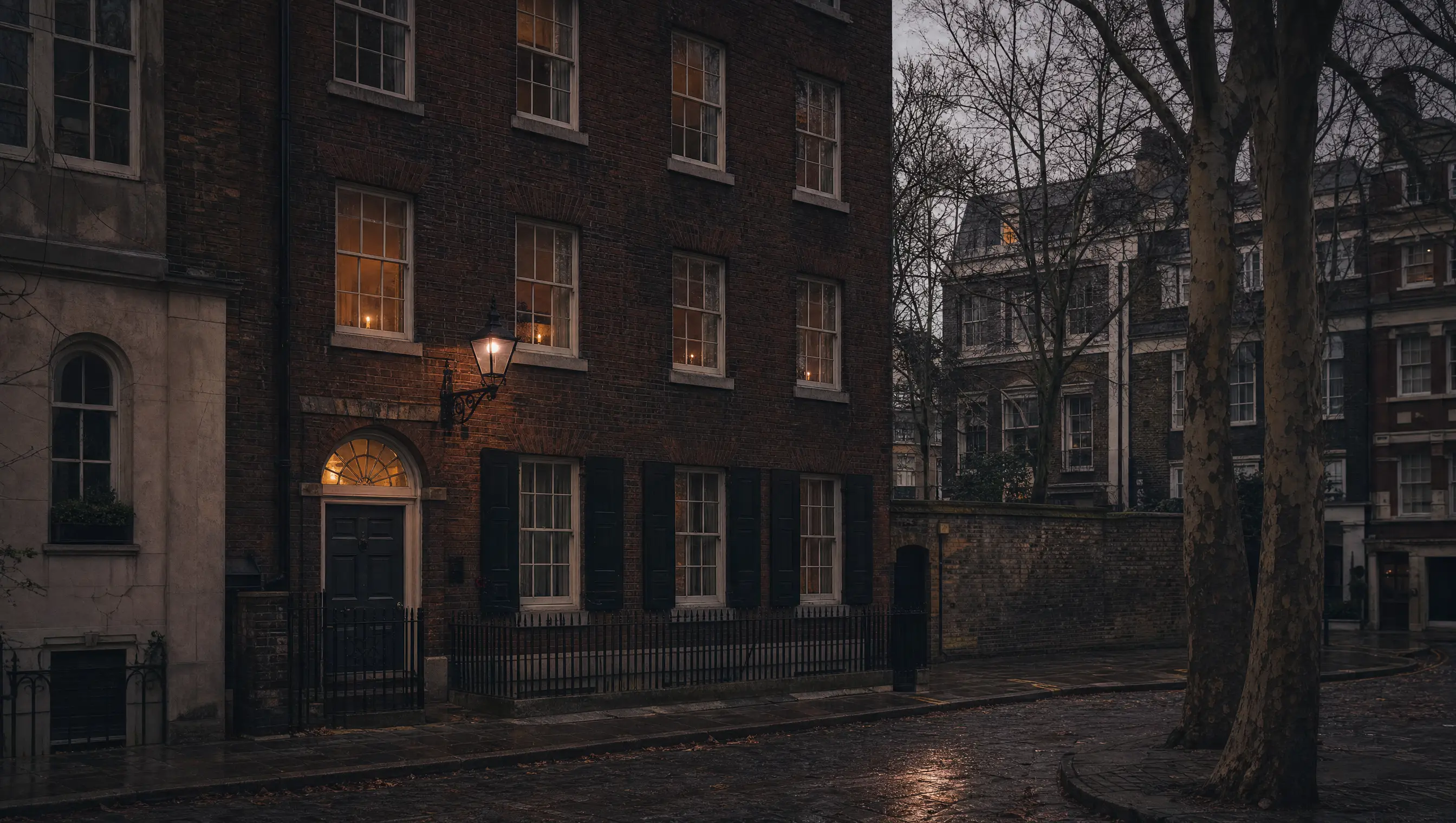
Dennis Severs bought this house in 1979, moved into it, and spent twenty years arranging ten rooms around a family who never existed. The Jervises are Huguenot silk weavers, and the house carries them from 1725 to 1919 as you climb — cellar upward, poverty to prosperity and down again into poverty, one storey per generation. He left it in 1999. The Spitalfields Trust keeps it, and keeps it exactly as difficult as he intended.
The rule is silence, and the rule is the whole thing. Nothing is roped, nothing is labelled, and nobody explains. What you get instead is a fire that has just been banked, a chair pushed back, tea going cold, a chamber pot, cloves, and clocks. The conceit is that the family has stepped into the next room and you have arrived a half-minute too late — and it holds, absolutely, right up until somebody in your party whispers something clever. Then it is a set. I have watched it collapse for other people and it does not come back.
Go in the dark. The evening visit, by candle, in winter, is the version worth the journey; the daytime one is the same house with the trick showing. Book ahead — entry is staggered and the rooms only take a few people at a time — and go alone, or with somebody who can be trusted not to narrate. Afterwards do not go straight to dinner. Walk east for ten minutes first and let it come off you.
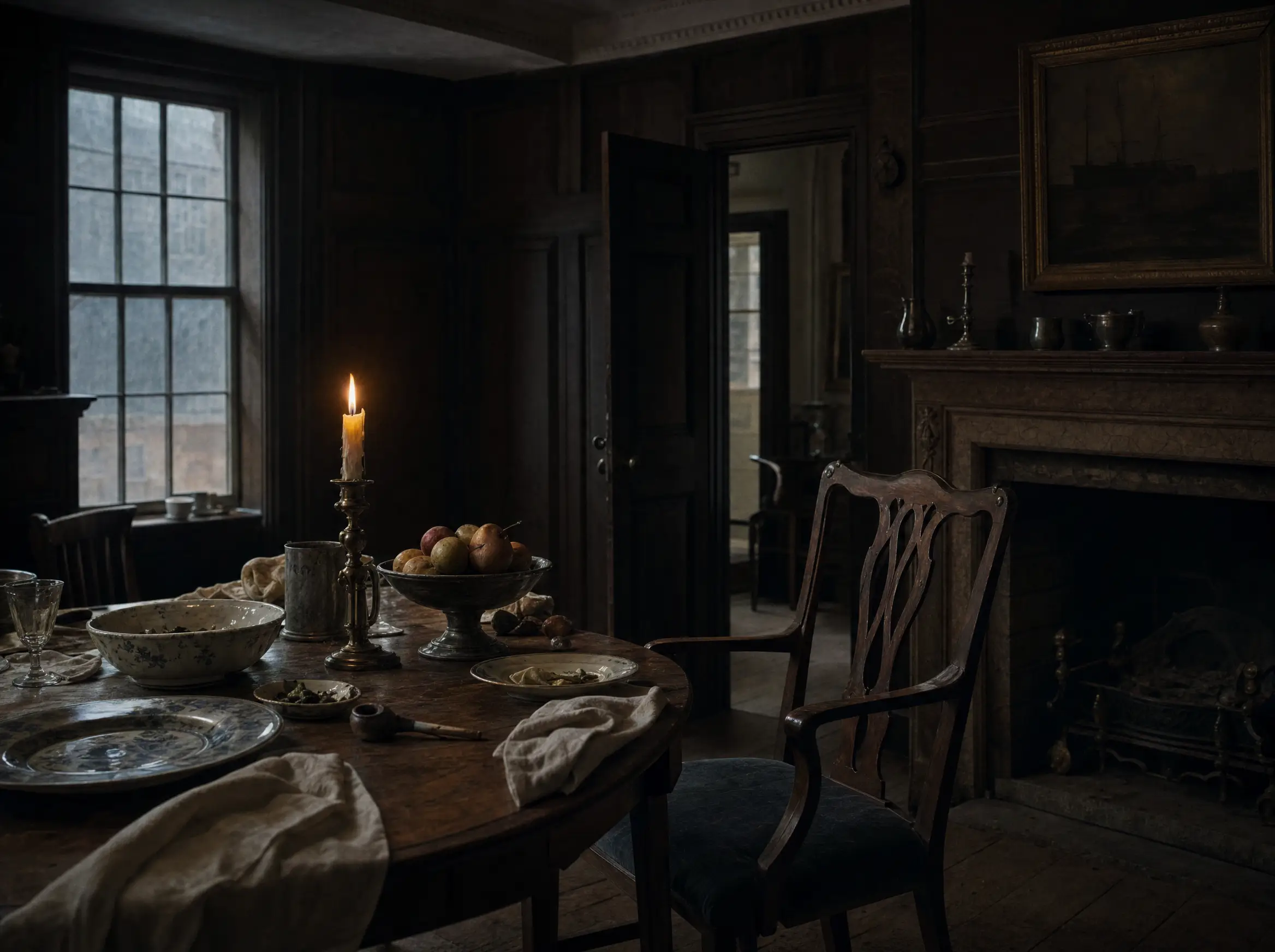
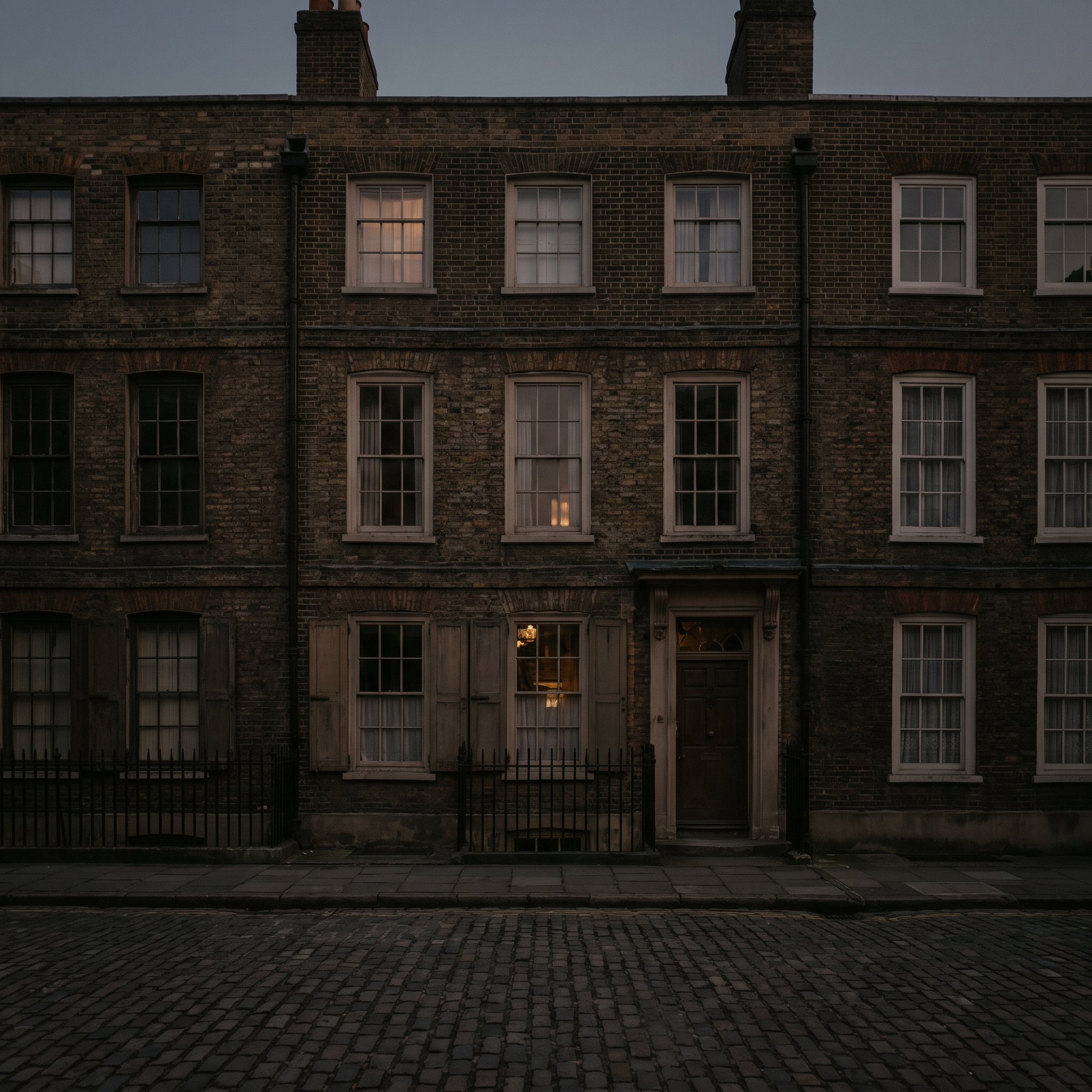
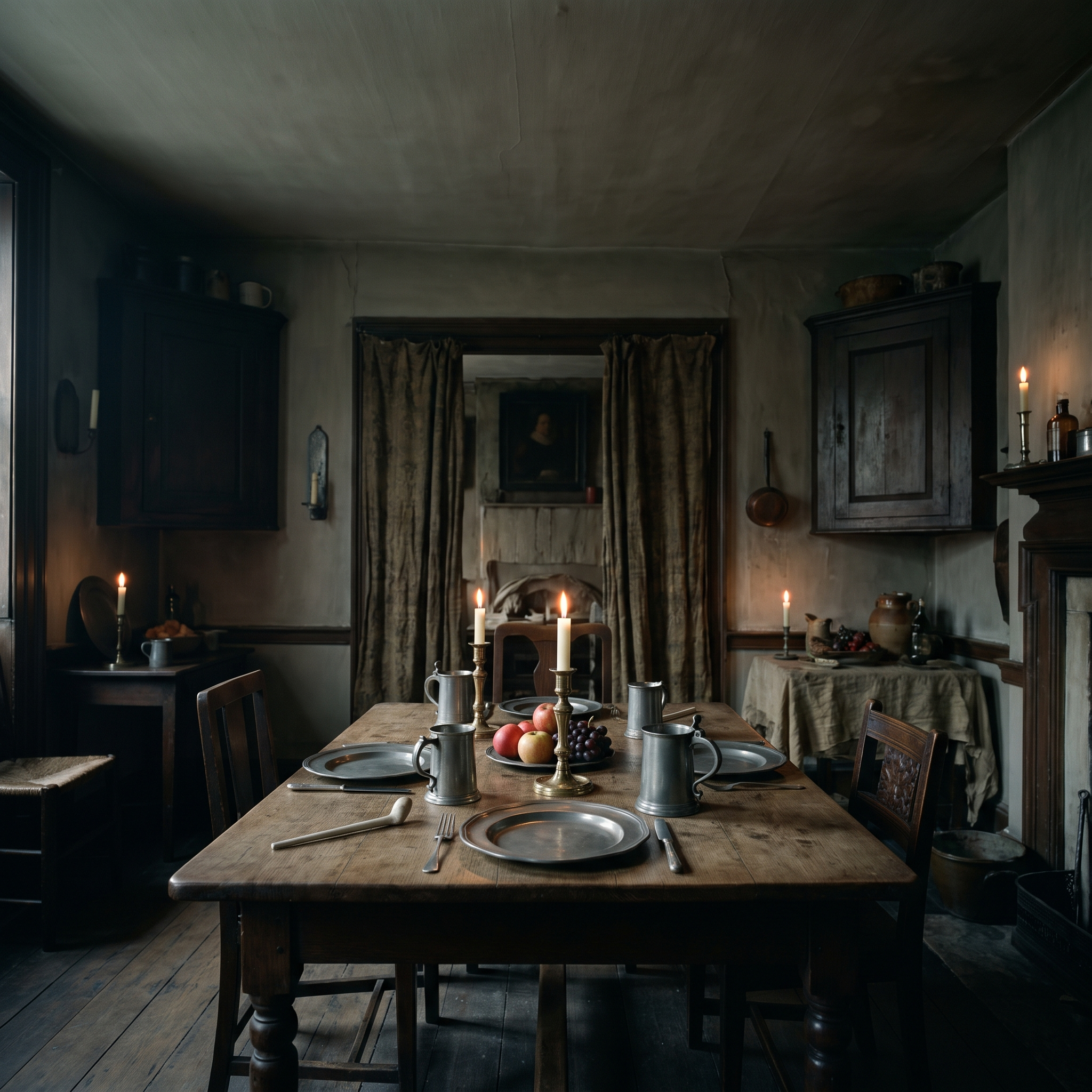
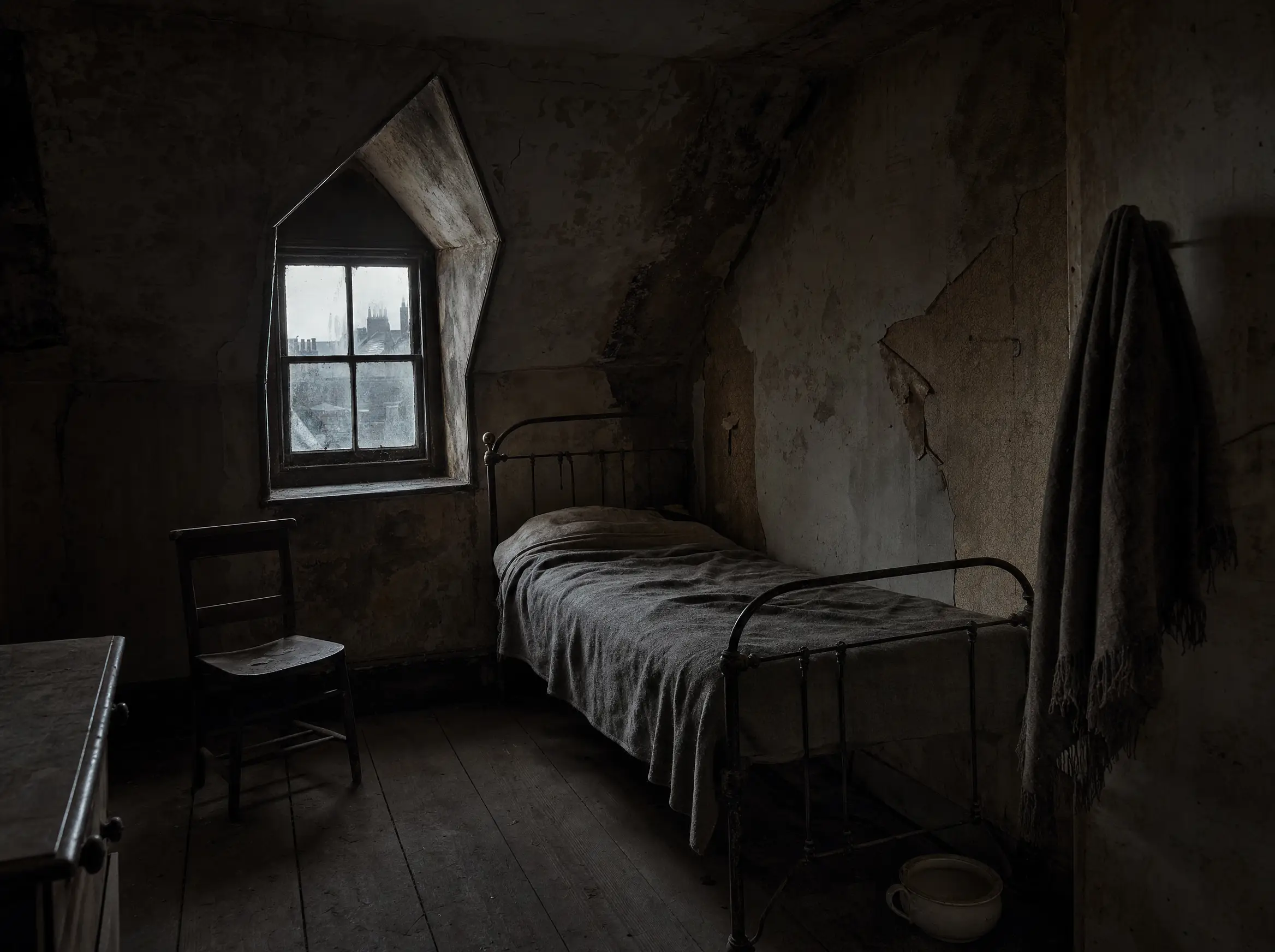
The climb ends badly on purpose, and the house has been telling you so since the cellar.
The top of the house is the nineteenth century, and it is squalid. Damp plaster, a bedstead, cold light through dirty glass. Severs did not soften it; he is said to have used smell deliberately up there, and the effect is that you arrive in the worst room of the house tired, having climbed four floors to get there.
That is the argument. Prosperity was a phase, not an inheritance. The same family, the same walls, and by the end of it the silk trade is gone and the rooms have been let out to whoever will take them. Nothing in the house says this. You are simply made to walk it.
I have never once managed to speak on the stairs coming down. There is nothing to say, and that is the point of the rule.