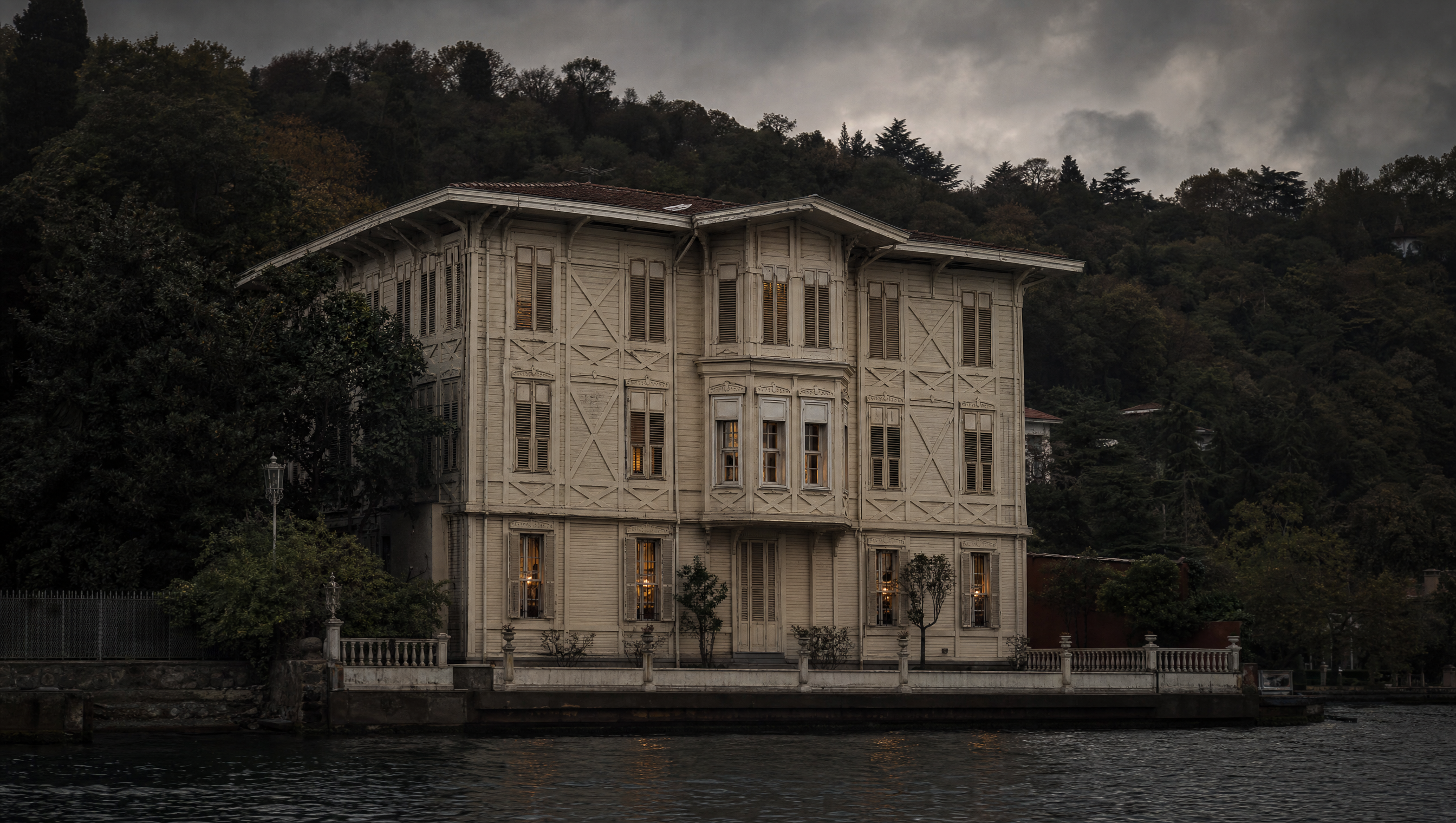
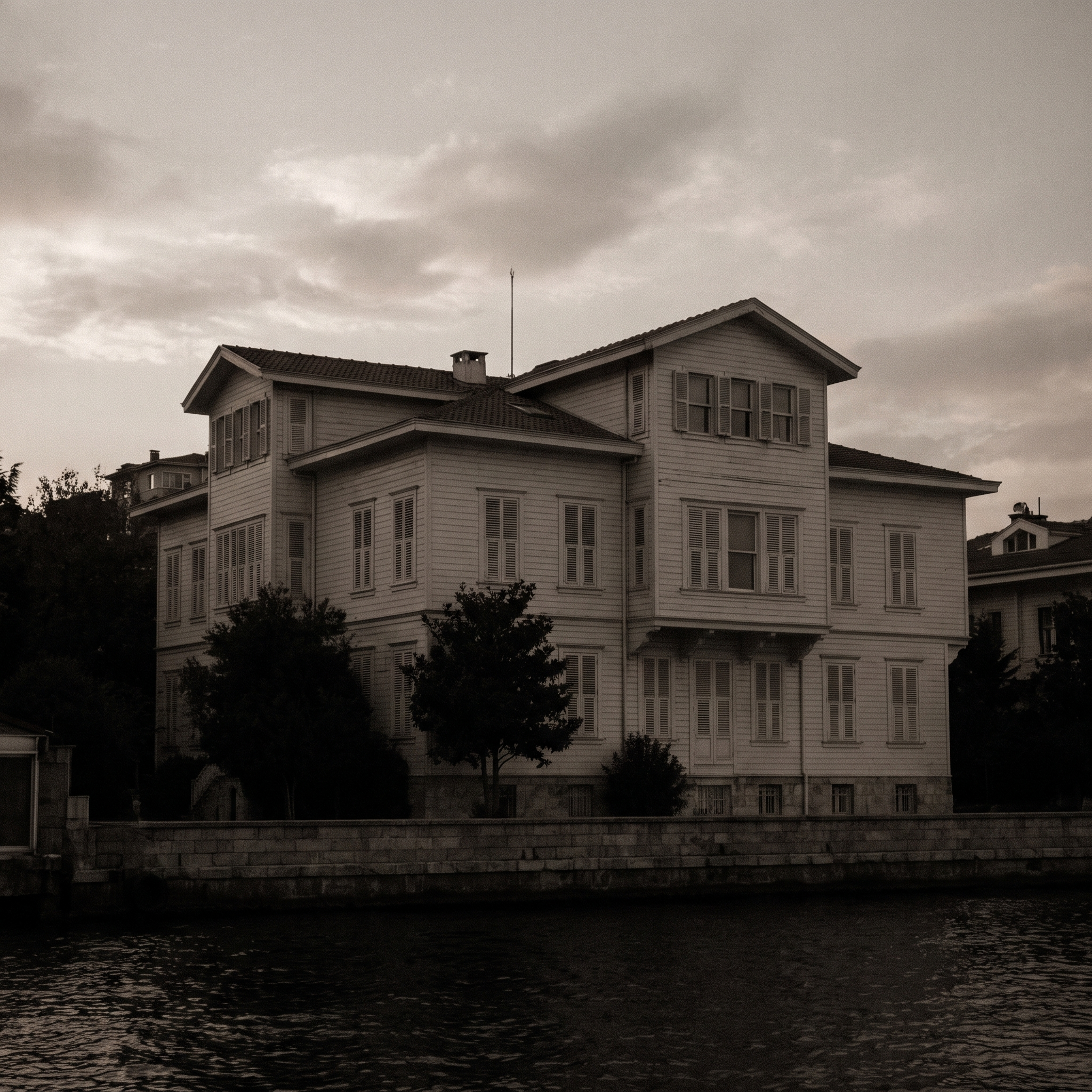
The building is a late nineteenth-century timber yalı that the Azaryan family put on the water at Büyükdere, and which the Koç family bought in 1950 as a summer house. Locals called it the threaded yalı for the crossed wooden mouldings laid across its face like stitching, which is either the best coincidence in Istanbul or the reason the collection ended up here. Sedat Hakkı Eldem turned it into a museum between 1978 and 1980. It opened in October 1980 as the first private museum in Turkey, and it still behaves like a house that has agreed to receive visitors rather than a museum that has borrowed a house.
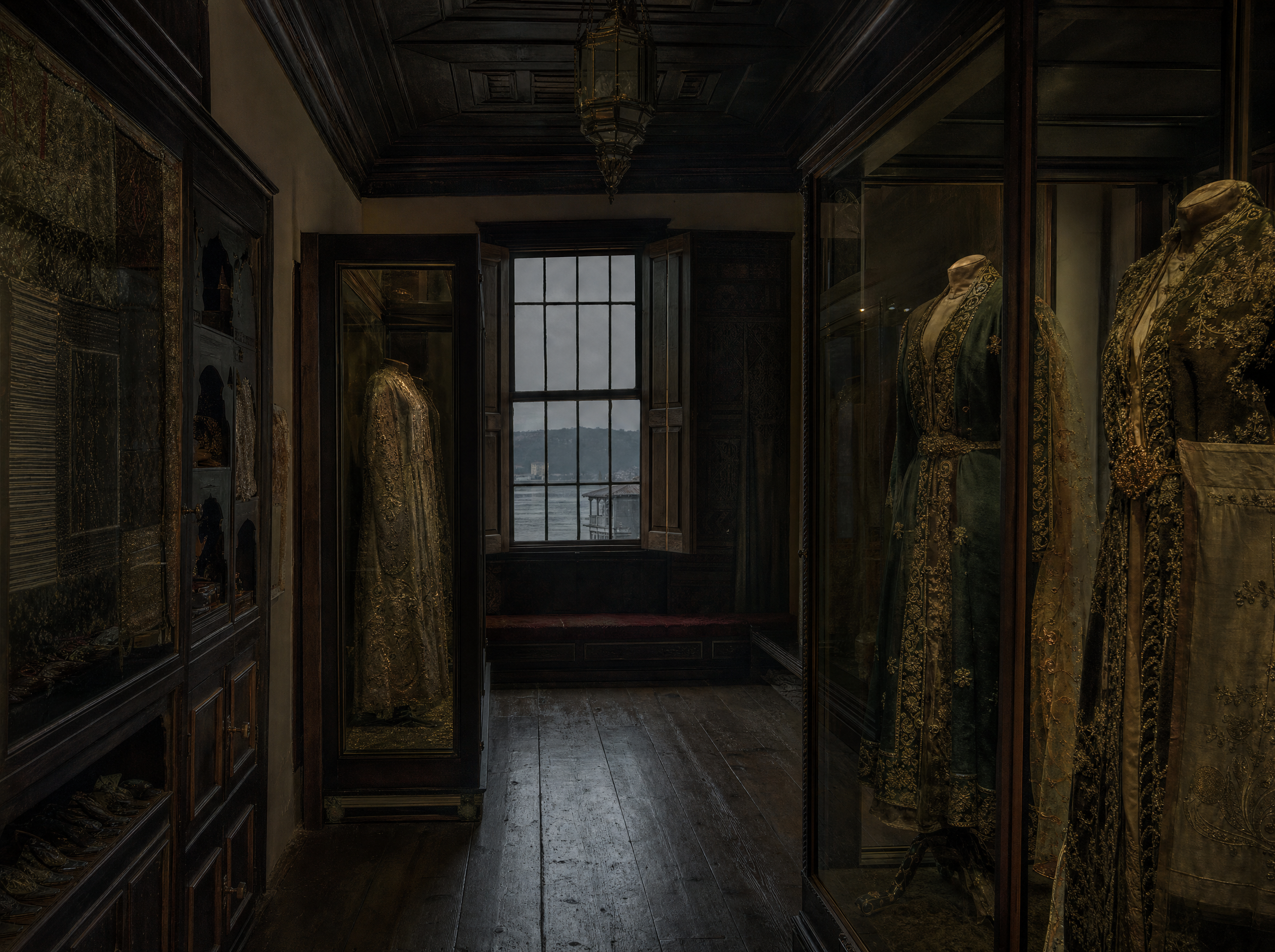
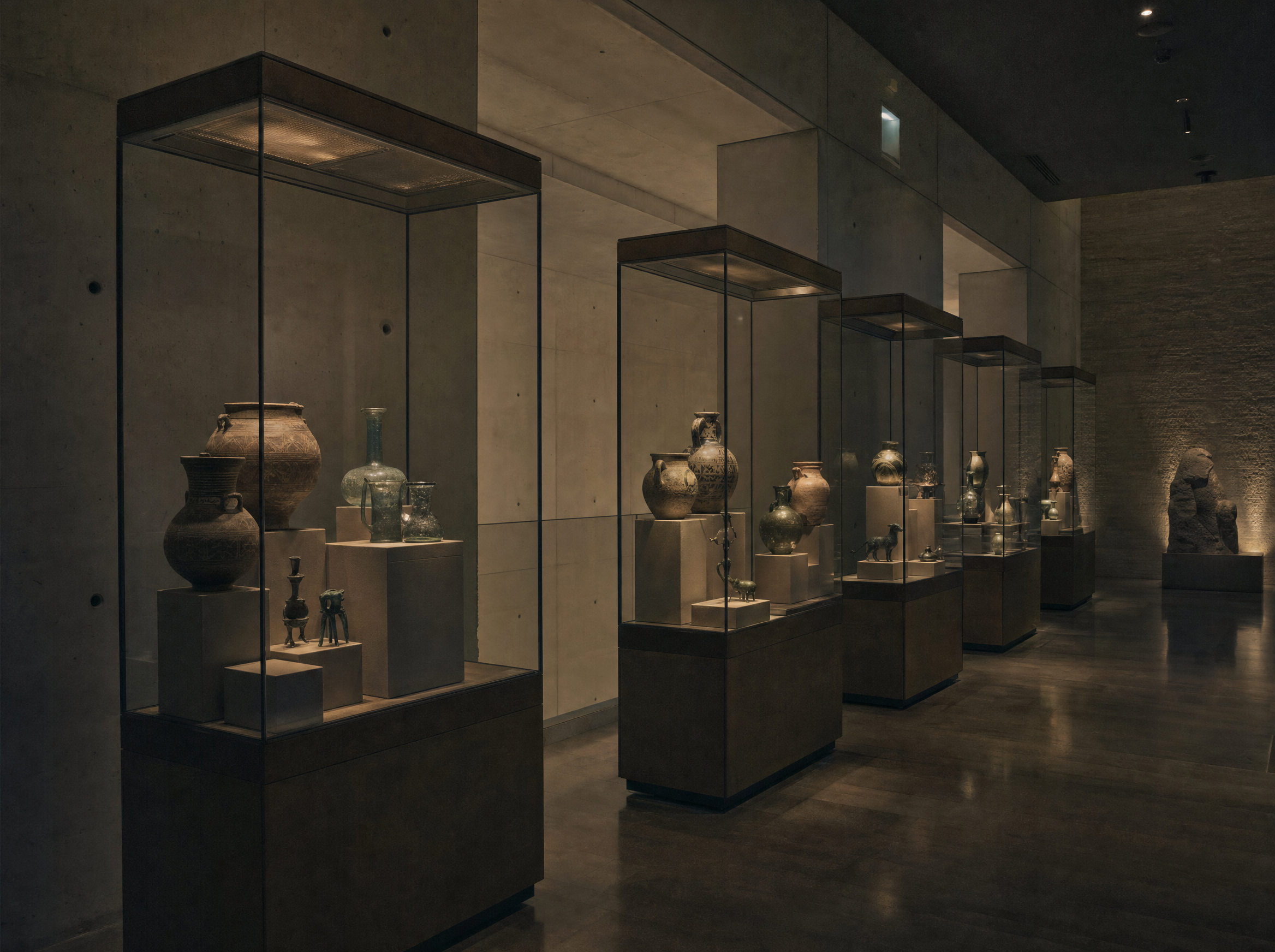
Upstairs in the yalı is Sadberk Koç's own subject — embroidery, needlework, ceremonial costume, the domestic Ottoman world assembled by a woman who cared about it before anybody was calling it a field. Next door, in the Sevgi Gönül building of 1988, is an entirely different museum: the Hüseyin Kocabaş archaeology, laid out in strict chronological order from Anatolian prehistory forward, in concrete and vitrines. Two collections, two temperaments, one ticket. Most people do the archaeology first because it is nearer the door. I would not.
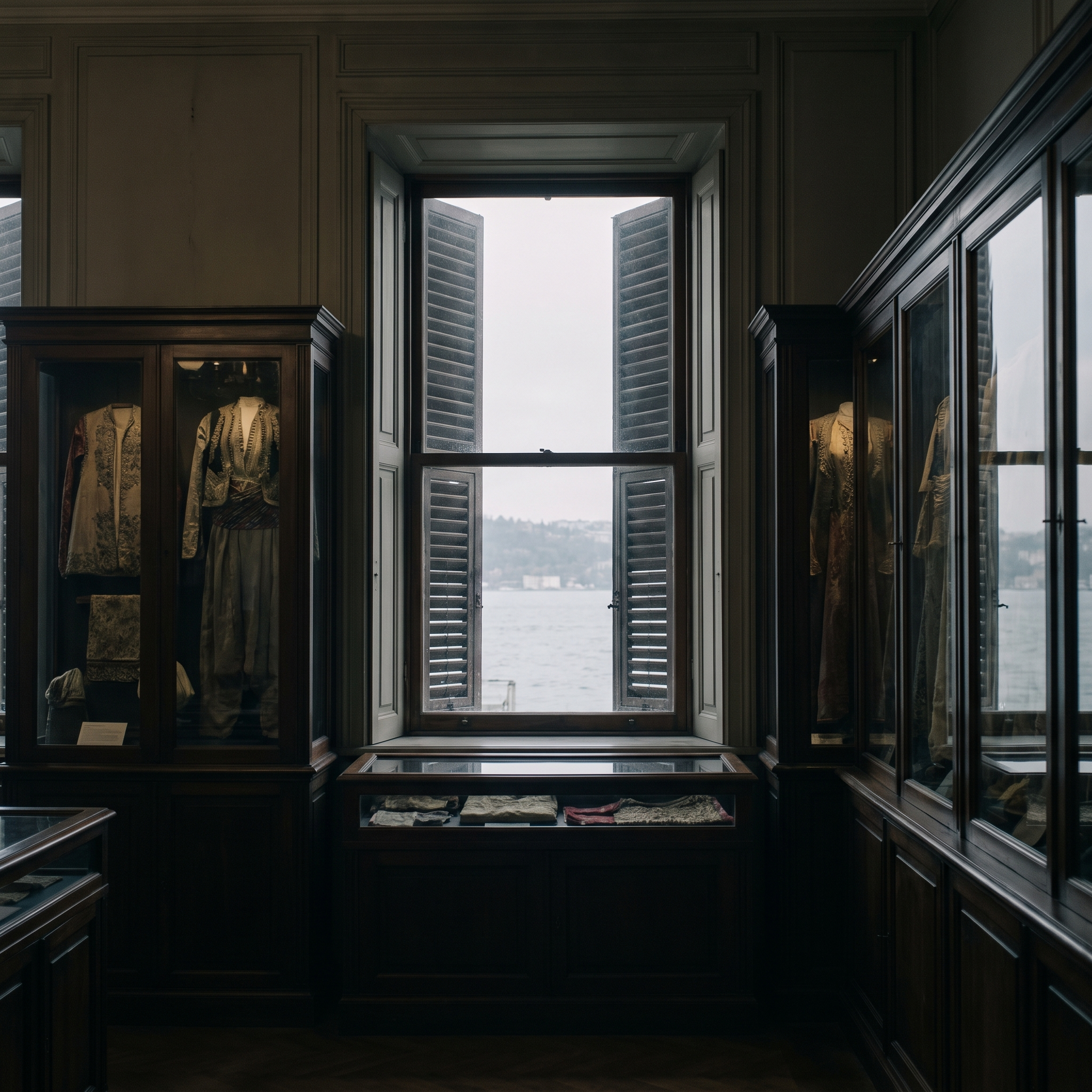
I came up in October, on the boat, on a grey morning, and the visit was over in ninety minutes and took the whole day, which is the correct ratio. The rooms in the yalı face the strait; the light comes off the water and moves across the cases while you are trying to look into them, and twice I stopped looking at the linen and looked out of the window instead. That is not a failure of the museum. It is the reason to come here rather than to a gallery in the old city that has no water in it.
She did not live to see it. Wanting it was enough to get it built.
Sadberk Koç died in November 1973. A museum bearing her name was, by the family's account, among the things she had most wanted, and seven years later her husband put her own collection into the summer house they had bought on the Bosphorus and opened it to anyone who could get up the strait.
The extension of 1988 is named for her daughter, Sevgi Gönül. So the plan of the site is a small family diagram: the mother's house, the daughter's building, and a door cut between them. You can walk from one to the other in four paces and cross about a century doing it.
I like that the memorial is not a portrait or a plaque but a subject — embroidery, the least grand of the decorative arts and the one most reliably made by women whose names went unrecorded. Hers did not. That is the whole argument of the place, and it is made without raising its voice.