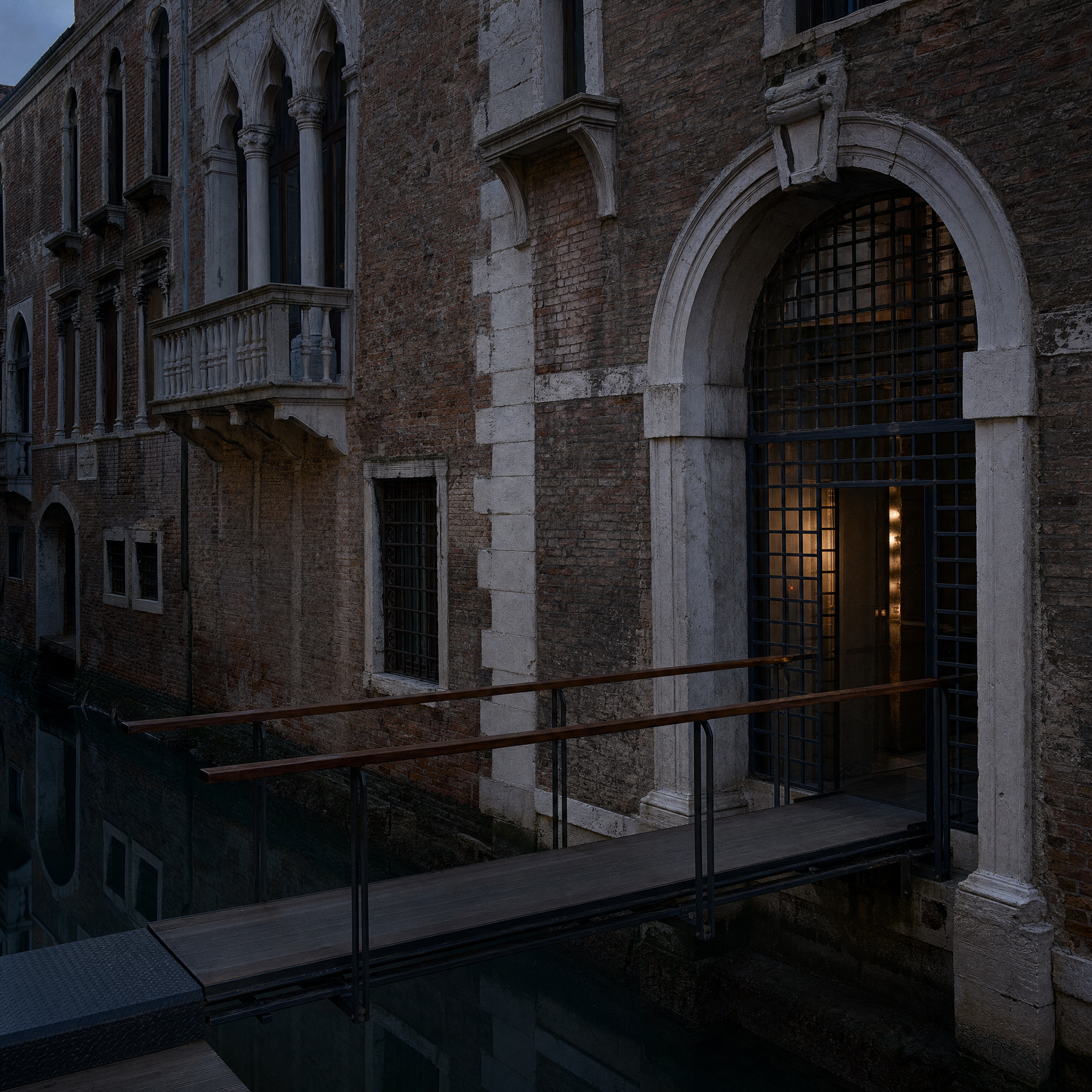
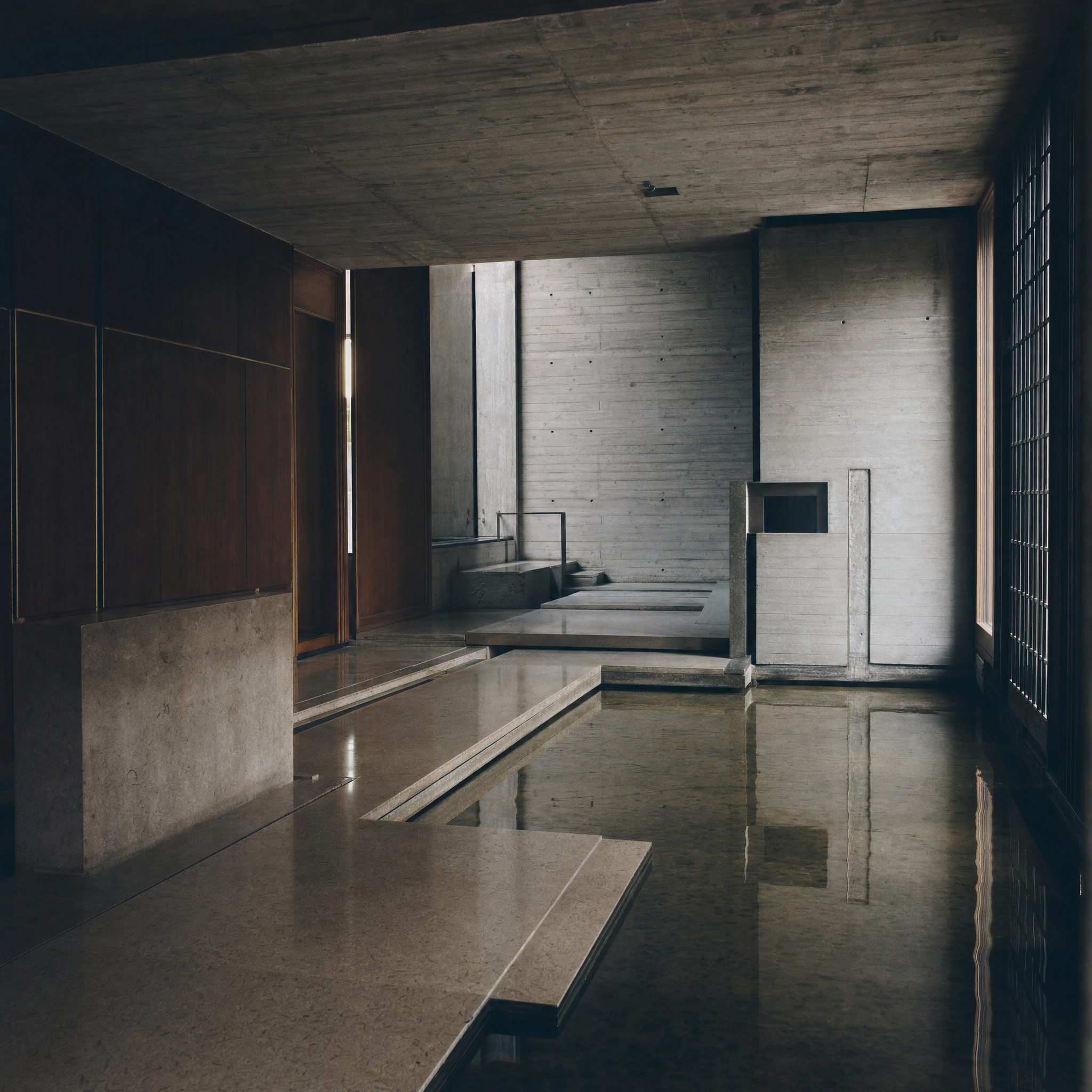
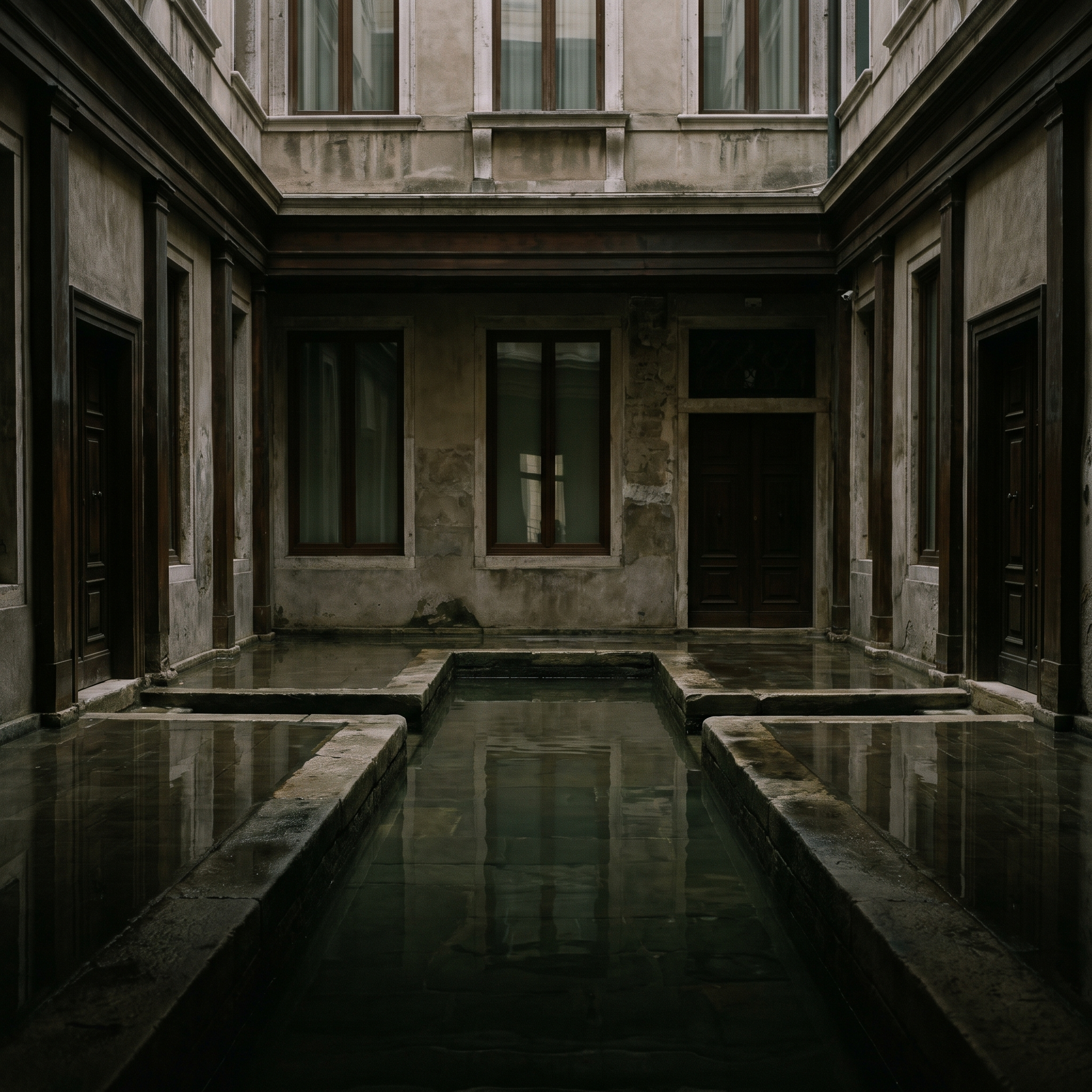
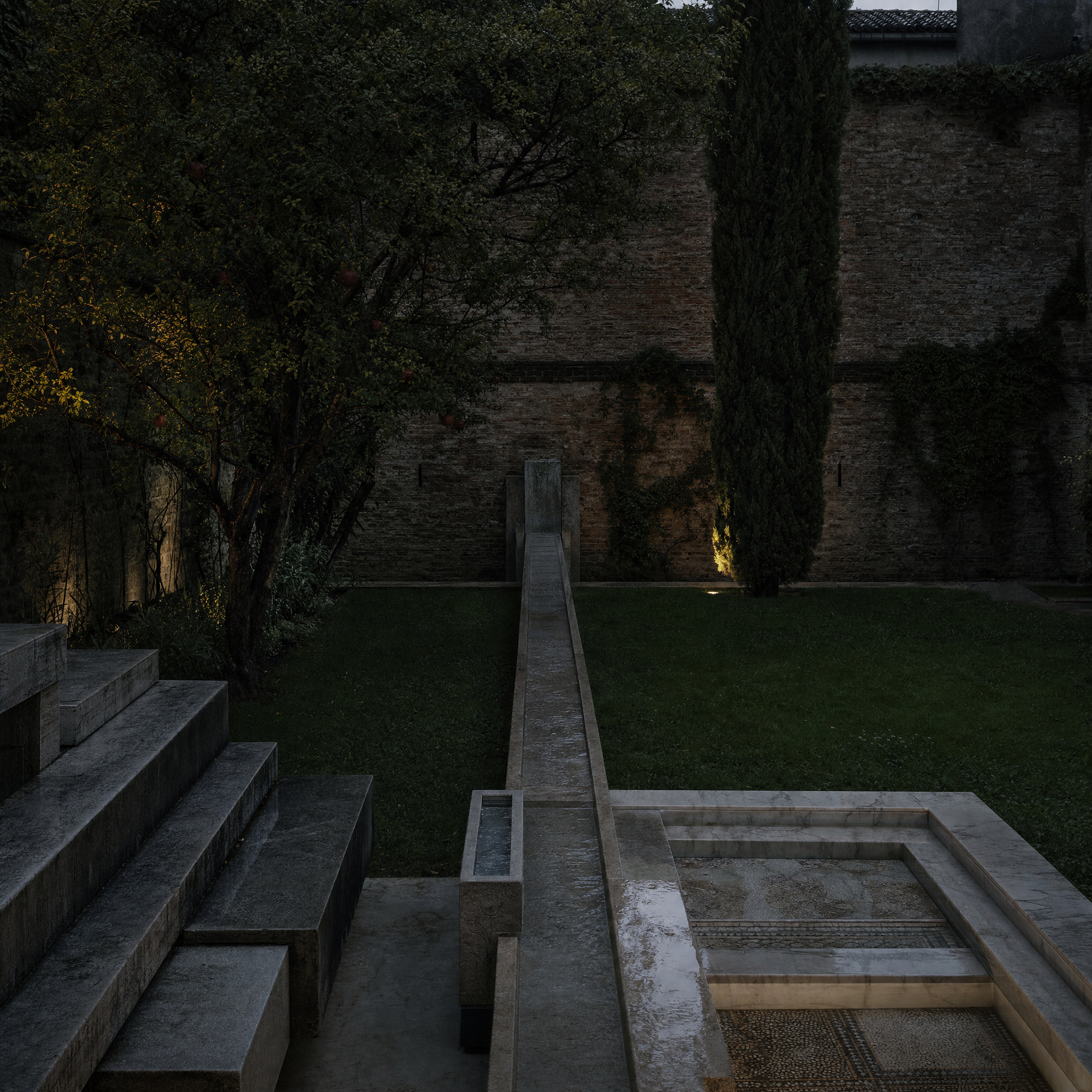
Every other ground floor in Venice is engaged in a losing argument with the lagoon: pumped, sandbagged, boarded, abandoned to the damp. At Querini Stampalia the argument was simply dropped. When Carlo Scarpa was given the ground floor at the end of the 1950s he built it to be flooded — stone channels, raised walkways, a shallow basin, board-marked concrete and teak that were never going to mind — and the acqua alta comes in through the water gate as a guest rather than a burglar. It is the calmest room in the city, and almost everybody crosses it in ninety seconds on the way upstairs to the pictures.
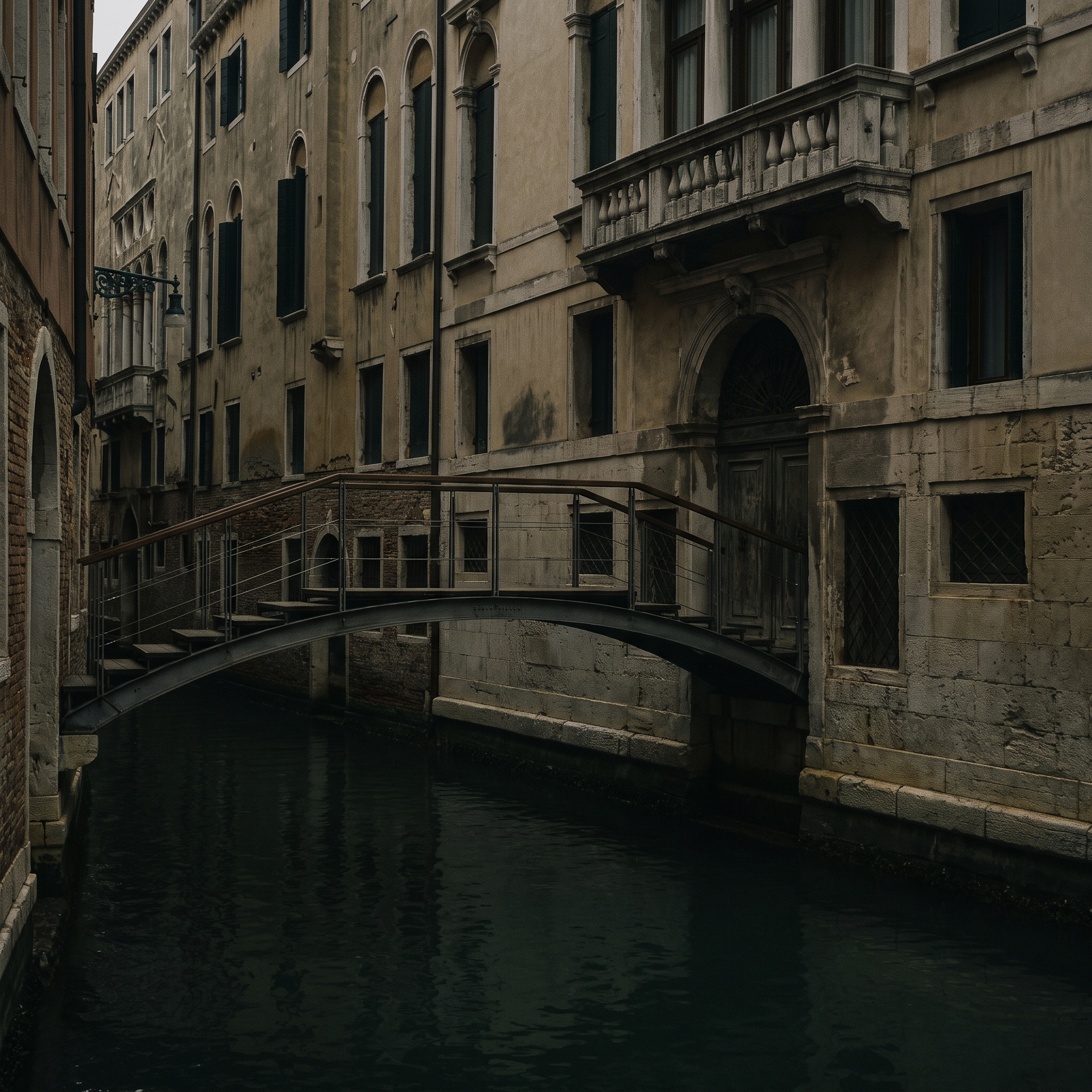
Do not do that. Sit down. The detailing rewards a long look and gives nothing at all to a quick one: brass held a few millimetres off stone so that a shadow does the joining, a step that lands you facing the water rather than the door, a small bridge outside that is the only new bridge in Venice I have ever seen improve the view it crosses. Then go up, where the house resumes being an eighteenth-century Venetian house — stucco, chandeliers, a floor that gives slightly — and the temperature changes completely.
Upstairs the pictures are not the famous kind and are better for it. Gabriel Bella painted sixty-odd scenes of Venetians doing ordinary official things — voting, processing, watching, queuing — which is to say he painted the machinery of a republic at eye level, and no other room in Venice tells you as plainly what the place was for. Pietro Longhi is there too, and a Bellini, and the library below has been open in the evenings since 1869 because the man who left the house said it must be. I went in November, when the light goes at four and the ground floor was an inch under.
He was the last of the family, and he left the house open at night.
Count Giovanni Querini Stampalia was the end of his line. In 1869 the house, the pictures and the books passed to a foundation in his name, with an instruction attached: the library was to be open in the hours when the other libraries of Venice were shut — evenings, and Sundays.
It is a small clause and an unusually exact piece of generosity. It assumes a reader who works in the day. A hundred and fifty years on, the reading rooms still keep those hours, and on a wet Sunday evening they are full of people using them for precisely the reason he intended.
Most bequests preserve a room. This one preserved a habit, which is much harder, and I would rather be left a habit.