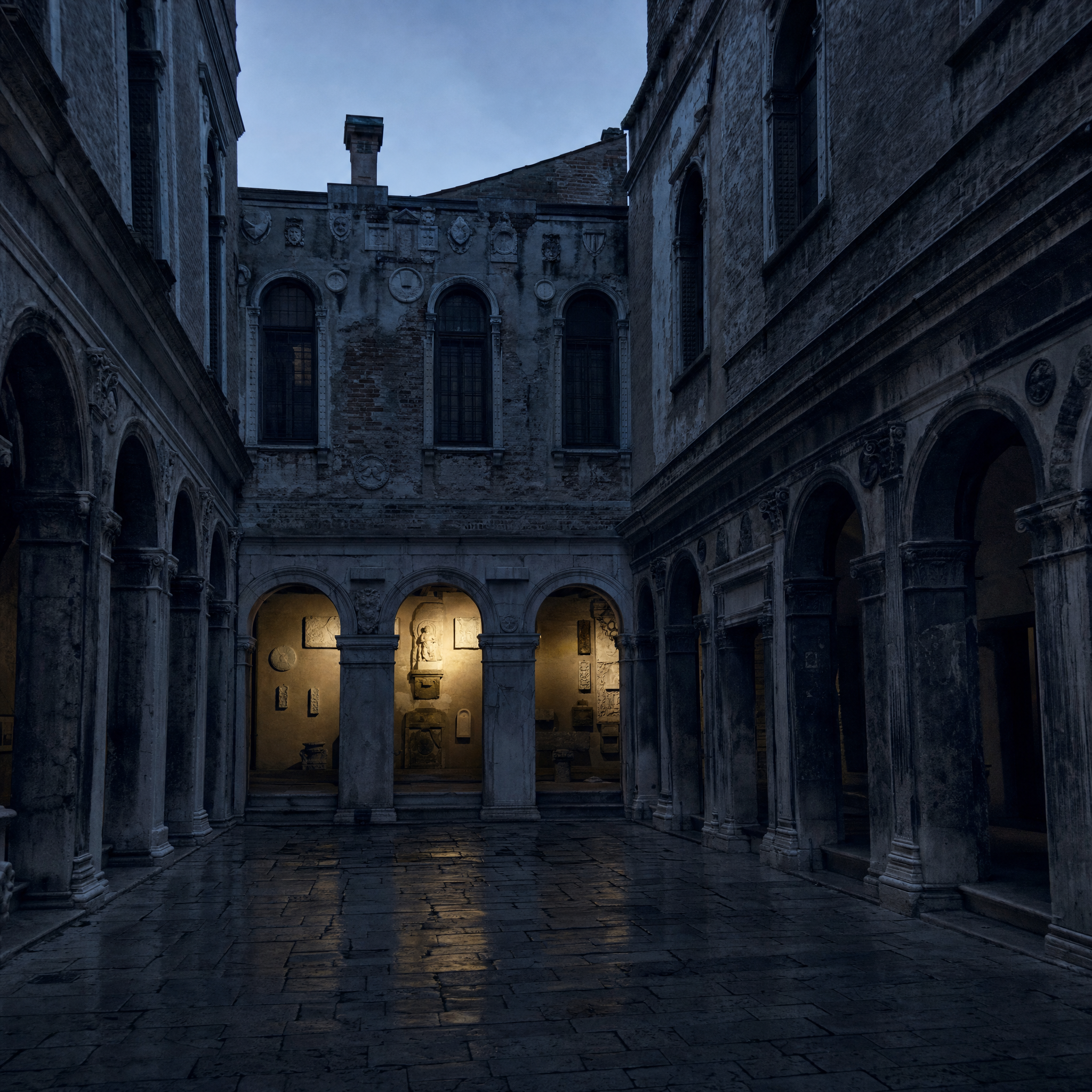
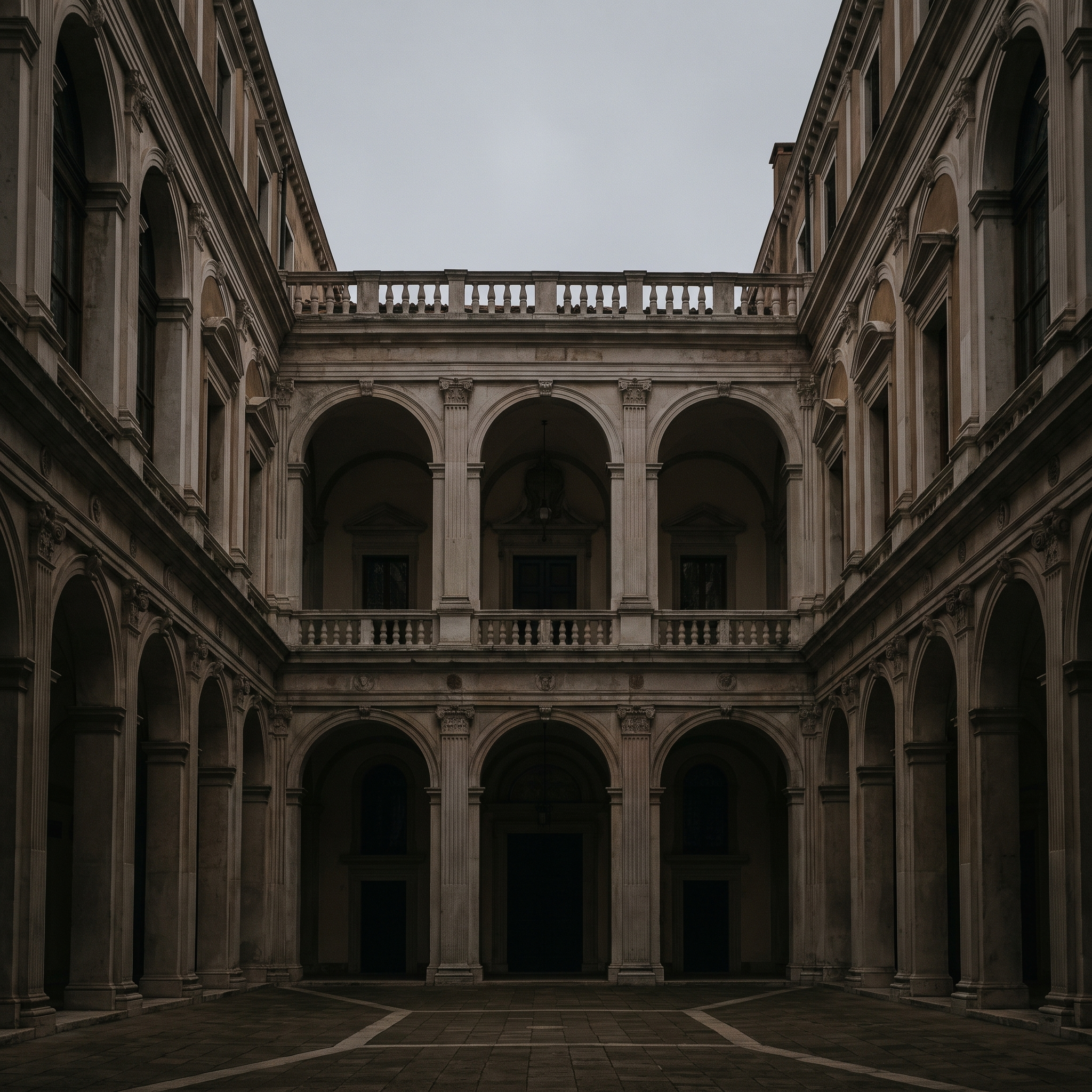
You come in off a lane so narrow you will walk past it twice, and the first thing that happens is a courtyard open to the sky — square, classical, faced in pale stone, with Roman fragments set into the walls. In Venice that is an act of defiance. Venetian palaces face the water and turn their arithmetic outward; this one turns inward and behaves like a house in Rome. Vettore and Giovanni Grimani rebuilt it that way in the fifteen-thirties and forties, and they meant it as a statement about where they thought civilisation had come from.
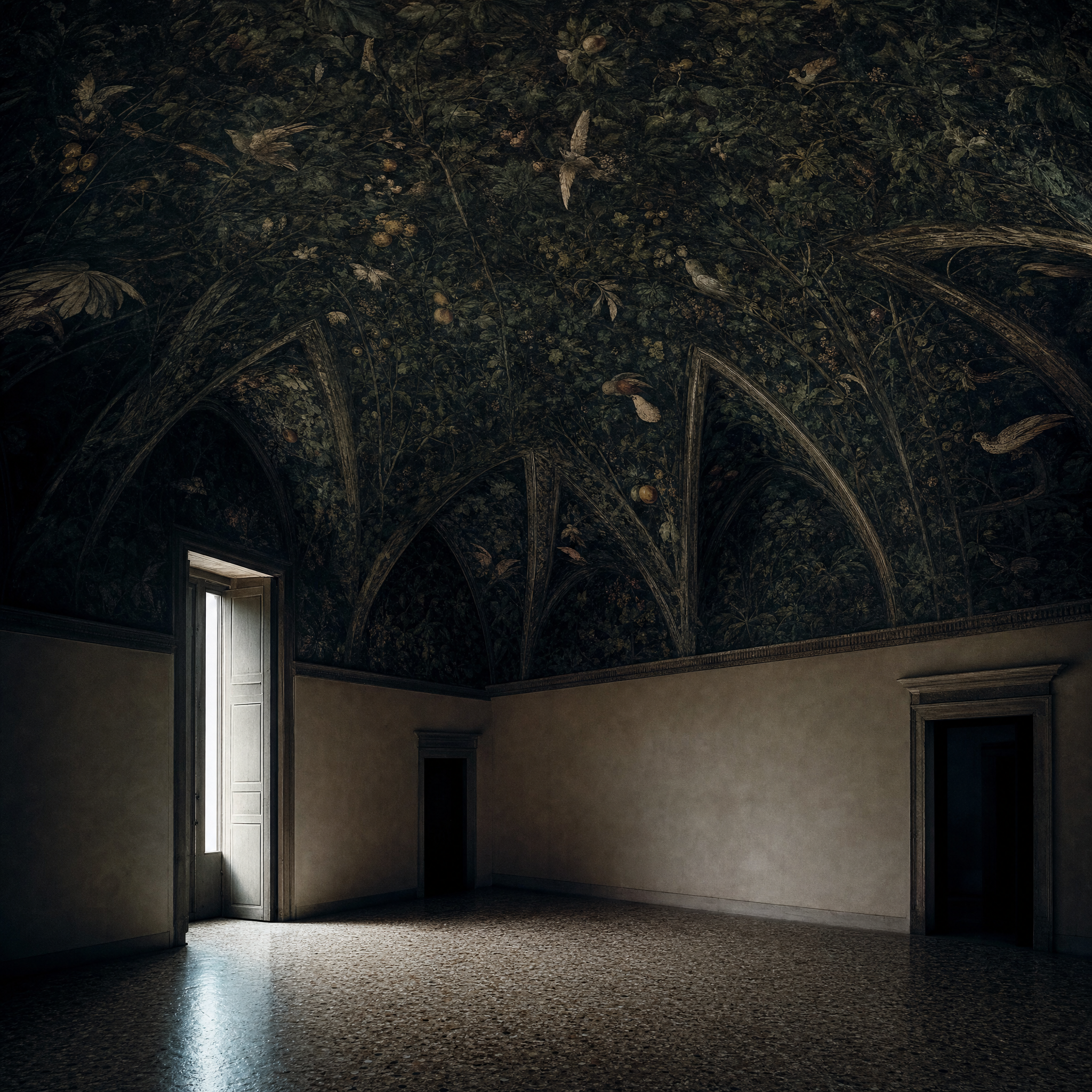
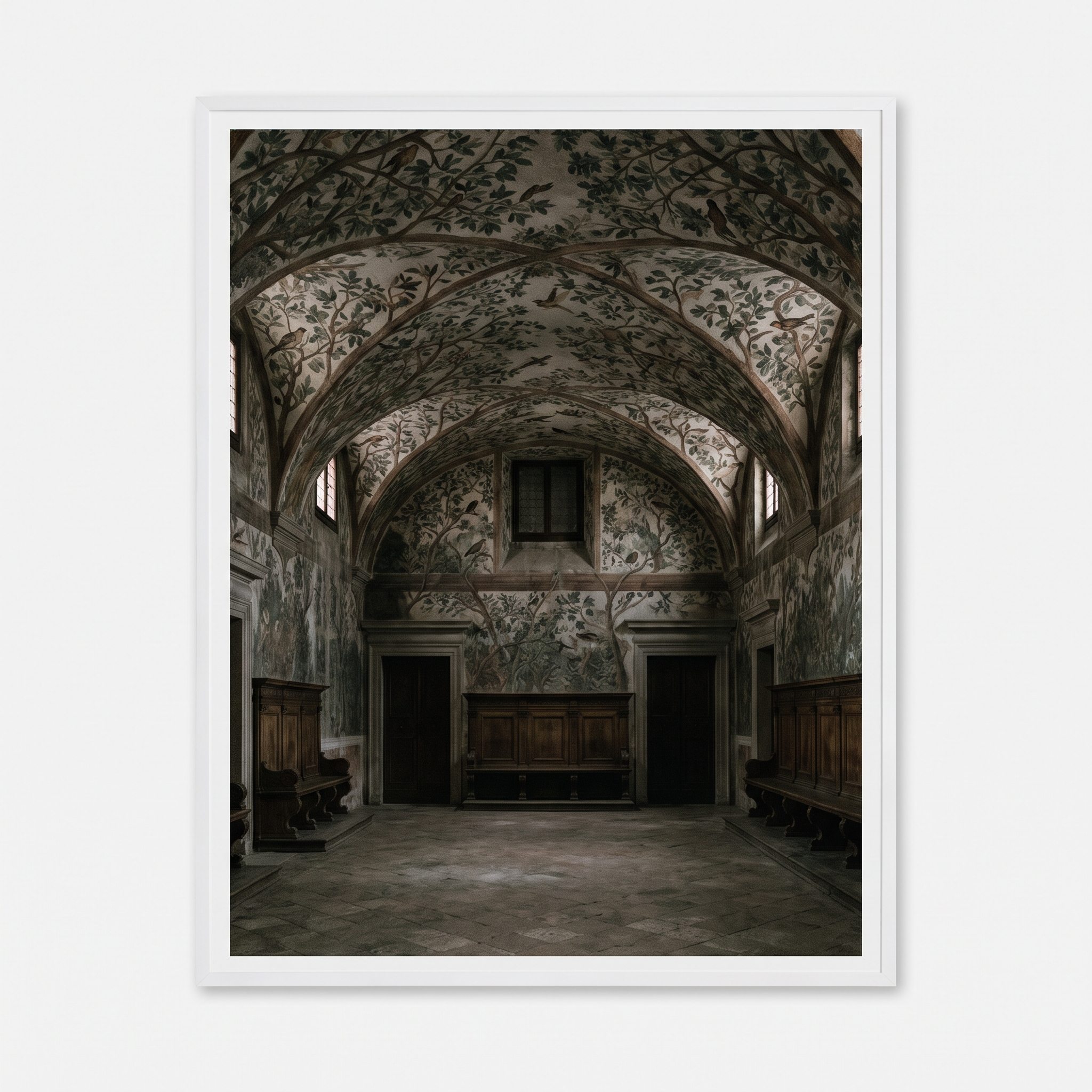
Because almost nothing of the family's furniture survives here, what is left is the building's own reasoning, which is why I send people to Grimani before Querini Stampalia rather than after. Upstairs the rooms run in sequence with hardly anything in them, and you look up: Federico Zuccari frescoed the staircase, and one small room has a ceiling frescoed so densely with leaves and birds that the plaster disappears into undergrowth. It is called the Foliage Room, and nobody who walks in keeps talking.
The room everything is arranged towards is the Tribuna — a tall square chamber lit from an open lantern overhead, its walls tiered with niches for antique sculpture, with a Roman Ganymede hung in the vault. It was designed as a place to keep marble in, and it is one of the very few rooms of its kind left anywhere. I went in February with acqua alta boards stacked in the campo outside, and for forty minutes there was nobody else in the palace at all. That is not a boast. It is, disgracefully, normal.
He gave the collection away, and the house spent four centuries missing it.
In 1587 Giovanni Grimani, Patriarch of Aquileia, handed his sculptures and gems to the Republic. It was a public-spirited act and it hollowed out his own house: the Tribuna had been built around those marbles, and the marbles left. What remained was an argument with its subject removed.
The palace then did what unloved buildings do — sold, divided, let, patched, forgotten. The state bought it in 1981, and it took until December 2008 for the doors to open again as a museum. Read that gap honestly: twenty-seven years of scaffolding to give back one house.
What the loss left behind is the rarest thing here. Emptied, the rooms cannot flatter you with objects, so they have to convince you with proportion instead — and they do.