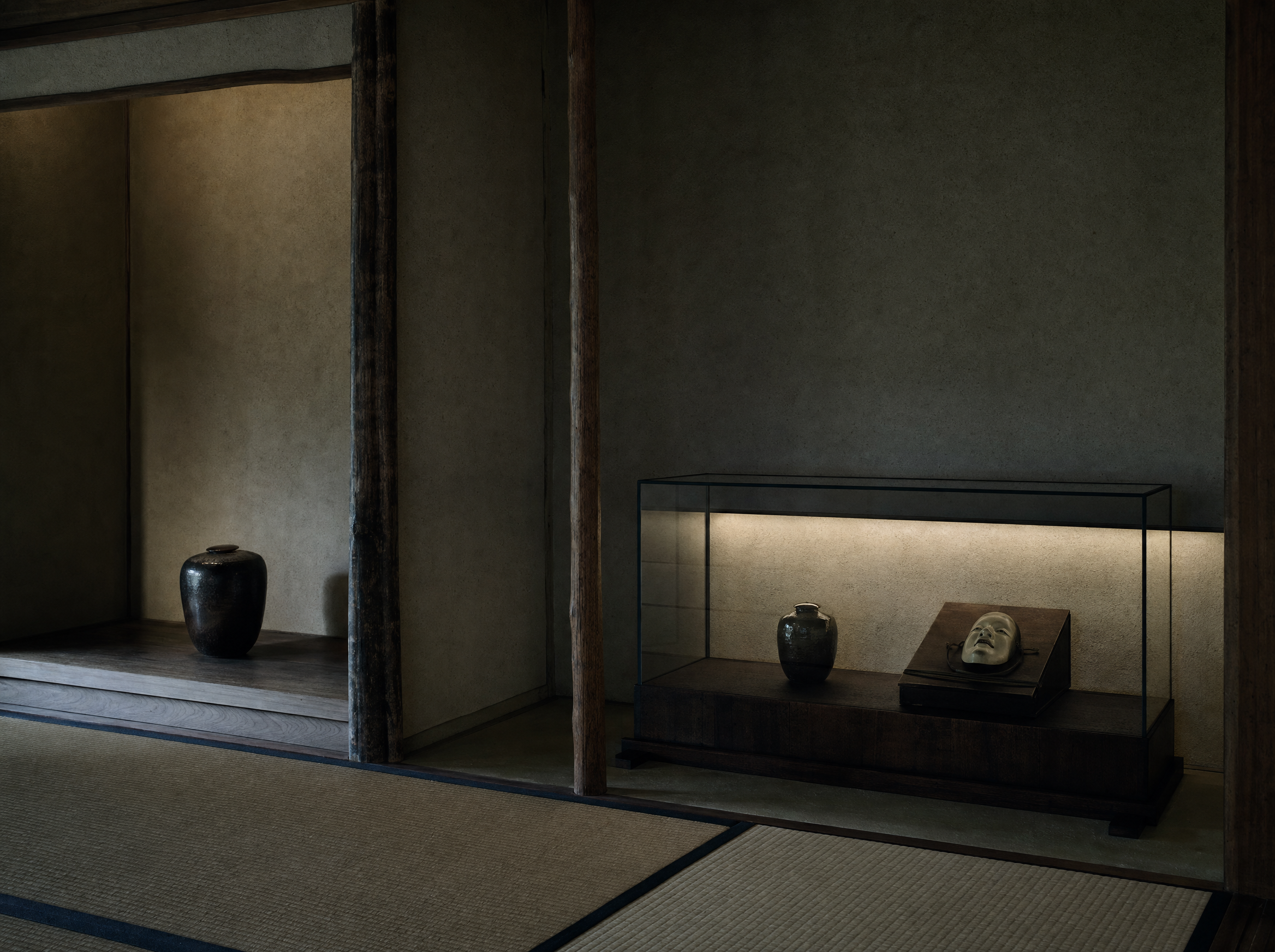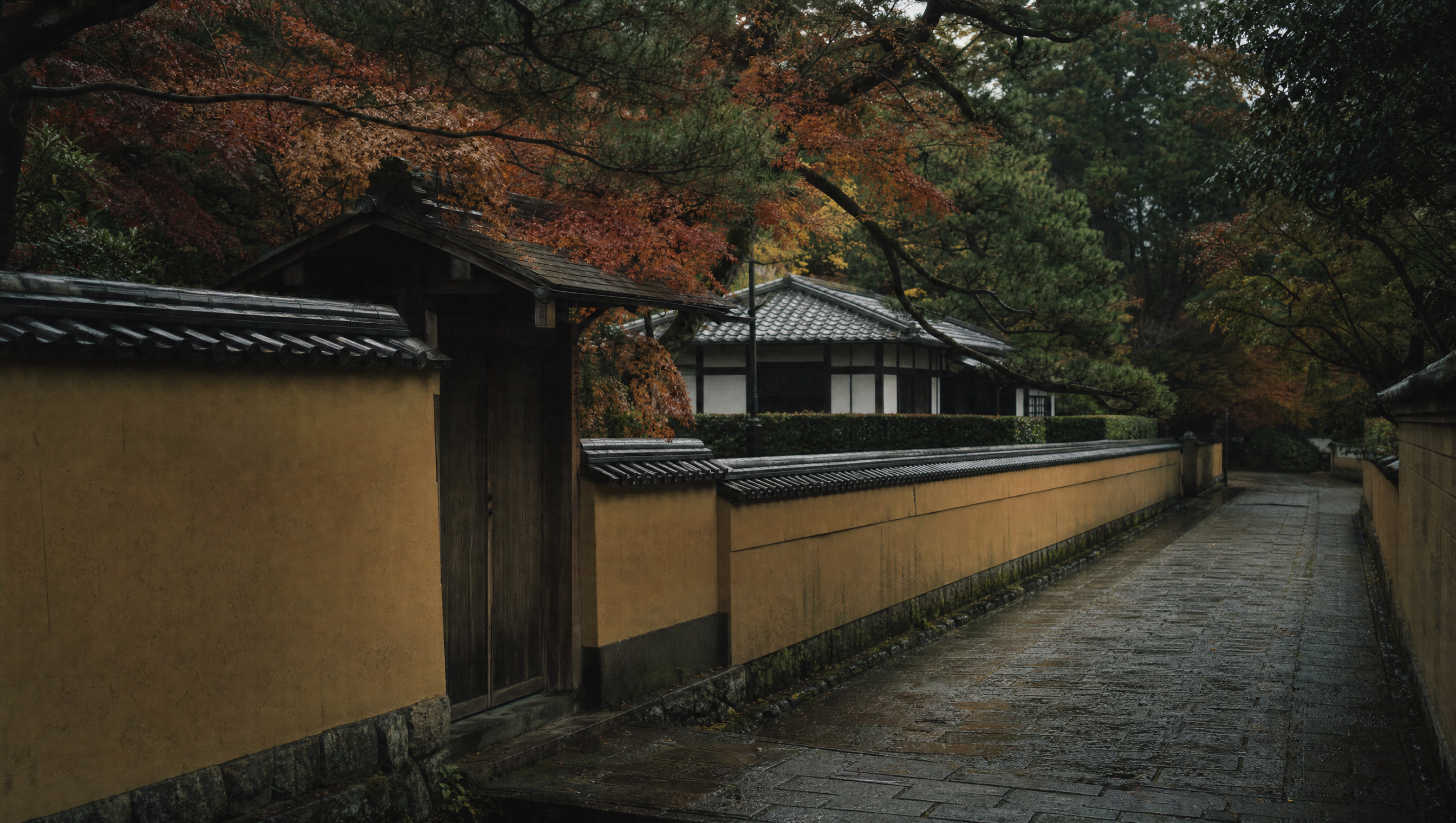
Nomura Tokushichi the second — 1878 to 1945, founder of the securities house and the bank that bore his name — took the tea name Tokuan, studied under the Yabunouchi school from 1913, learned Noh in the Kanze style the year after, and spent forty years buying accordingly. The museum that holds what he assembled opened in 1984 on Shimokawara-chō, a few doors from the villa he had used in Kyoto since 1918. Some nineteen hundred pieces: tea utensils, Noh masks, Noh costumes, calligraphy, and his own amateur work kept in with the rest, which I like him for. Seven of them are Important Cultural Properties and nine more are Important Art Objects, and on any given visit you will see perhaps twenty things.
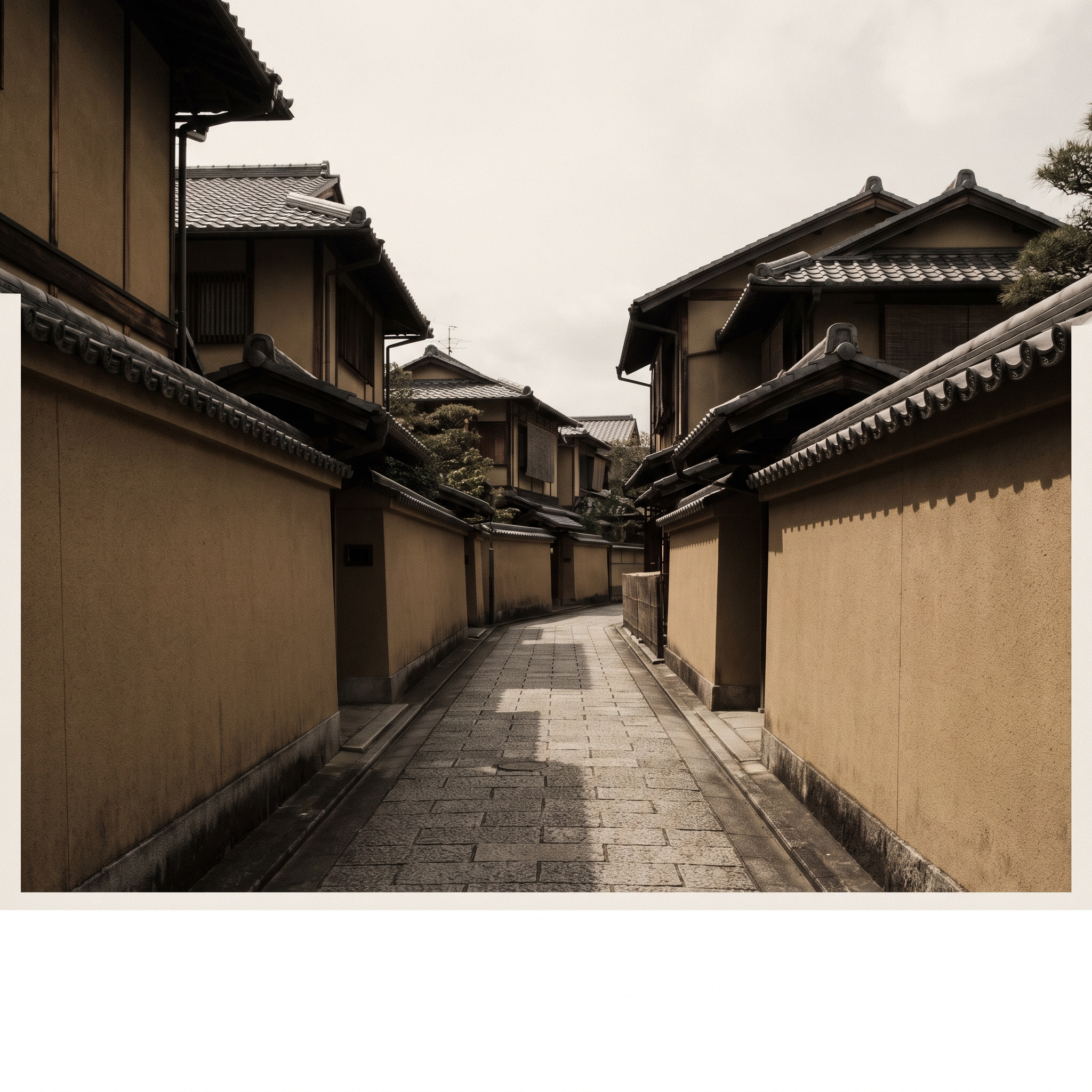
The building is low, sukiya-built, and does not want to be noticed from the lane; two exhibition rooms and a tea room is the whole of it. What is unusual is the calendar. It opens twice a year — roughly March to early June, then September to early December — and is shut the rest of the time. That is not a shortage of staff. It is the logic of a tea collection, where objects belong to seasons, and a bowl shown in the wrong month is being shown wrongly. Half a year of darkness is the price of the other half being right.
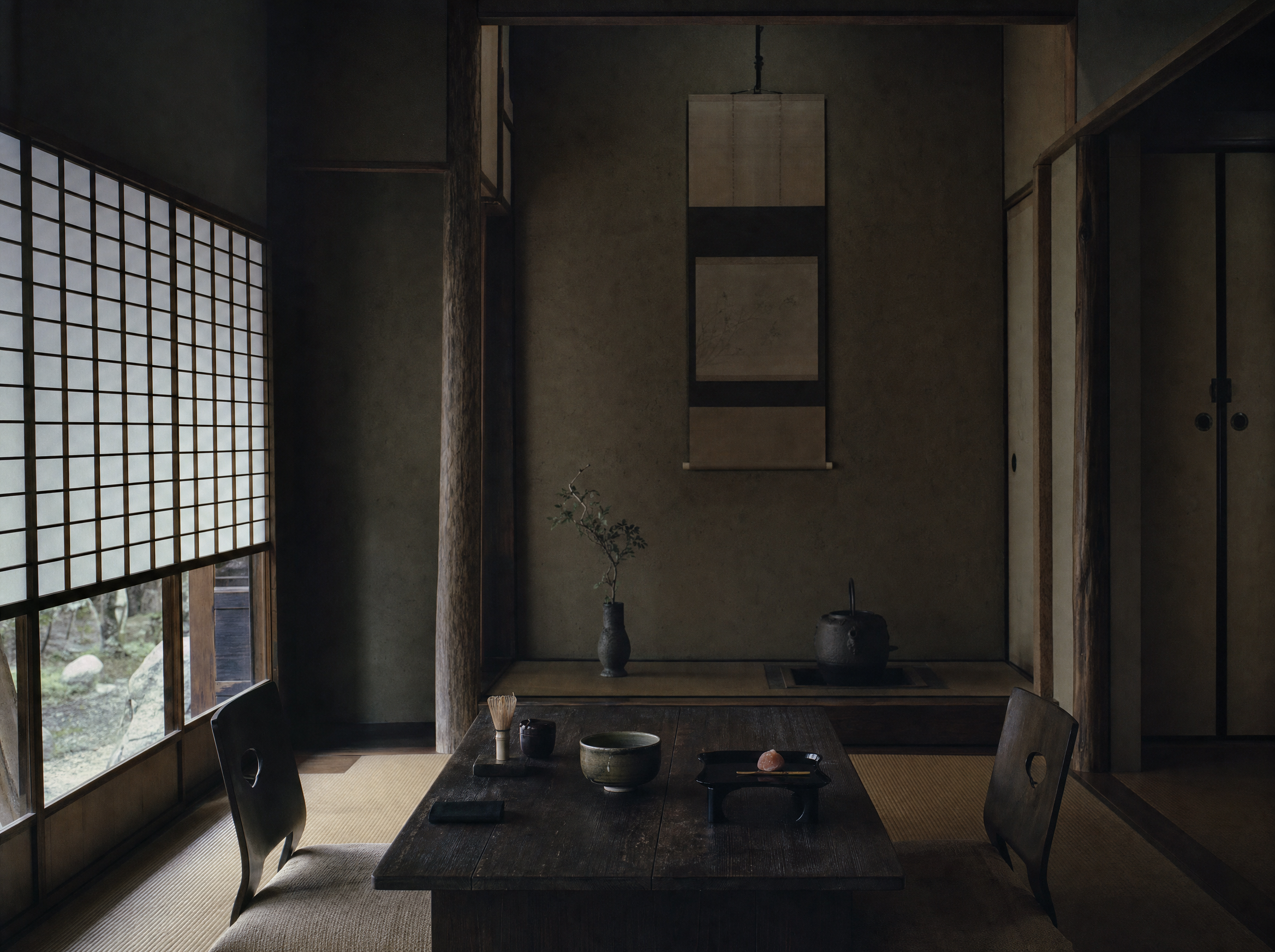
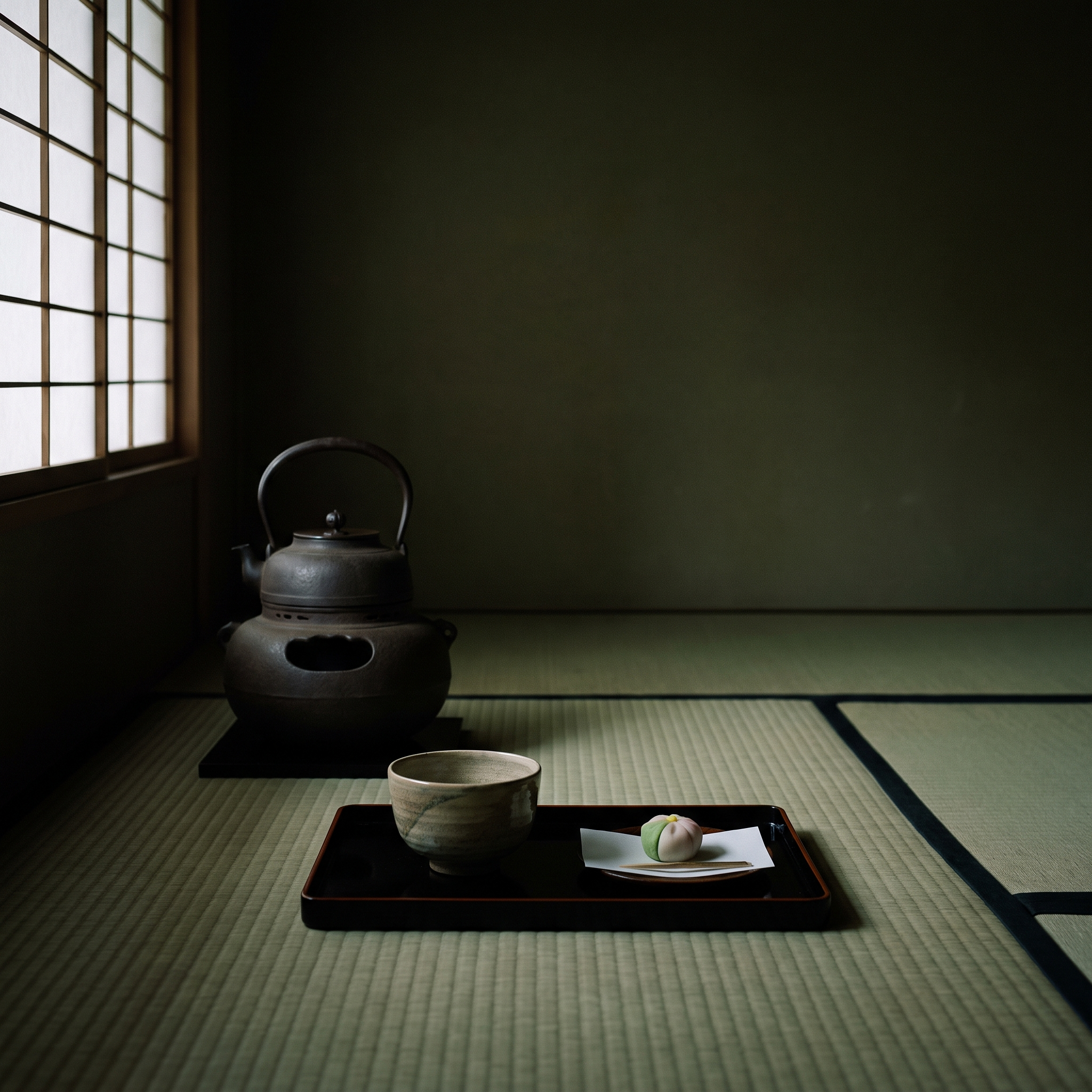
Come after Murin-an, which is ten minutes downhill, and come inside the season or not at all — I have twice walked up to a closed door because I trusted a guidebook rather than the calendar. Take the tea. It is served at a table with chairs rather than on the floor, the utensils on the day are pulled from the collection, and you are seated close enough to read the glaze. Forty-five minutes, an hour with tea, and it is the quietest room in eastern Kyoto.