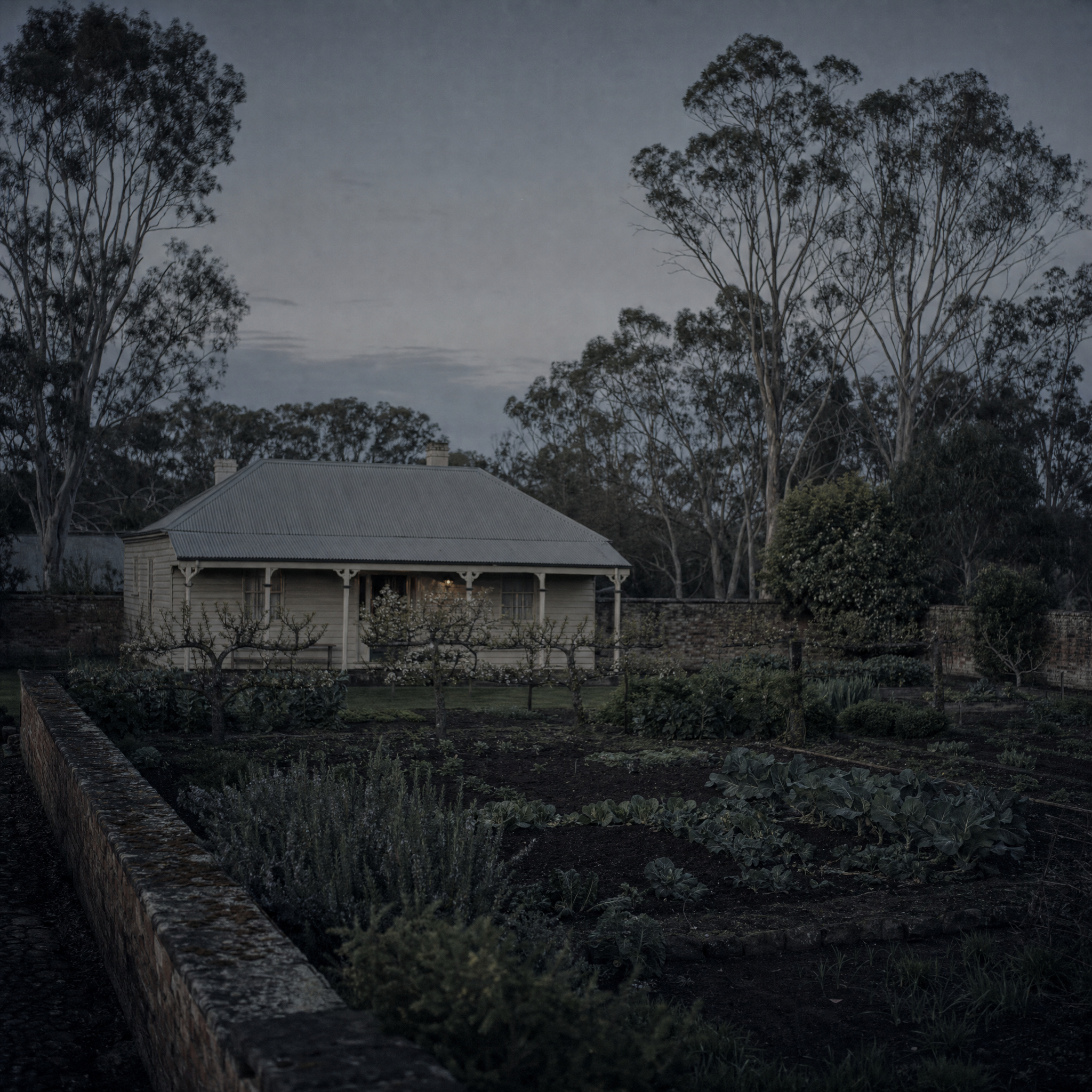
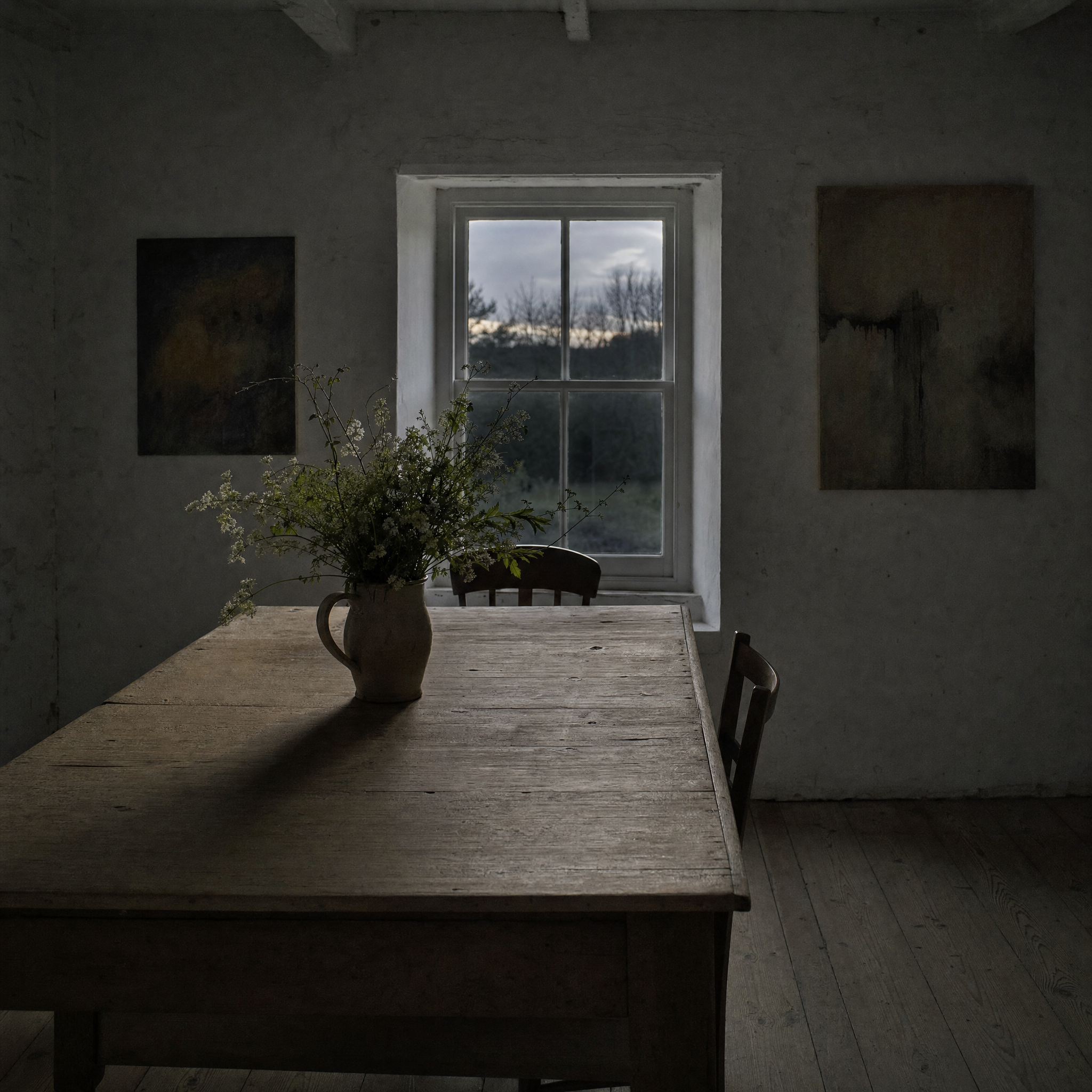
John and Sunday Reed bought a run-down dairy farm here in 1934 and spent the rest of their lives making it the place Australian painting happened. The farmhouse dates from the 1870s and is a small, plain, weatherboard sort of building with nothing grand about it at all — which is precisely the point. Sidney Nolan painted the Ned Kelly series in its dining room between 1946 and 1947, on the dining table, in a house where he was also a lodger and rather more than that. You can stand in the room. It is the size of a room.
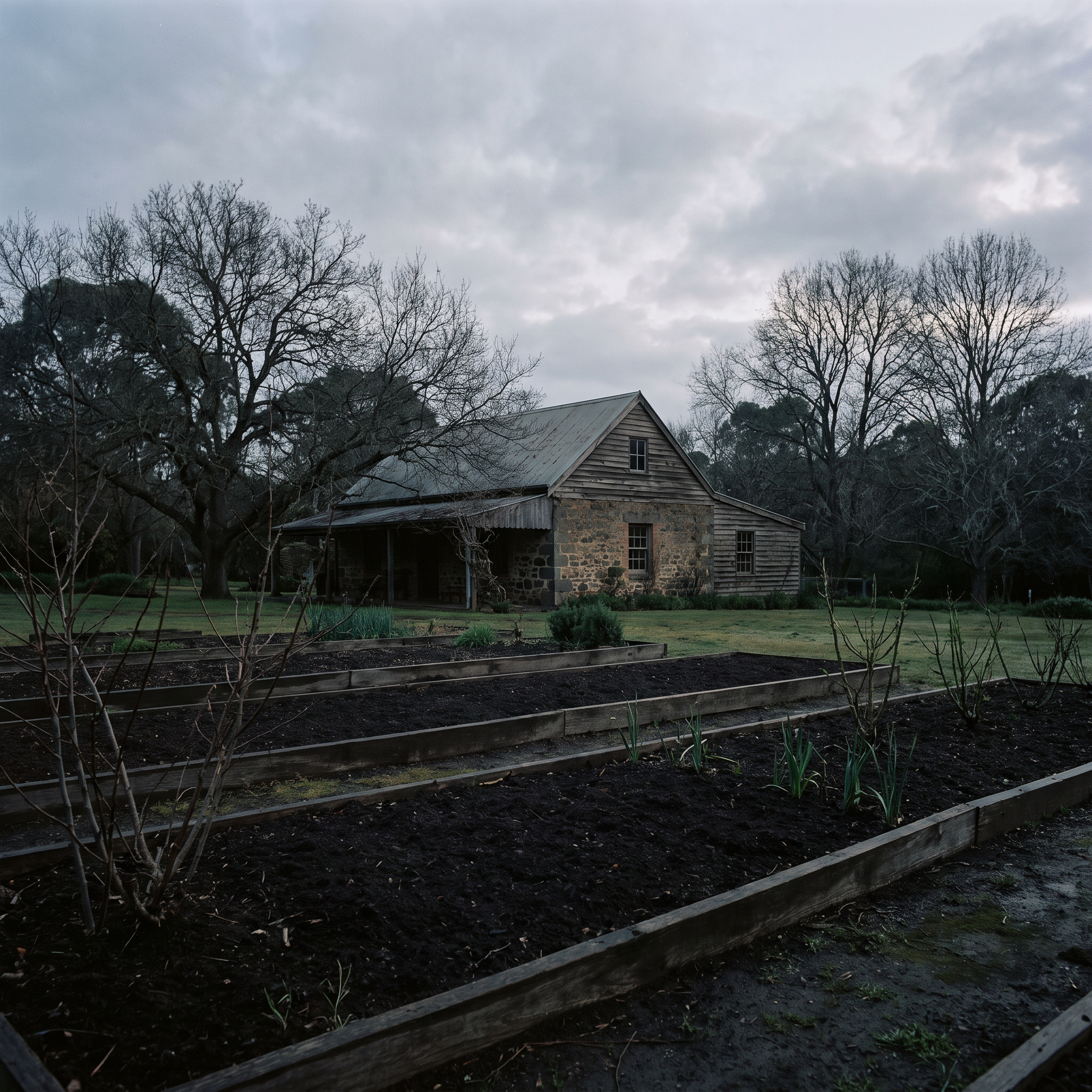
I went in September, which is their spring, and I want to be firm about the order of the day: the kitchen garden before the pictures. Sunday Reed gardened the way other people collect, and the beds — heritage-listed now, and still cropped for the kitchen — are not the setting for the art, they are the same activity carried on with different materials. Walk the beds first and the paintings inside stop looking like a movement and start looking like the work of people who came in for lunch.
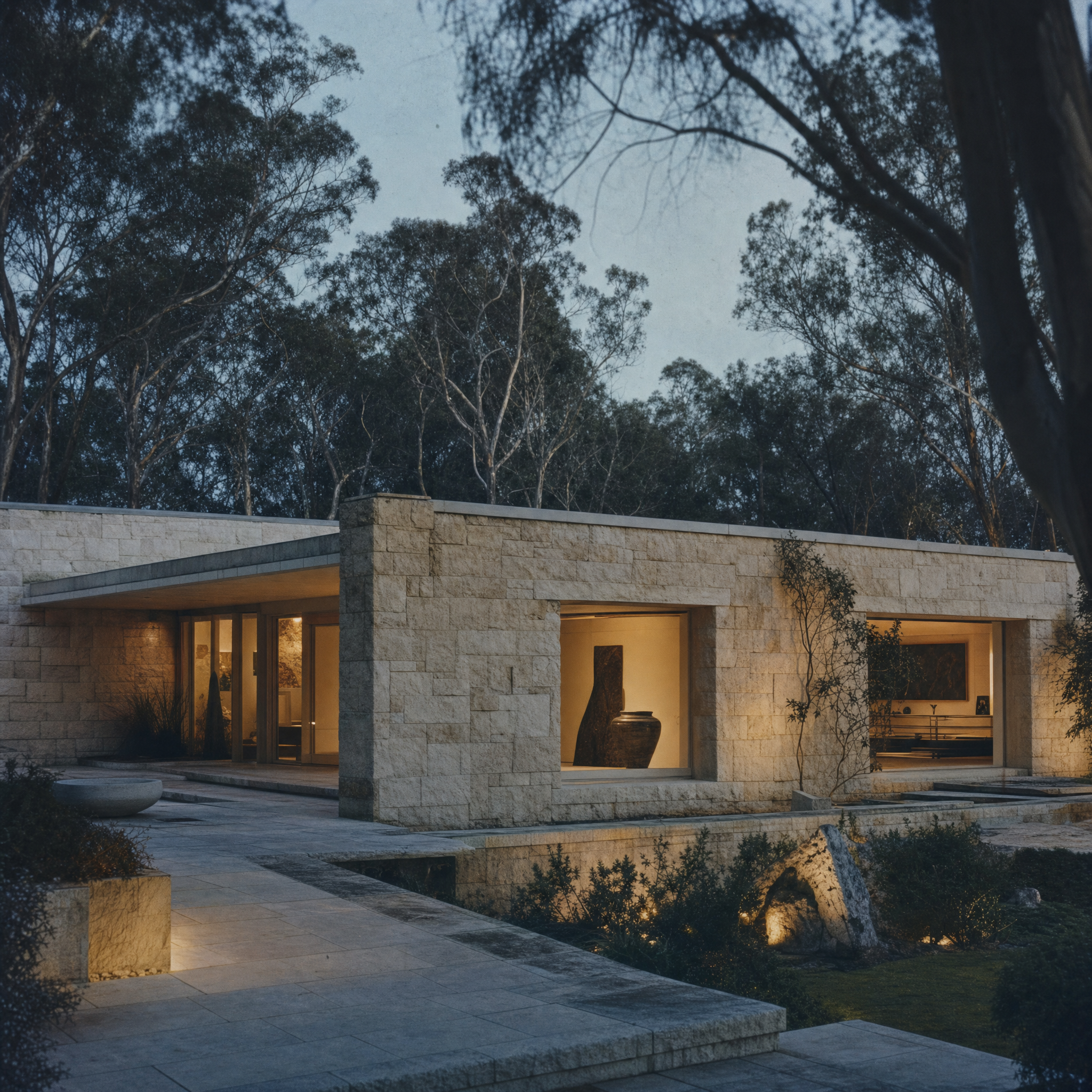
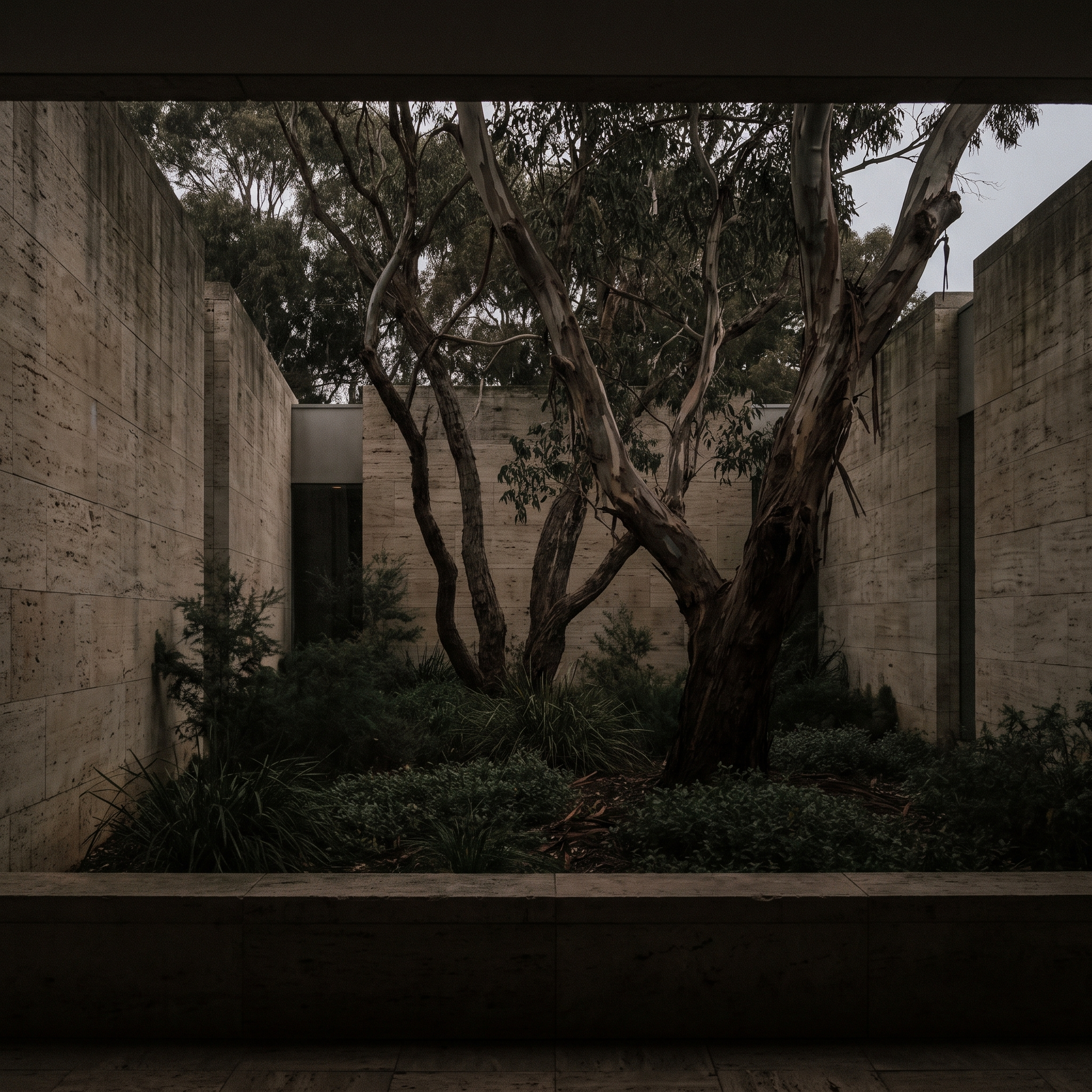
Then there is the second house, the one the Reeds commissioned in 1963 and moved into in 1967, built of pale Mount Gambier limestone by David McGlashan and briefed, gloriously, as "a gallery to be lived in". It is a cool, low, deliberate building and it makes the farmhouse look like an accident, which it was. Between the two of them you get the whole argument of the place: bohemia is not the opposite of order, it is the thing order was built to protect.
They saw it open, and then they stopped.
Heide opened to the public as a museum in November 1981, the state having bought the property and the second house with it. Both Reeds died the following month, within days of each other. Forty-seven years of turning a dairy farm into an argument, and they got roughly five weeks of watching strangers walk through it.
I do not think that is tragic, exactly. It reads more like a handover than a loss. But it does explain the temperature of the place — nothing here has the varnish of a bequest arranged at leisure. The beds still want weeding. The rooms are still small.
Sunday made a garden for her own reasons, out of sight of the visitor route logic, and people have been calling it the heart garden ever since. Go looking. It is not signposted the way a headline would be.