Calouste Gulbenkian was born in Üsküdar, left the Ottoman Empire in 1896 when the persecution of Armenians made staying impossible, took British nationality in London, kept a house on the Avenue d'Iéna, and came to Lisbon in the war. He died here in 1955, and the collection — some six thousand pieces, bought over fifty years on his own taste and no one else's — stayed. It is the only great private collection I know of that ended up in a city by circumstance rather than by sentiment, and the city has been an extraordinarily good custodian of it.
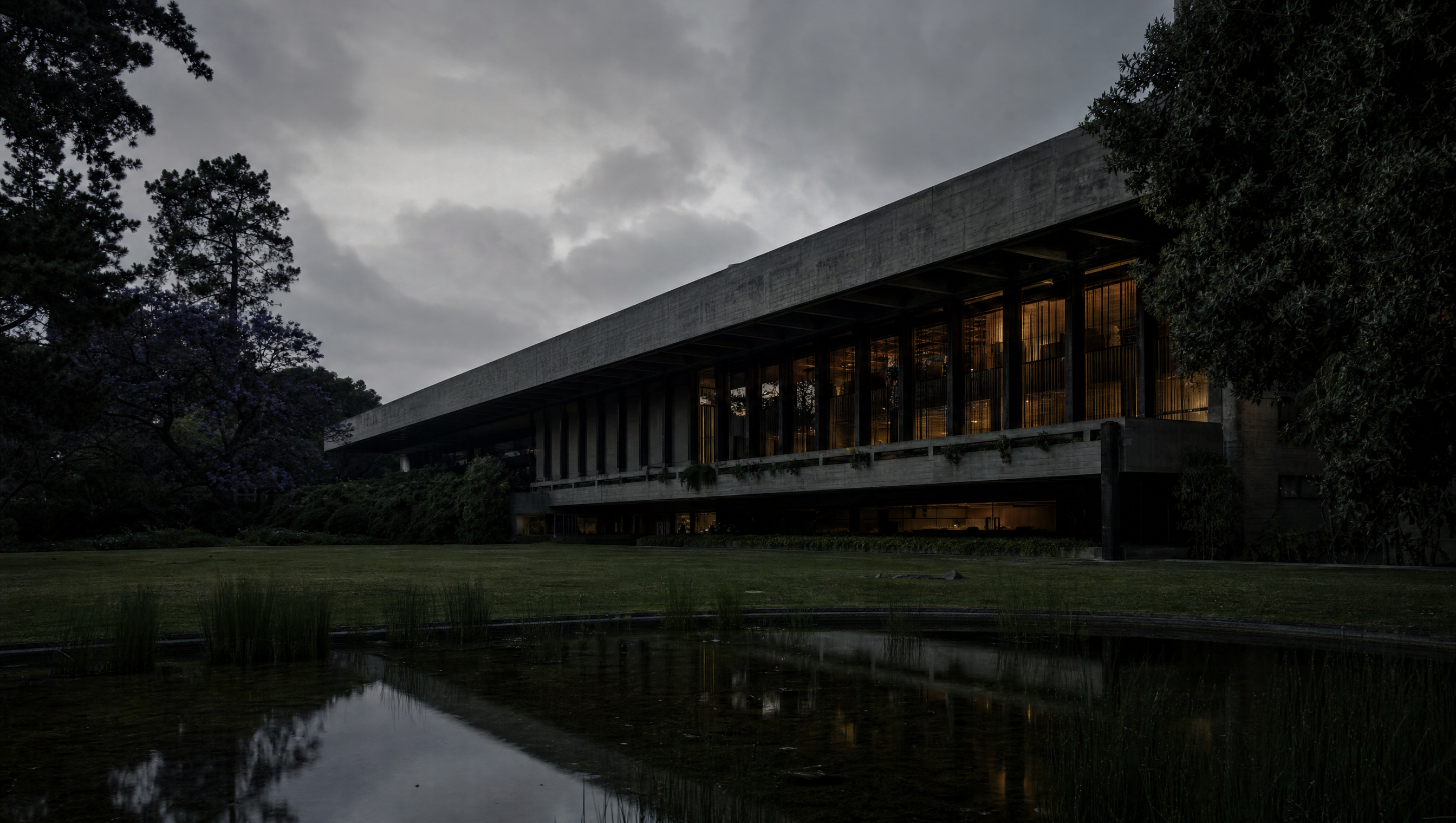
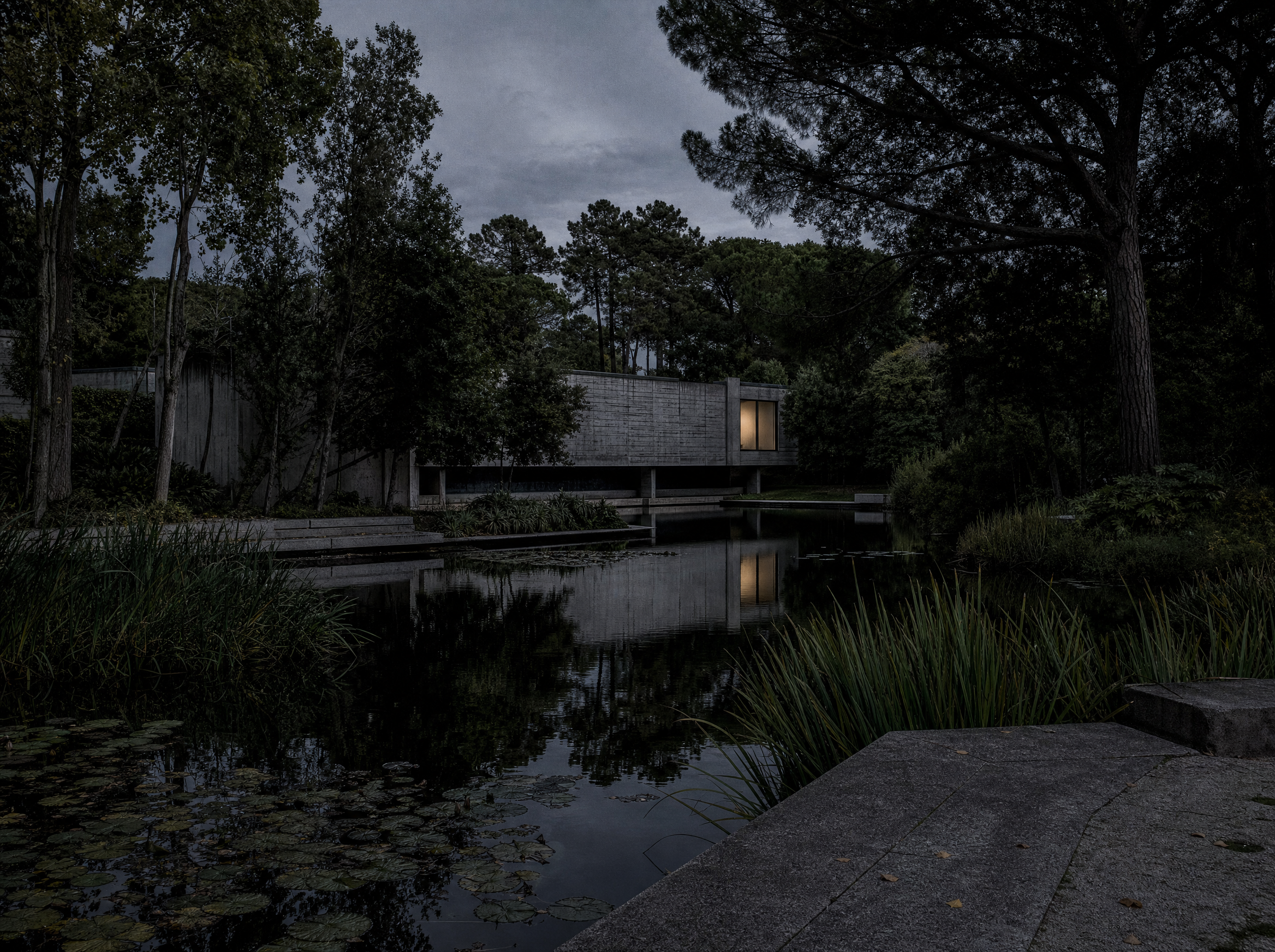
The building was not inherited; it was built for the collection, opened in 1969, and it is the quietest argument in Lisbon. A long low block of board-marked concrete and granite laid on its side in a park, by Ruy Jervis d'Athouguia, Pedro Cid and Alberto Pessoa, with the galleries arranged around two gardens and glazed the whole height of the wall wherever the plan permits. You walk from Ancient Egypt to René Lalique in about ninety minutes, and roughly every eight of those minutes the building stops and hands you a tree. I have never found anywhere else that paces a collection so kindly.
A caution, honestly given: my last visit was before the museum closed for eighteen months of work, and it reopened on 18 July of this year, restored back towards its 1969 self — the green carpet returned to the European galleries, filtering films in place of the blinds in the mosque-lamp section, a new numismatics room made from a study that used to be shut, the Assyrian relief moved to where it should always have been. So take the order below as a route and not a floor plan. I intend to walk it again in the winter and correct myself in public.
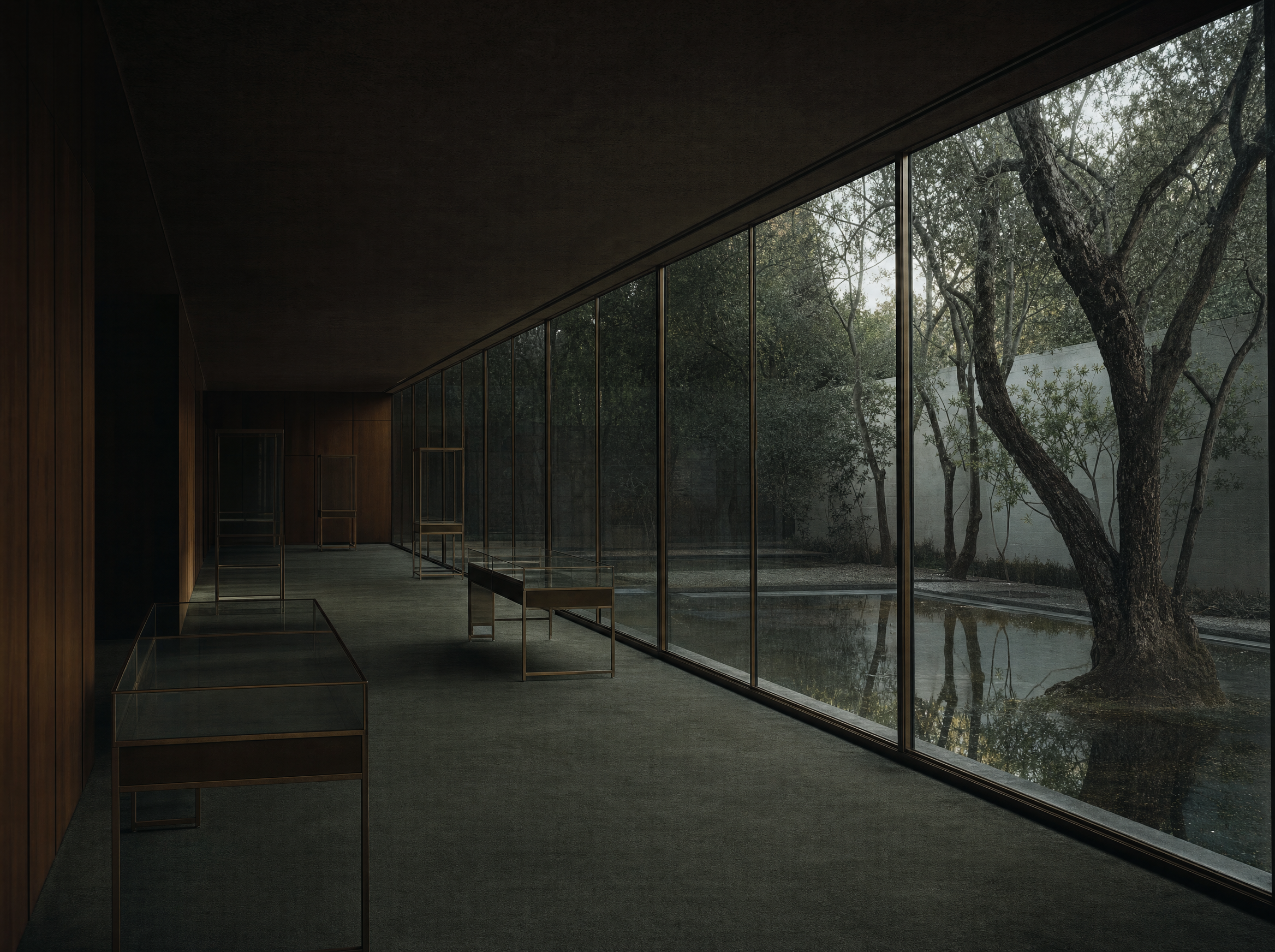
the Lalique room, rehung
since I was last in it PL. 029d
He called the pieces his daughters, and he left them where he had ended up.
Üsküdar, then Cairo, then London, then Paris, then Lisbon. Five cities in one life, and only the last of them by accident. The great collections of Europe are usually a family's argument with its own city — the Camondos on the rue de Monceau, Mrs Gardner on the Fenway. This one is a man without a city at all, assembling a world in the absence of one.
You feel it in the shape of the collection more than in any label. Egypt, Mesopotamia, the Islamic world, Armenia, China and Japan, and only then Europe — arranged as a single route rather than as a European museum with an Eastern annexe. That order was his, and it is the most autobiographical thing in the building.
Lisbon did not ask for any of it and has looked after it for seventy years, which is a thing worth saying out loud in a directory of houses that inherited their own luck.