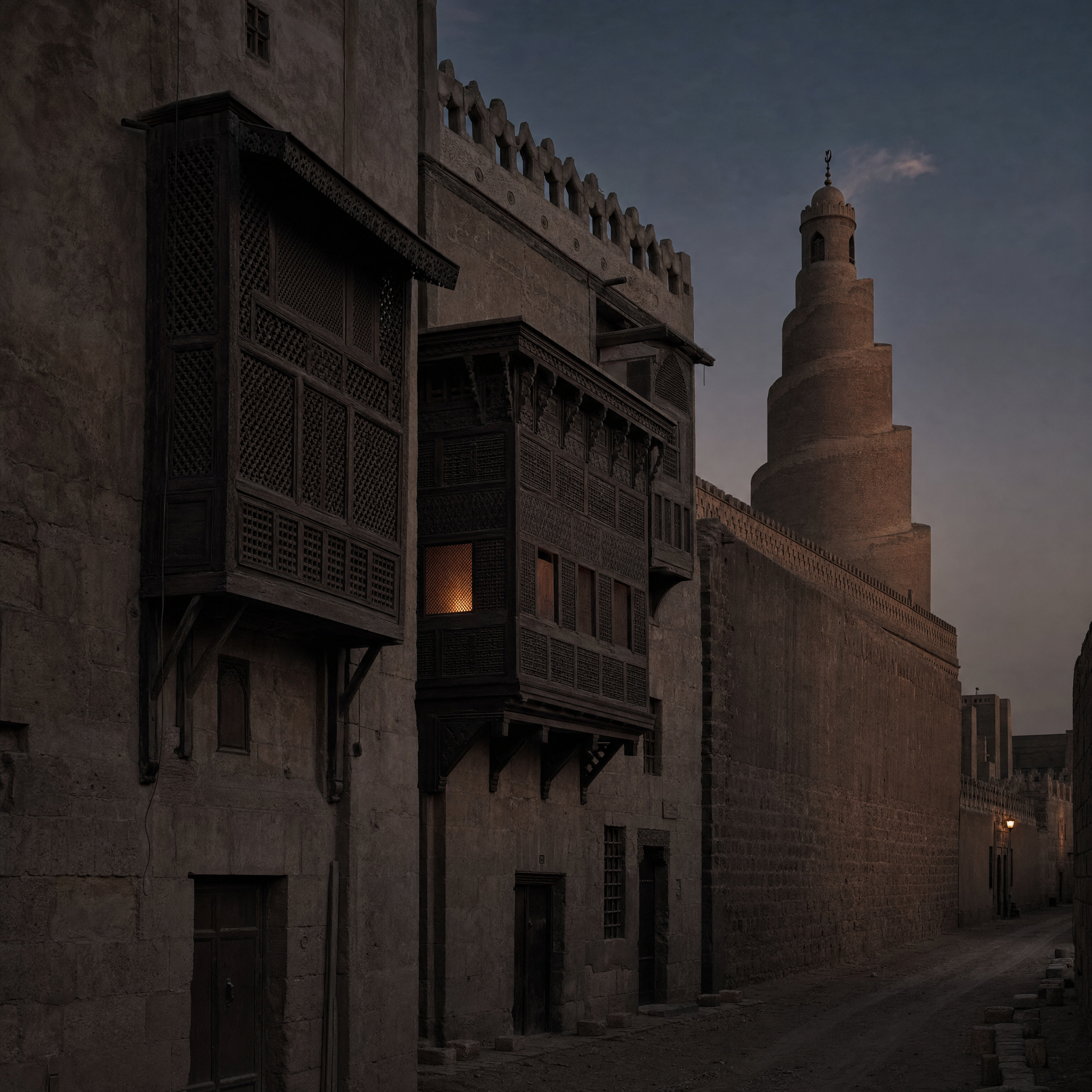
This is not one house. It is two, built a century apart and leaning against the outer wall of the Mosque of Ibn Tulun because that is what people did with a good wall. The western house went up in 1540 for Abdel-Qader al-Haddad; the eastern one in 1632 for Hajj Mohammad al-Gazzar, and it later belonged to a Cretan woman, which is why everyone in the quarter still calls the place Bayt al-Kritliyya. In 1935 a retired British army doctor named Robert Grenville Gayer-Anderson was given permission to live in the restored pair, and he spent seven years wiring them for electricity, plumbing them, and filling them with everything he had bought in Egypt and further east. When illness sent him home in 1942 he left the lot to the country. The government made it a museum; the king made him a Pasha.
The pleasure of it is that nothing is arranged the way a museum arranges things. There is a Persian room and a Damascus room and a Queen Anne room, each done wholesale in its own manner, and the joins between them are unapologetic. But the real subject of the house is concealment. The women's side looks down into the great reception hall through a mashrabiya gallery you do not notice until you are standing above it. Cupboard doors open into corridors. Corridors open into small comfortable rooms with a screen for a fourth wall. I lost the thread of my own route twice on a November morning and eventually stopped minding, because being mildly lost is the condition the plan was designed to produce.
Go early and go up. The rooms below are the collection; the roof terrace is the argument. It is enclosed in tall carved screens — some of the panels worked with small crosses, Coptic joinery repurposed without comment — and through them you get the mosque, the flat rooftops, and light arriving in strips. Sit down there. That is the whole instruction. The house was used as a film set in 1977 and the guides will tell you so within four minutes of your arrival; nod, and go up anyway.
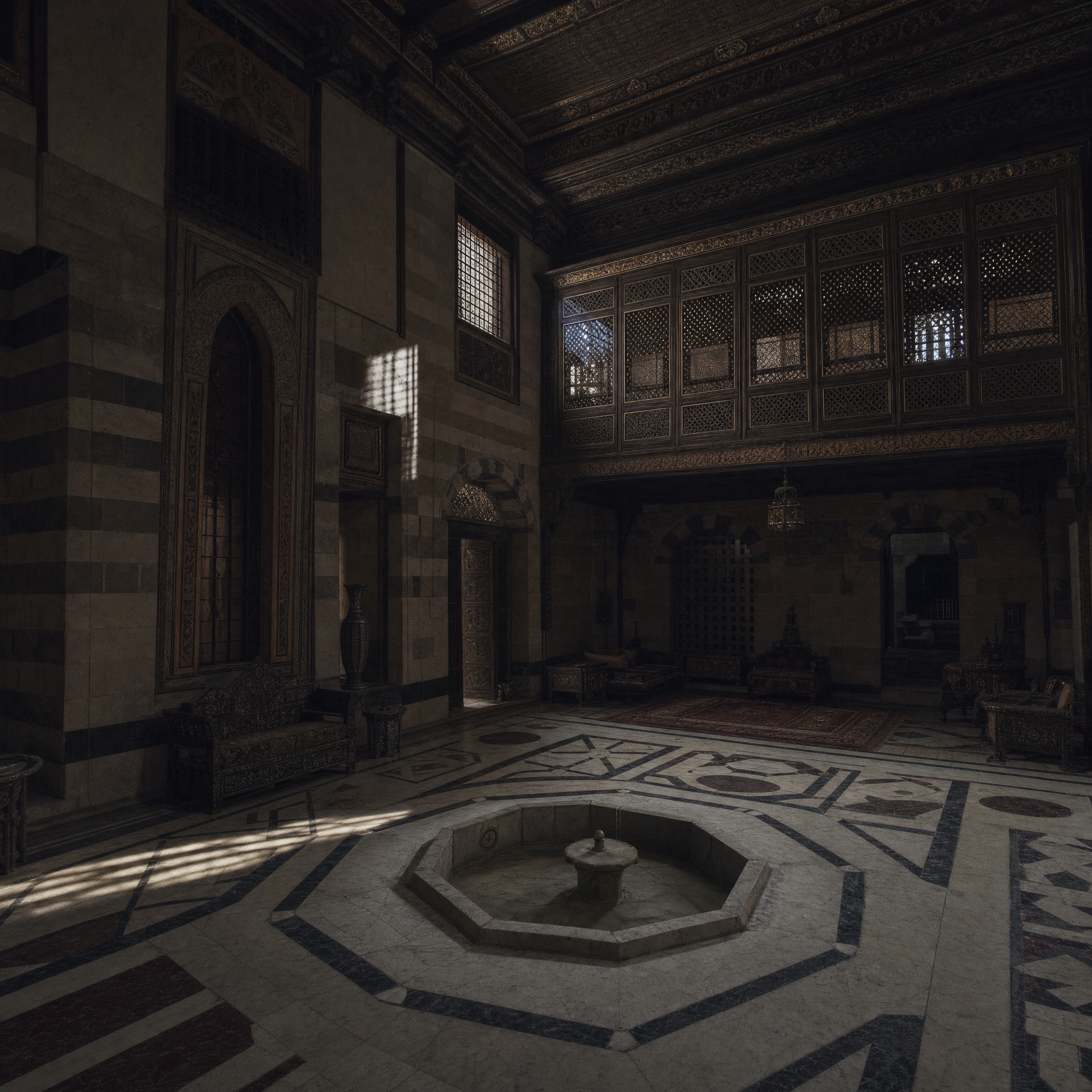
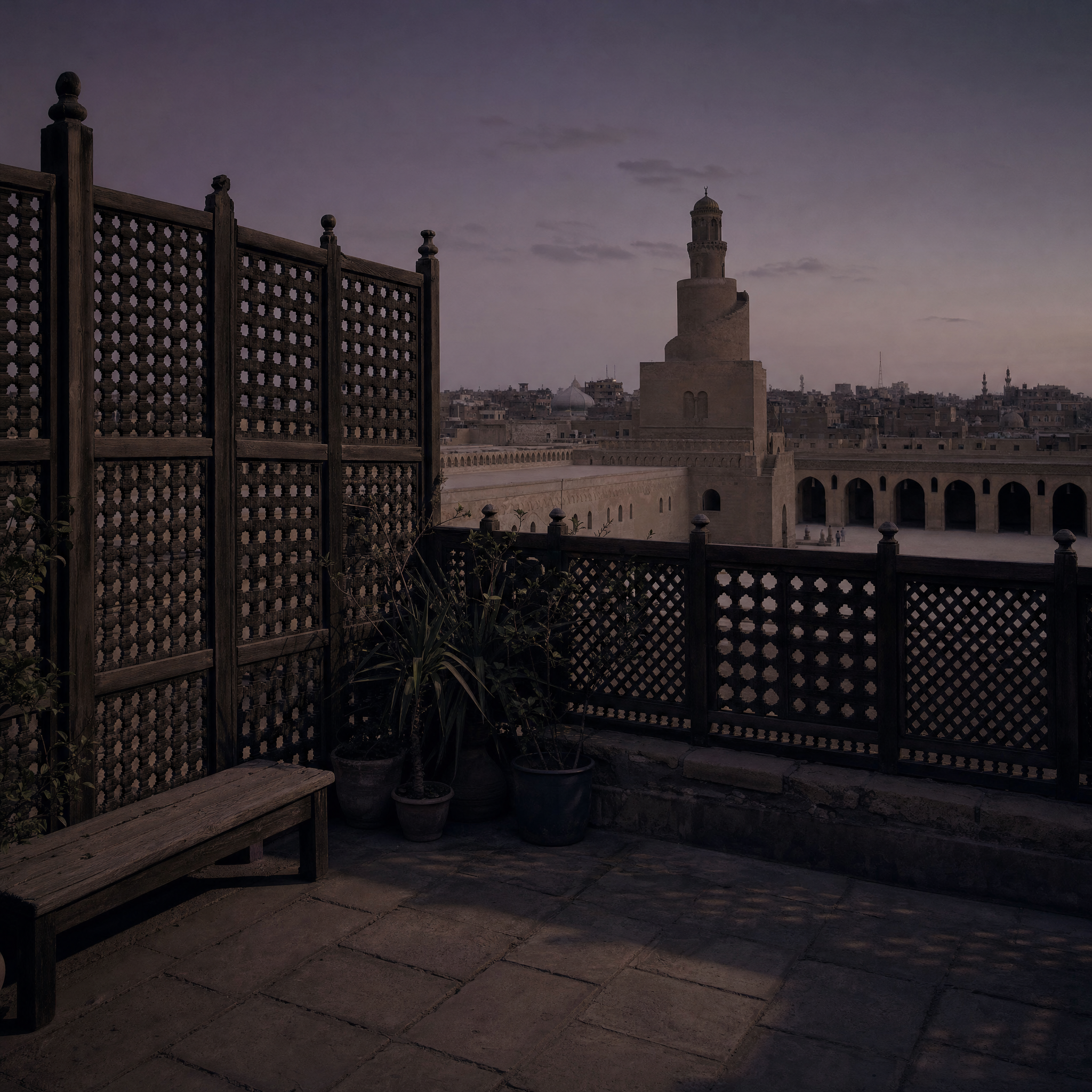
Two plates held empty. I keep the rule in both directions: nothing published that I did not stand in, and nothing invented for rooms I did not raise a camera in.
The best thing he owned is not here, and he sent it away himself.
In 1939 Gayer-Anderson gave a bronze Egyptian cat — gold rings in its ears, a poise that has since put it on a great many book jackets — to the British Museum, where it sits in the Egyptian sculpture gallery under his name. He kept a copy for the house in Cairo.
I find I cannot decide what that says about him. A collector who parts with the finest object in his collection is either unusually generous or unusually aware of where objects get looked at. Probably both, and the copy sitting in its place in Cairo is the honest part: he did not pretend.
Which is, in the end, what the whole house is. An Englishman's arrangement of Egypt, kept in Egypt, catalogued and given back. Not a period room and not a plunder story. Something less tidy than either, and better company for it.