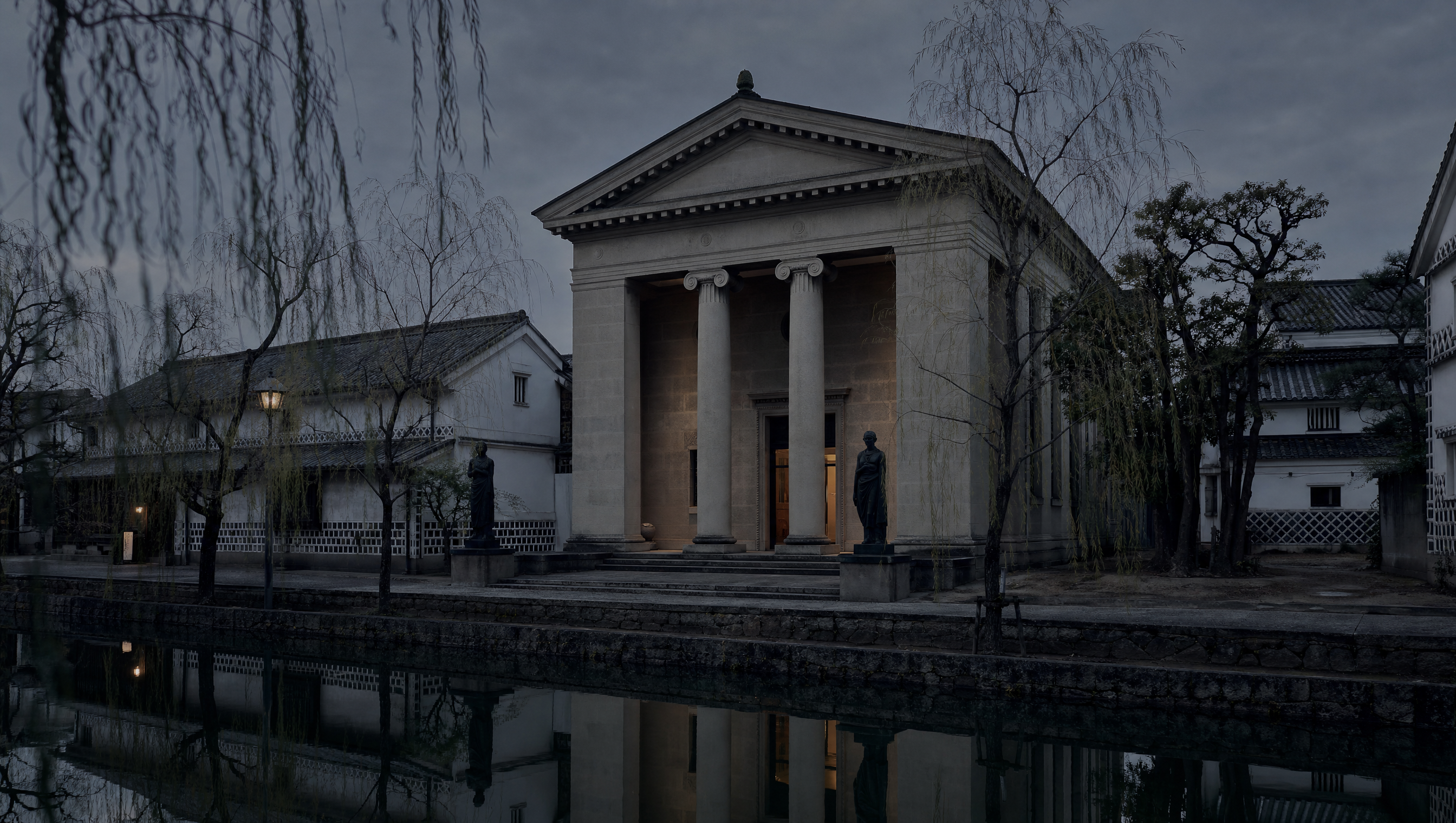
You come along a canal lined with willows and black-latticed storehouses, and there, on the embankment, is a small stone building with Ionic columns and a plain pediment, with two Rodin bronzes standing at the door like footmen. It opened in 1930, the first museum in Japan given over to Western art, and the architect was a local man, Yakushiji Kazue. Nothing about it should work. All of it does, because the building is not pretending to be Greek — it is announcing, in the only vocabulary available in 1930, that what is inside is meant seriously.
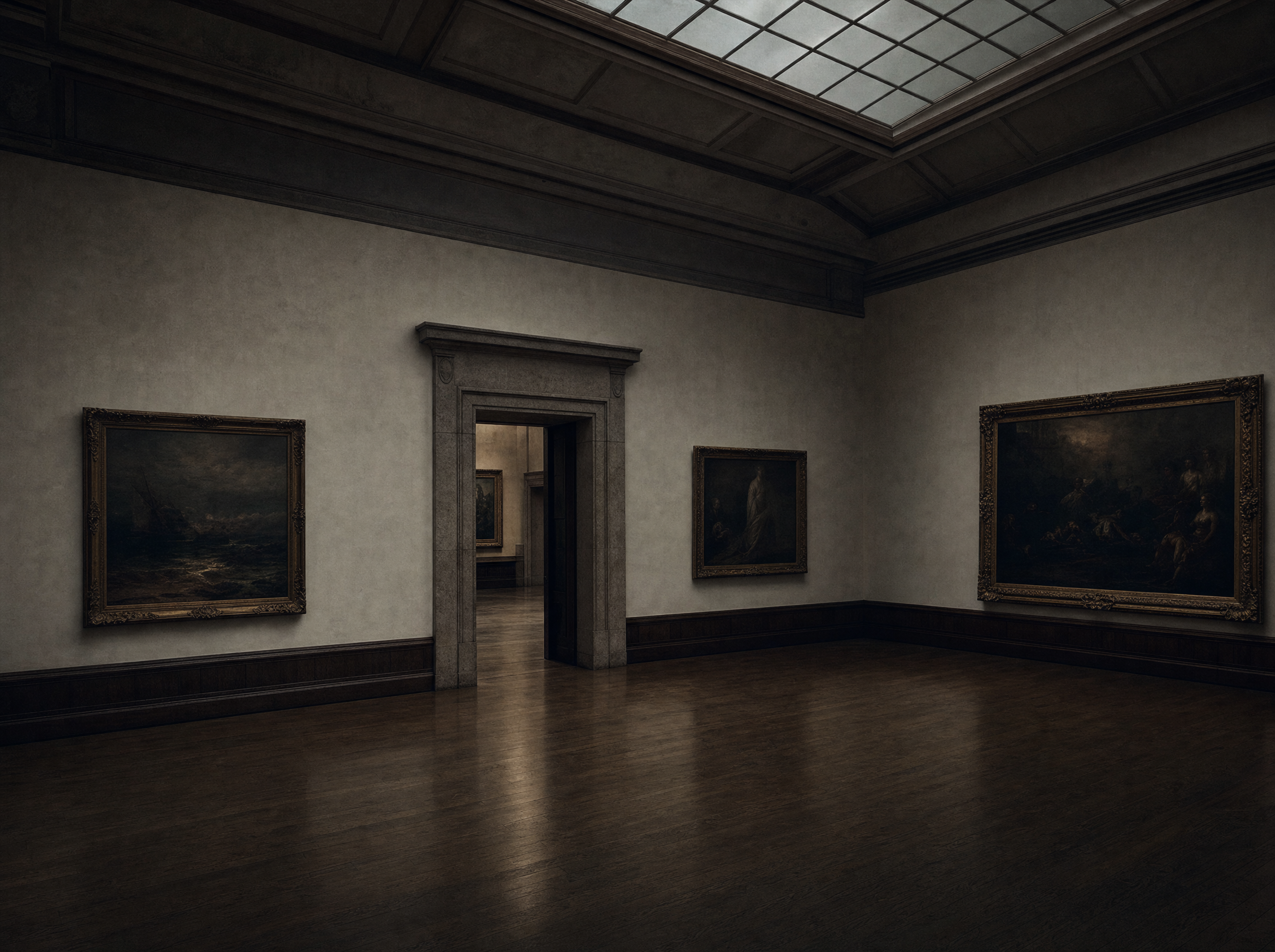
And it is. The El Greco Annunciation is thirty seconds inside the door, which I think is a deliberate discourtesy to anyone who came expecting provincial politeness. I laughed. There are Monet, Gauguin, Renoir; the paintings were bought in France not by a dealer but by a painter, Kojima Torajirō, spending a textile fortune belonging to his friend Ōhara Magosaburō. That is the whole peculiar mechanism of this place: one industrialist's money, one artist's eye, and a town small enough that nobody could talk them out of it.
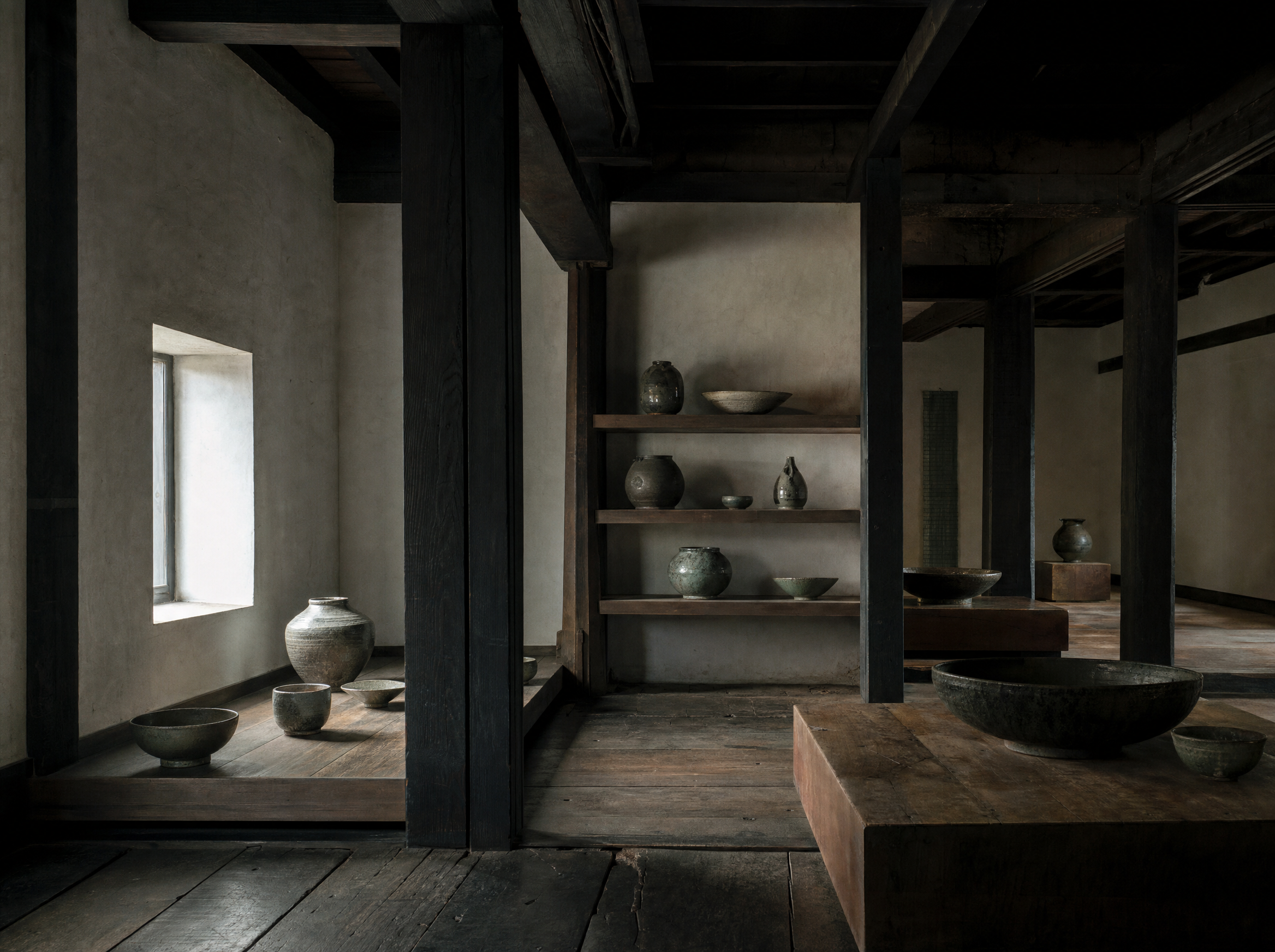
Then do not walk past the storehouses. The craft wing is set into converted Edo rice granaries — white plaster, black beams, a shaft of grey light — and it holds Hamada, Kawai, Leach, Tomimoto, Munakata's woodcuts, Serizawa's dyed cloth. Everyone gives it fifteen minutes on the way out. It deserves an hour, and it is the part of the museum I have thought about most since. The pots were made by people who knew exactly what a room like that would do to them.
Kurashiki is four trains from most places one starts from. The building answers that objection before you have finished making it.
A cotton town in Okayama put an El Greco thirty seconds inside its front door in 1930, and then said nothing further about it for ninety-odd years.
The museum is a headstone with a roof on it.
Kojima Torajirō, born 1881, went to Europe on Ōhara money and came back with pictures nobody in Japan had seen in the original. He died in 1929, not yet fifty. The museum opened the following year, and the whole of it — the columns, the bronzes, the Annunciation — is one rich man's answer to a friend's death.
Ōhara Magosaburō died in 1943. The building stood through the war in a town that was not bombed, which is the sort of luck no institution can plan for and every institution depends on. Kurashiki kept its storehouses and its canal for the same reason.
Go to the Kojima memorial hall last, when you have already seen what his eye bought. His own canvases are not the equal of the ones he chose, and he knew it. That is a harder thing to build a room around than grief, and the room is honest about it.