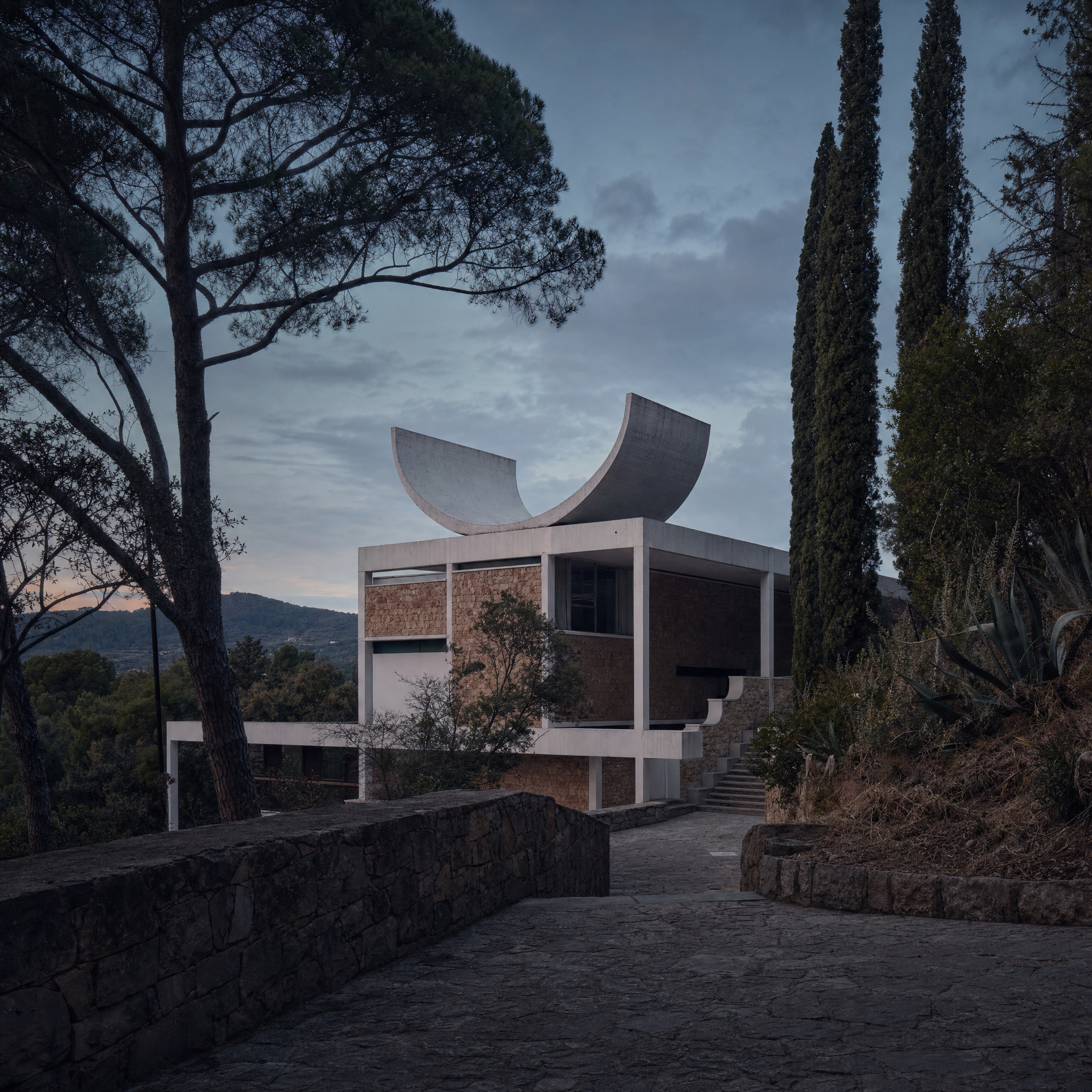
I walked up from the village on a warm afternoon in late September, which took about ten minutes and felt like more, and arrived at the one thing I had not prepared for: how little of the building there is. Josep Lluís Sert enclosed a famously small amount of floor — the rooms are modest, low, top-lit through those two great curved white scoops on the roof, and they let the hillside in at every opportunity. Everything I had read had told me about the art. Nobody had told me the architecture would decline to compete.
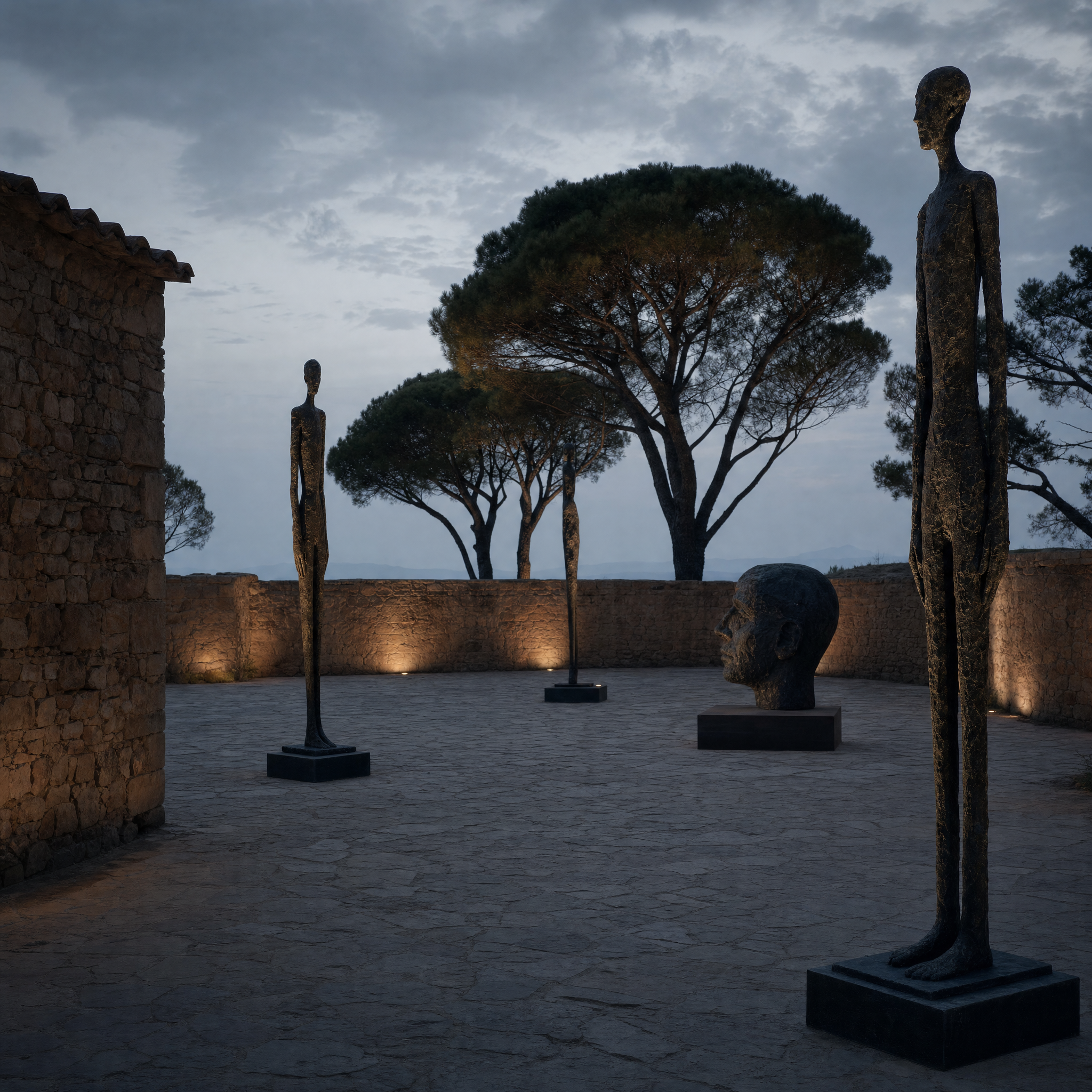
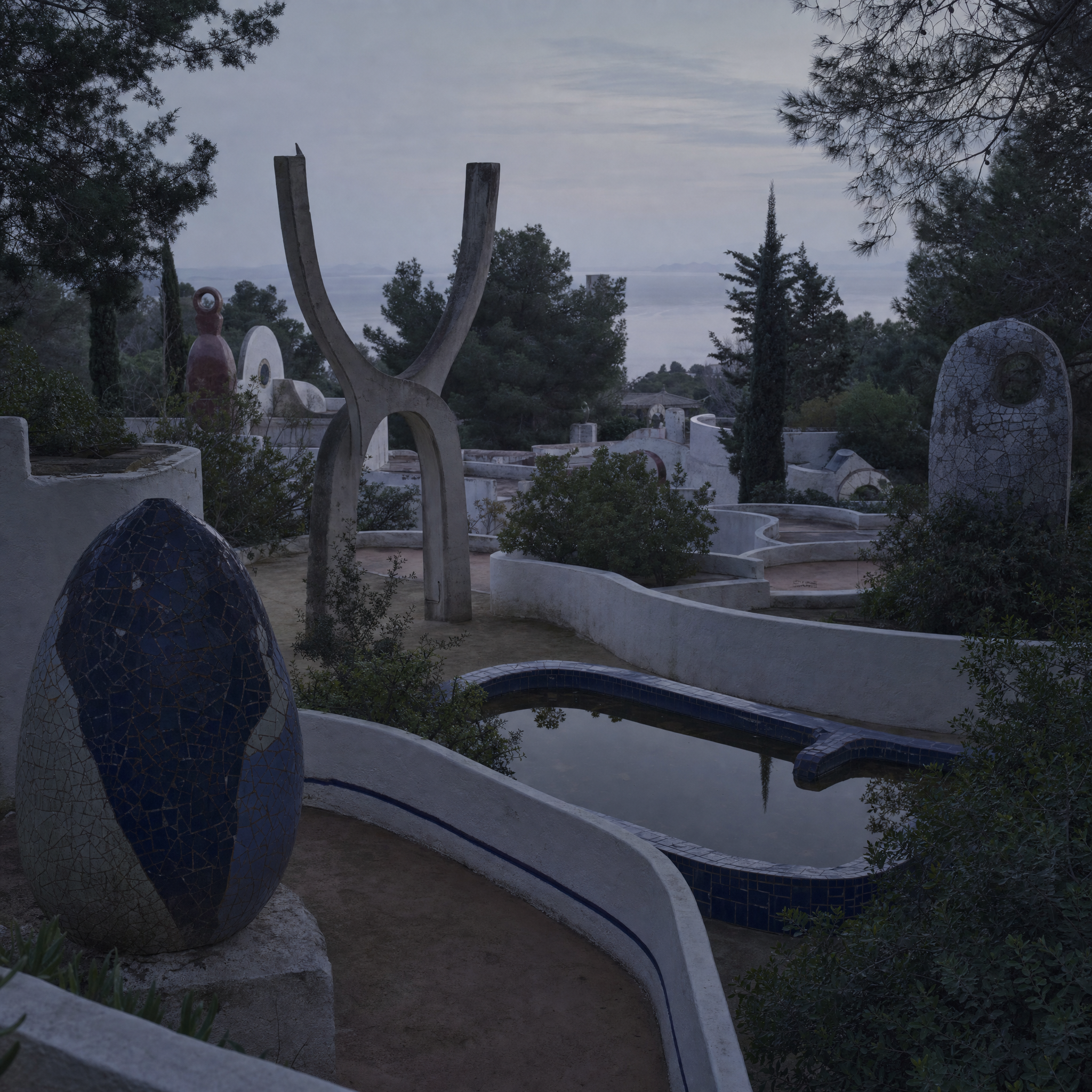
The consequence is that the outdoor rooms are not a garden with sculpture parked in it. They are galleries with the roof taken off. Giacometti's court is a walled enclosure of pale paving and thin standing figures that lengthen as the sun drops; Miró's Labyrinth is a whole terraced hillside of ceramic and concrete, made over twenty years with the Artigas, father and son, and it goes on being funny long after you have decided to be reverent. I gave the indoor galleries an hour and the outside three, and I would reverse none of it.
Two small warnings, offered kindly. It is open every day, which sounds convenient and means the coach parties have no closed day to avoid — go at ten, or go at four. And the collection rotates around whatever is hanging, so do not travel for a particular painting without checking first; the sited works are the constant, and the sited works are the reason.
The whole place is what a family did instead of going quiet.
Aimé and Marguerite Maeght lost their younger son, Bernard, to leukaemia in 1953. They were dealers and publishers with the best address book in Europe and no idea what to do with themselves. It was Braque, by the Foundation's own account, who told them to make something of the hillside rather than sell it.
So they did, and the artists came and worked on it rather than merely lending to it — Miró on the labyrinth, Giacometti on his court, Braque on a pool and on a window for the little chapel, which is dedicated to Saint Bernard and is not subtle about whose name that is. André Malraux opened it in July 1964.
Nobody says any of this at the gate, and I have come round to thinking that is right. You are allowed to enjoy the place for a whole afternoon before you learn what it is for. The chapel is where it catches up with you. Sit down in it.