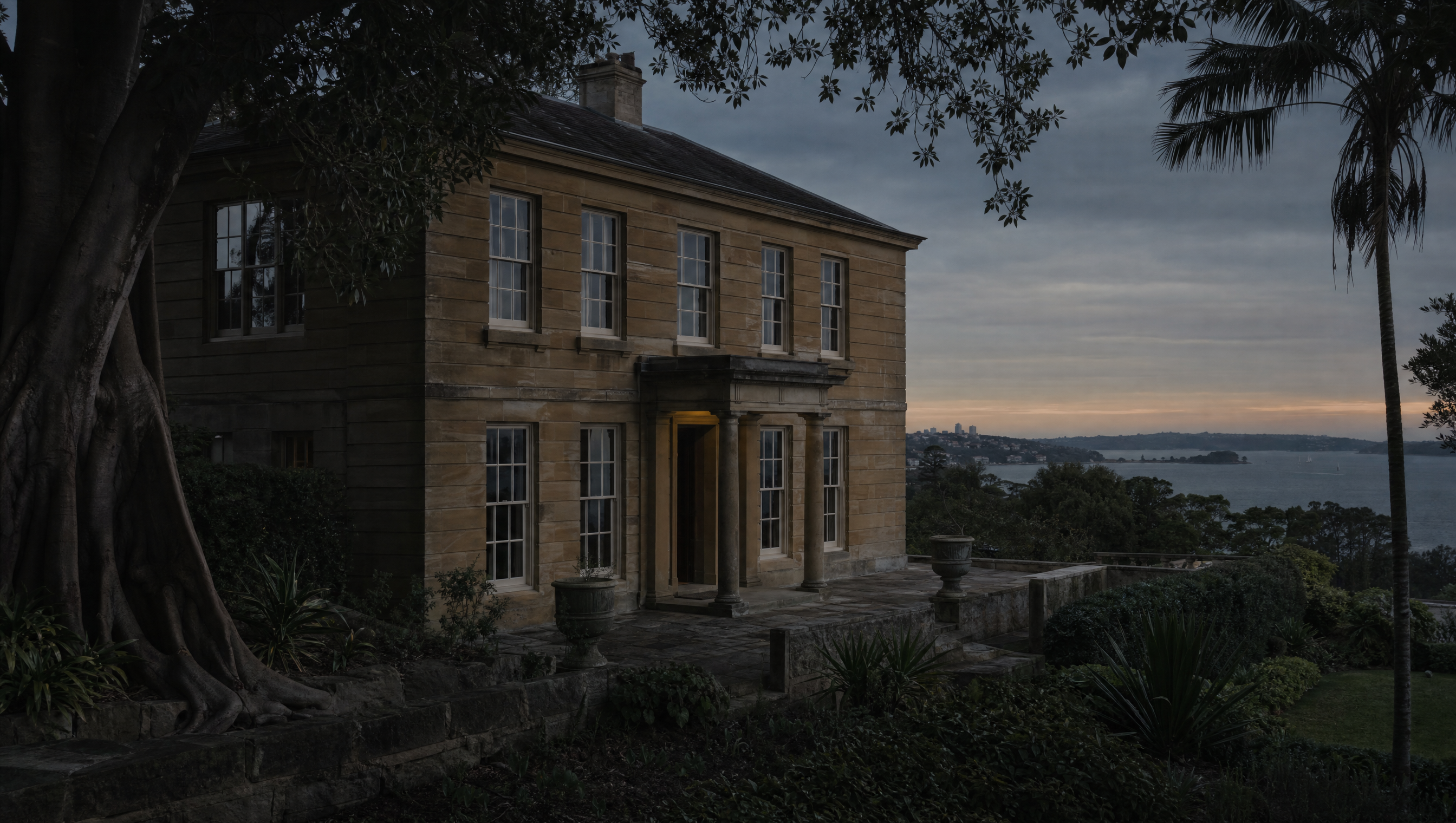
Alexander Macleay came out in 1826 to be Colonial Secretary and brought with him an insect collection that was, by the standards of the day, one of the great ones in Britain. He was given fifty-four acres above the water, spent five years turning the bush into a private botanic garden before he laid a stone of the house, and then built — to a design attributed to John Verge — the finest house in the colony. That order of operations tells you everything. The garden was the point; the house was where you went to sit down.
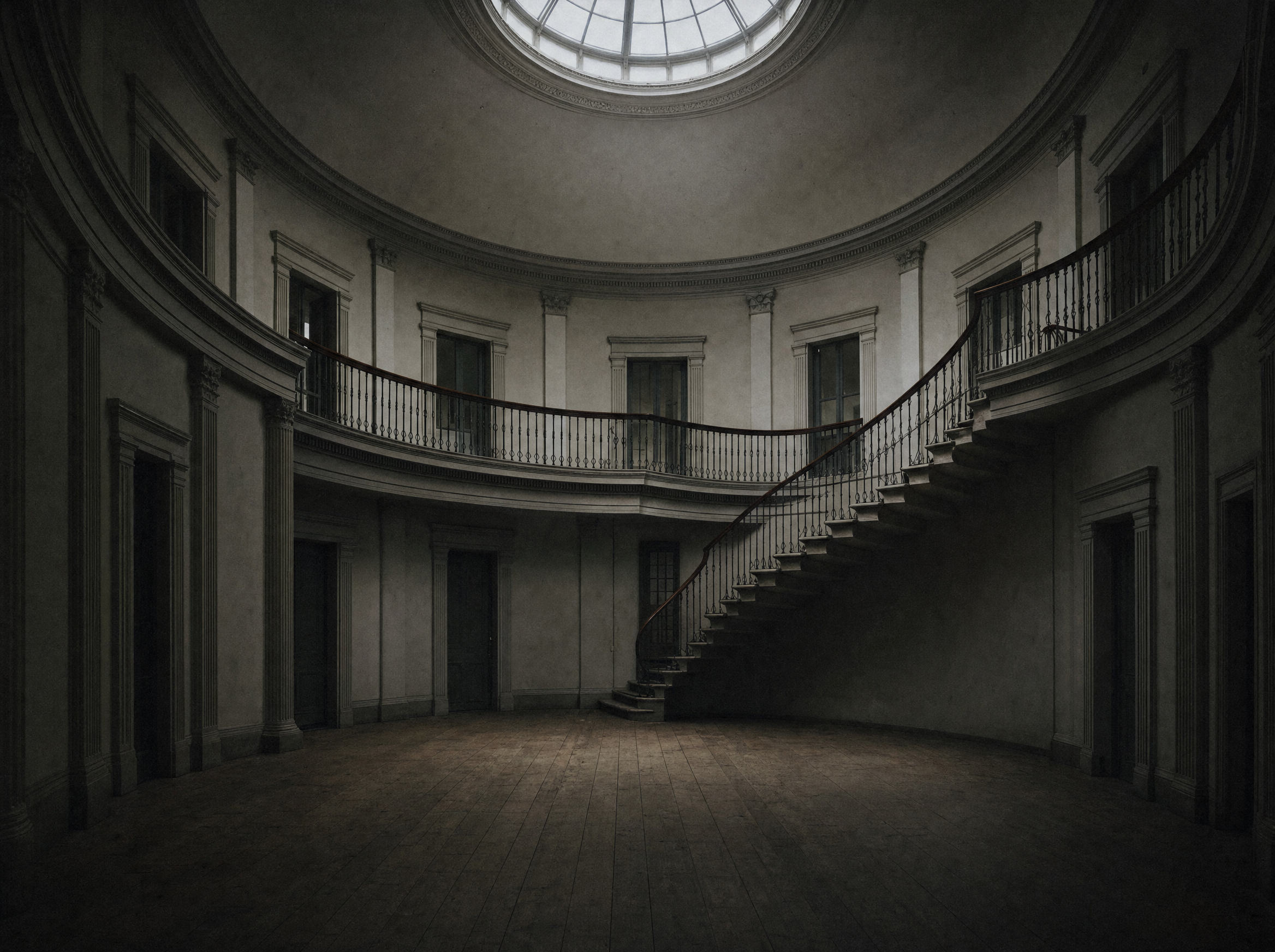
It was never finished. A single-storey colonnade was meant to wrap the whole building, and Conrad Martens painted it as though it were there, and it never was: the money went first. What survives is therefore a house with a magnificent inside and a slightly bare outside — the small portico on the front is a twentieth-century afterthought — and the inside is the elliptical saloon, two storeys of pale plaster under a domed lantern with a stone stair that appears to hang off the wall without help. I have stood in a great many entrance halls. This is the one I would keep.
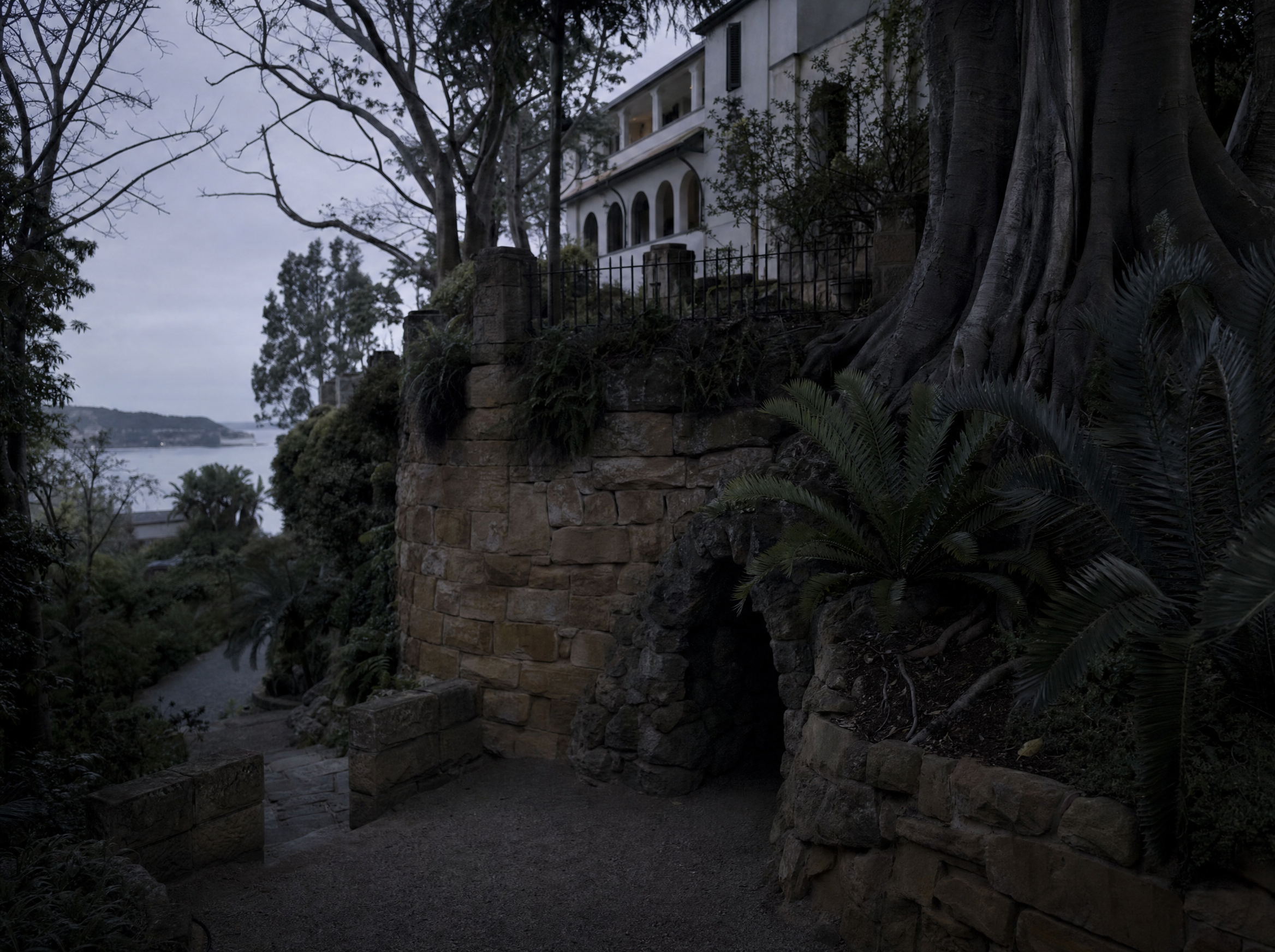
Go on a Sunday or Monday morning, which is when it opens at all, and go early: the saloon takes its light straight down through the lantern and by afternoon the harbour glare has flattened everything. Give the seventeen-minute film upstairs its seventeen minutes — I resisted, and was wrong. Then go outside and down the terraces, because the sandstone walls and the grotto are older than the house and are the last legible piece of the garden that ruined the man who made it.
The finest house in the colony spent forty years as fifteen flats.
By the early 1840s the mortgages on this house and on Macleay's country property had come due, the pastoral ventures had failed, and his largest creditor was his own eldest son. In 1845 William Sharp Macleay required his family to leave, took the debts onto himself, and moved in. The library went to pay creditors. The drawing-room furniture, ordered from London six years earlier, was sold to the newly finished Government House, where some of it still stands.
The land went afterwards, in pieces. The last subdivision in 1927 took the kitchen wing off the back of the house to make an access road. Artists squatted in what was left; by 1940 it had been cut into fifteen flats; the great elliptical lawn is now a public reserve with a different name. Restoration began in 1977 and the house opened as a museum, which is why you can stand in the saloon at all.
I do not find this sad, exactly. Everything in the house that was bought is gone, and everything that was built is still here. That is not the usual proportion, and it is worth an extra ten minutes on the terrace working out how you feel about it.