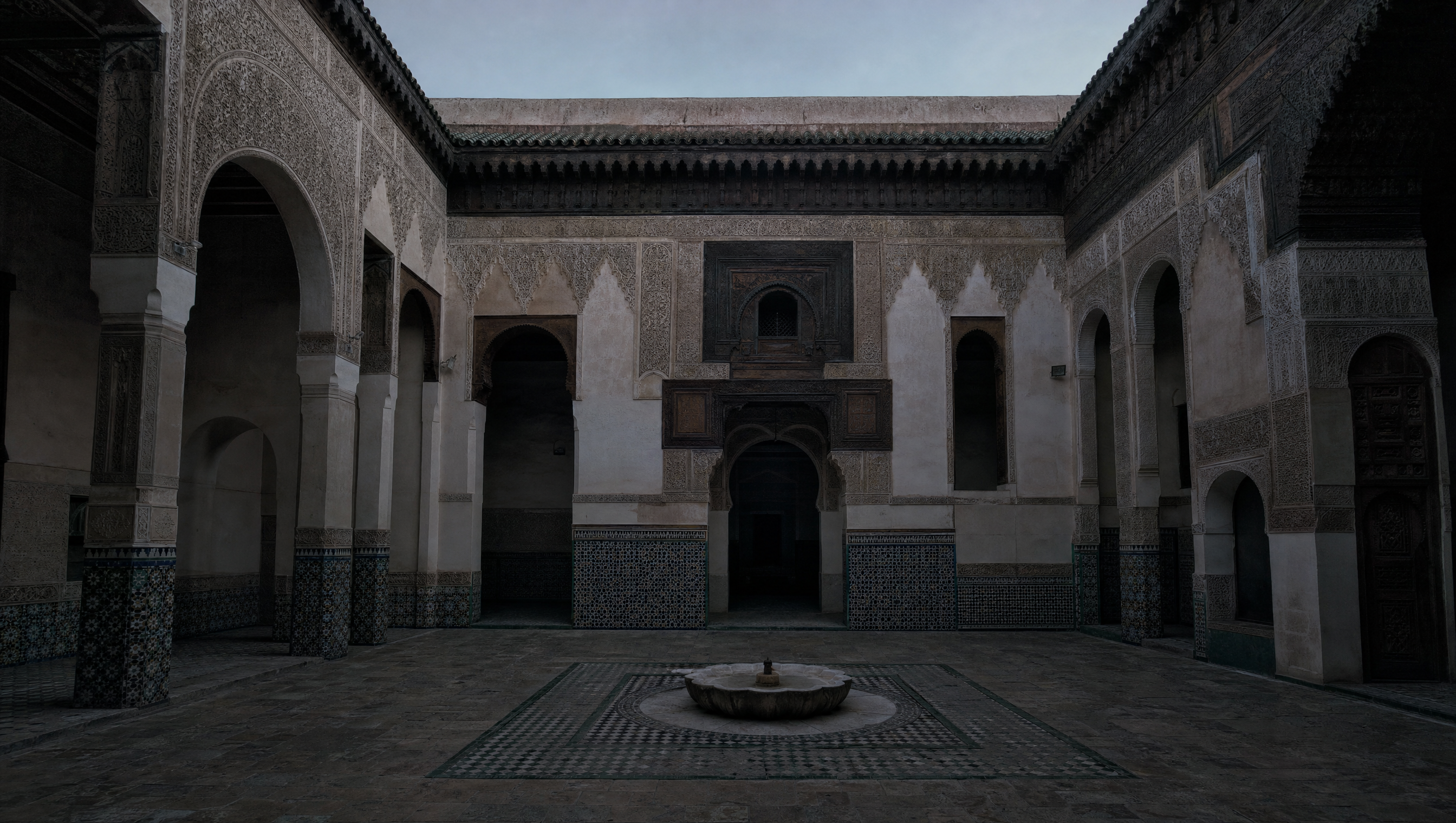
Si Saïd b. Moussa built this house in the last years of the nineteenth century — he was minister of war, and brother to Ba Ahmed, the grand vizier who was building the far larger Bahia a few minutes' walk away. What he put up is the Marrakech house at its most disciplined: nothing to the street, everything to the courtyard, and a riad garden with a painted wooden pavilion set down in the middle of it. It became a museum in 1932, which makes it one of the oldest in the country, and it has been rearranged more than once since.
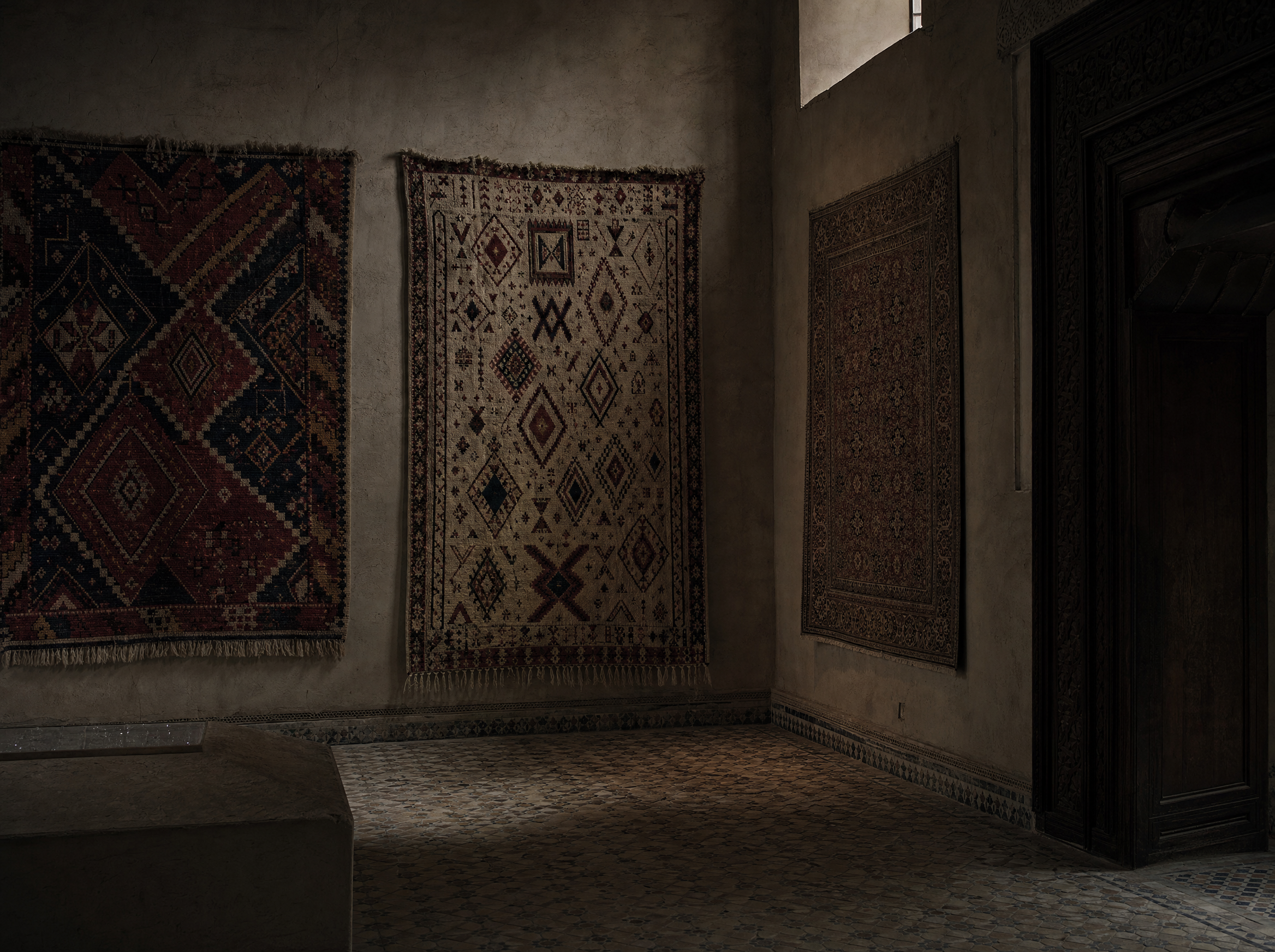
The Fondation Nationale des Musées reopened it in 2018 as the national museum of weaving and carpets, and the change of subject suits the building better than the old catch-all of crafts did. Some four hundred carpets hang here now — High Atlas flatweaves that are essentially arguments in wool, next to the fine floral urban work of Rabat and Fès — and hanging them flat on plain plaster is exactly right, because it lets you see how differently the two traditions think about a rectangle. The wooden fairground wheel is still in the collection and still the object everyone smiles at.
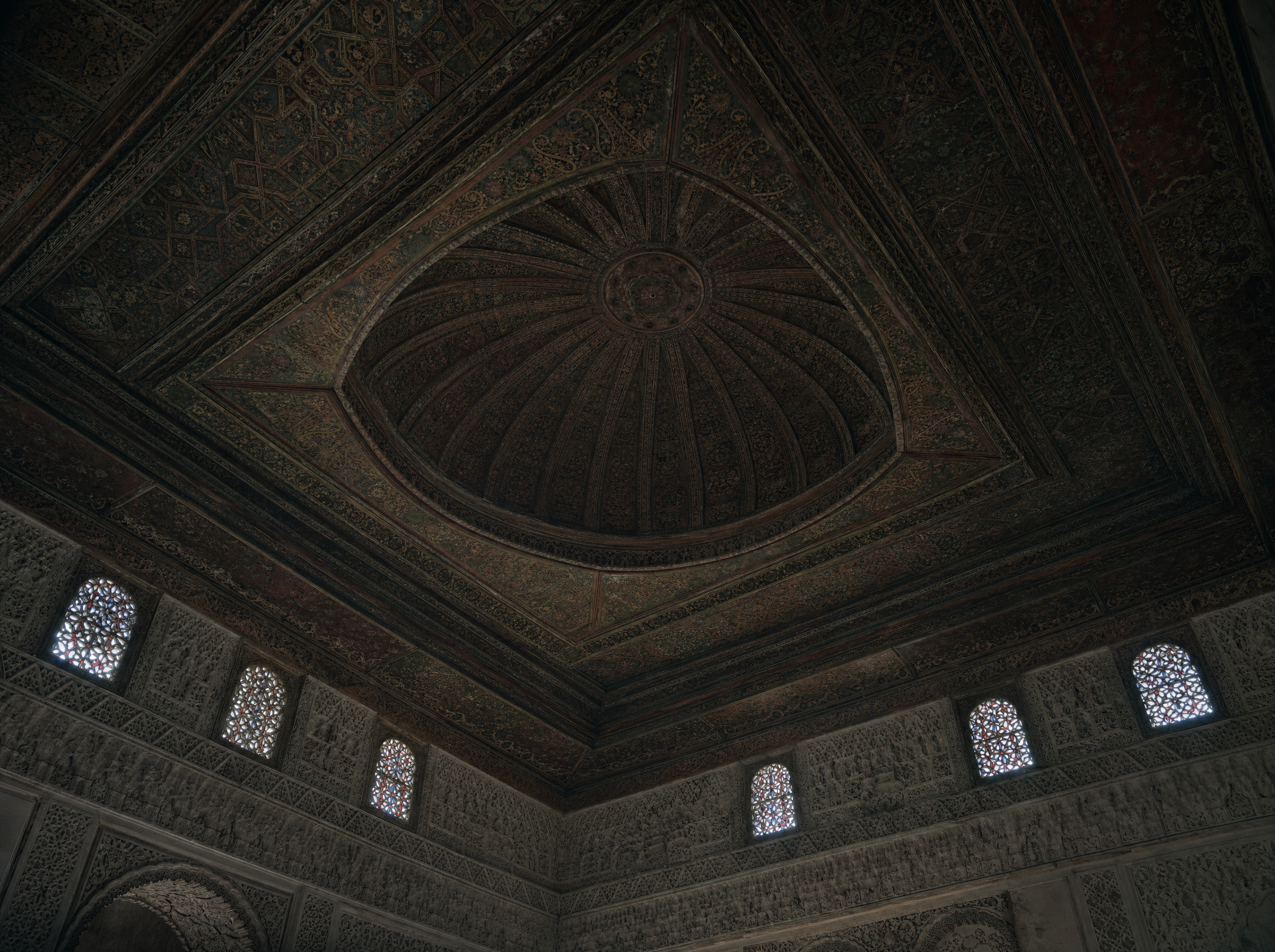
But the building outranks its labels, and I would not pretend otherwise. The upstairs reception room has a carved cedar dome above a band of pierced plaster, and I stood under it for a long time doing nothing useful. Go at opening, in winter, when the courtyard is still cold; the light drops straight down for an hour and then goes flat. And ring before you walk up — the house has been in and out of repair since the 2023 earthquake, and the hours on the door have not always agreed with the hours on the website.
the fairground wheel