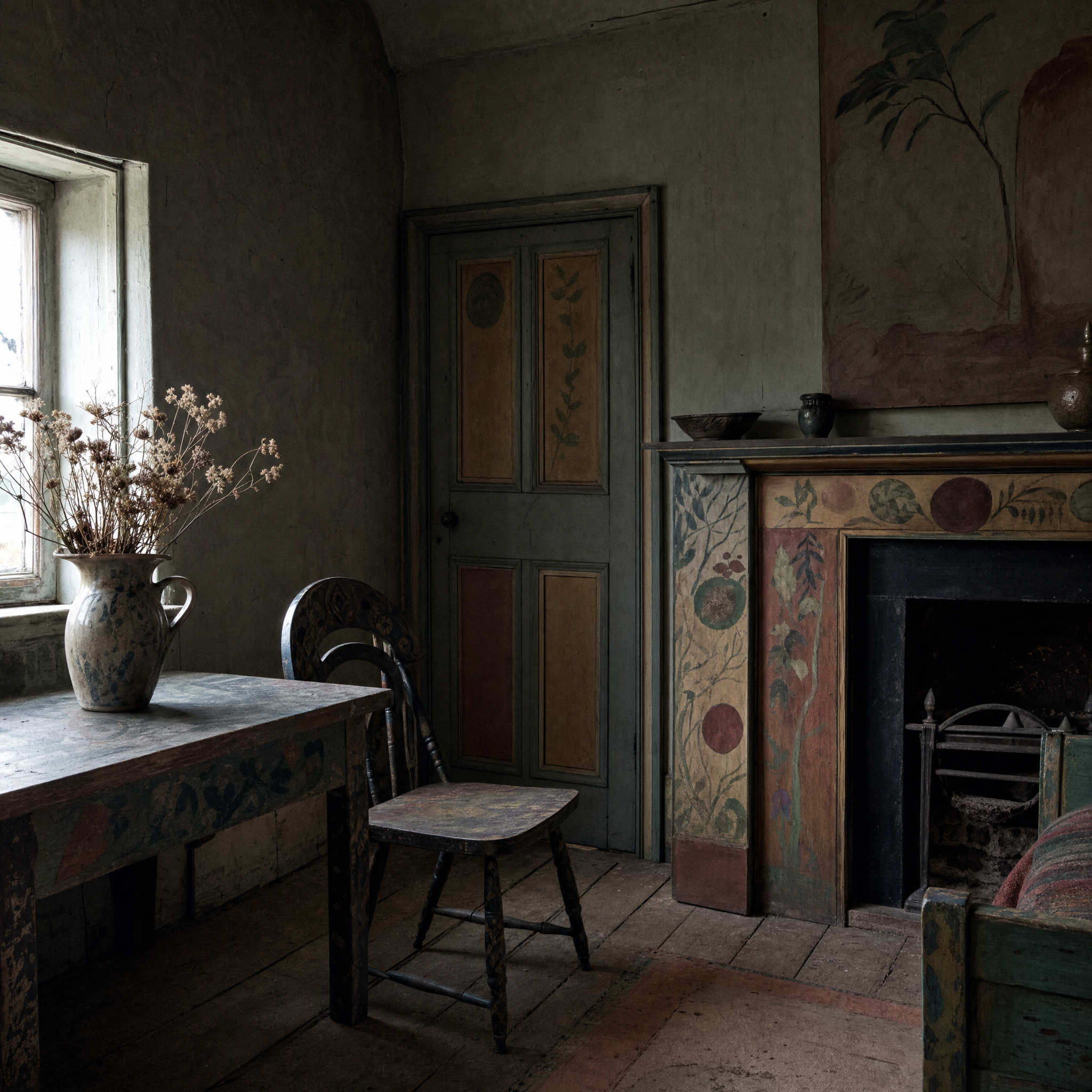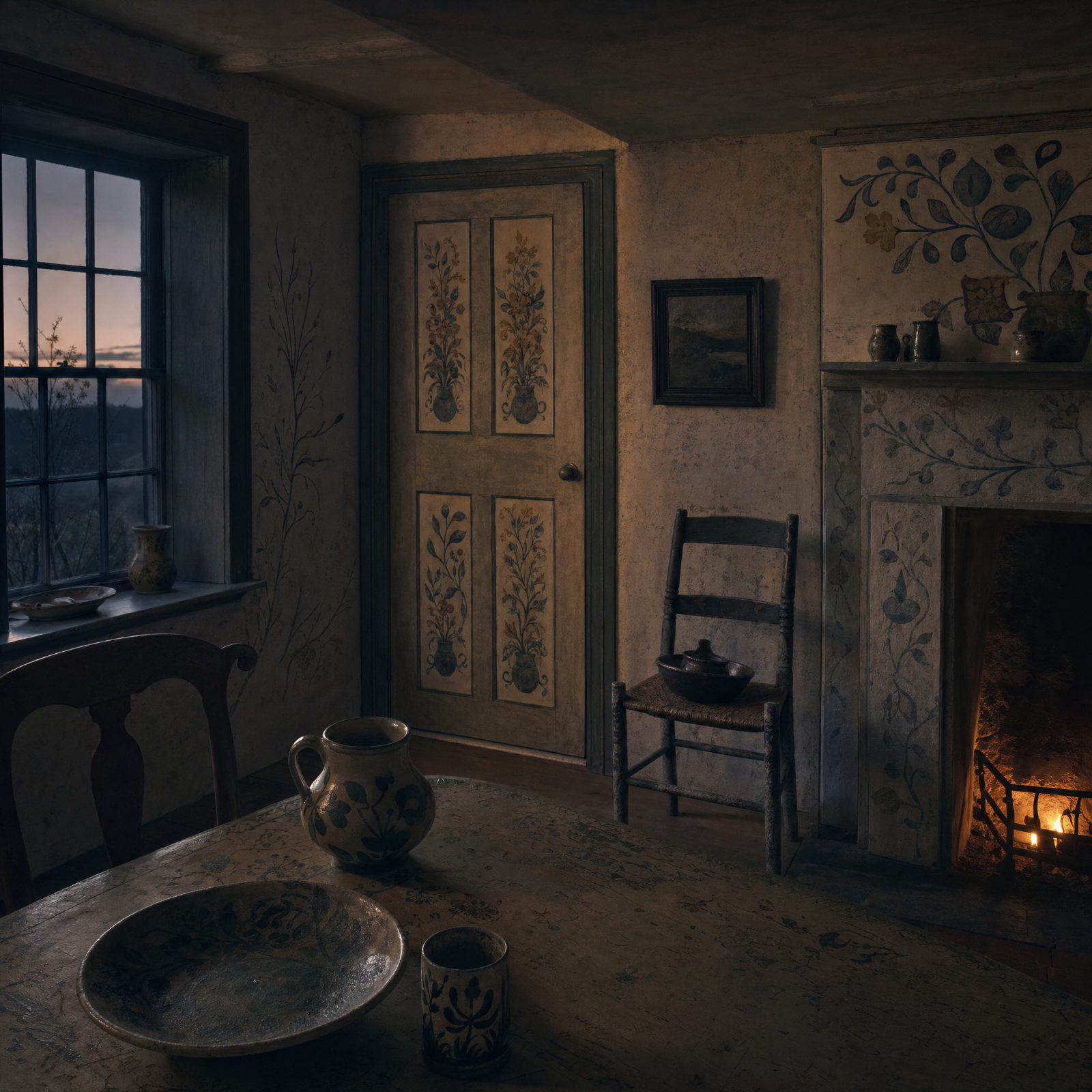
Vanessa Bell and Duncan Grant came here in 1916 for an unromantic reason: Grant needed farm work to hold his exemption from the war, and Virginia Woolf, Vanessa's sister, had found the place and pressed it on them. What happened over the next fifty years is the reason for the drive. The decoration at Charleston is not applied to the house — it is the house. Door panels, fire surrounds, a cupboard, a bedhead, the backs of chairs. Nobody was commissioned. They painted what was in front of them, and then, when they tired of it, painted it again.
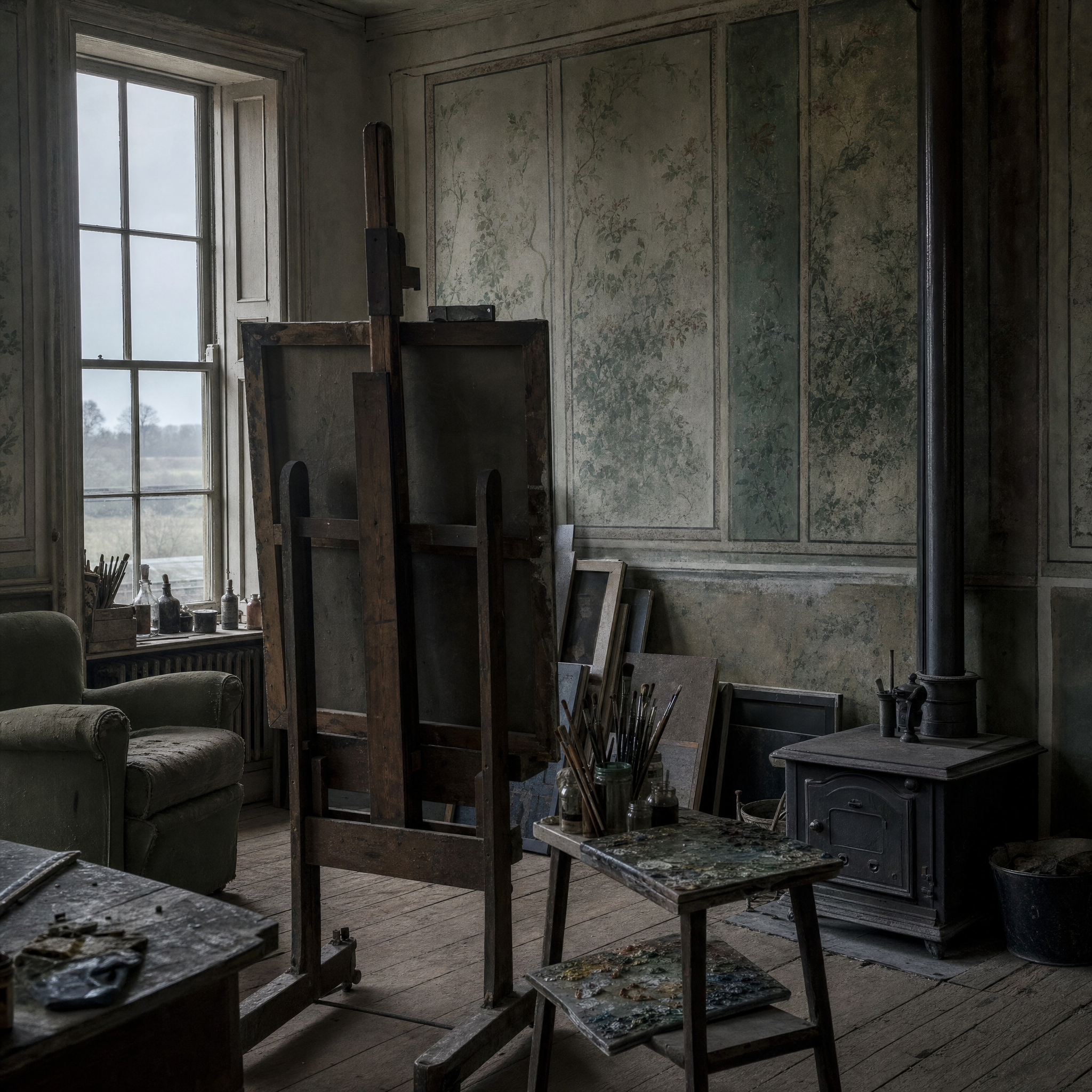
The room that undid me was the dining room, which is much darker than the photographs let on: black stencilled walls, oak-yellow chevrons and sponged grey diamonds, put on by hand by whoever happened to be staying. It is the only grand-looking room in the house and it was made by guests after dinner. The studio is the opposite and just as good — brushes and jars left standing, Vanessa's tiles round the fireplace, and Stephen Tomlin's unfinished bust of Virginia Woolf, which he never got to the end of and which is far better for it.
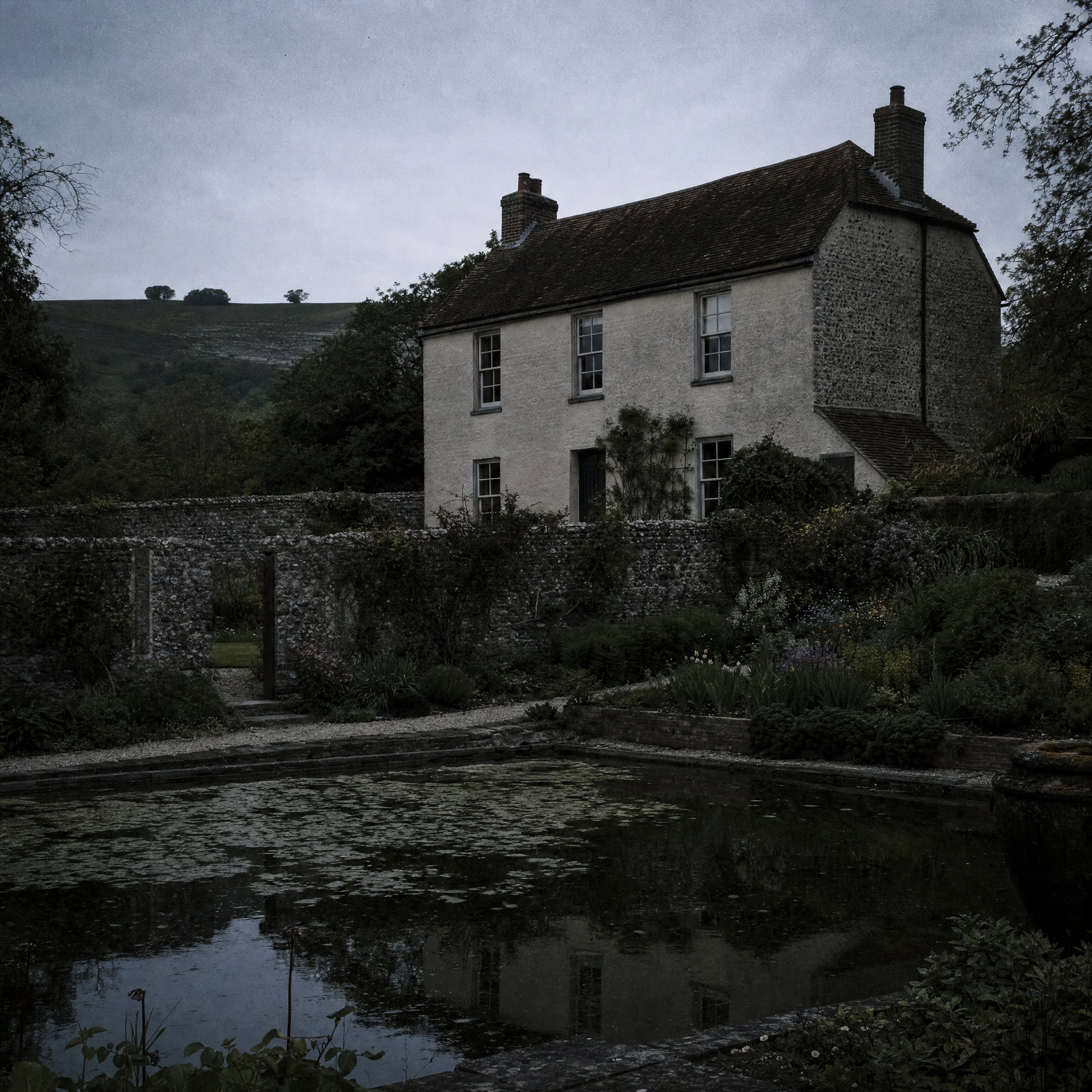
Give the walled garden the hour you were going to spend in the shop. Roger Fry had a hand in laying it out, and it is doing the same work as the painted doors — gravel, mosaic, a pond, sculpture set among the flowers, an enclosed world by people constitutionally unable to leave a surface plain. I went in June. Long light, the windows open, and the paint reading warm rather than tired. I would not come in the wet unless I had no choice.