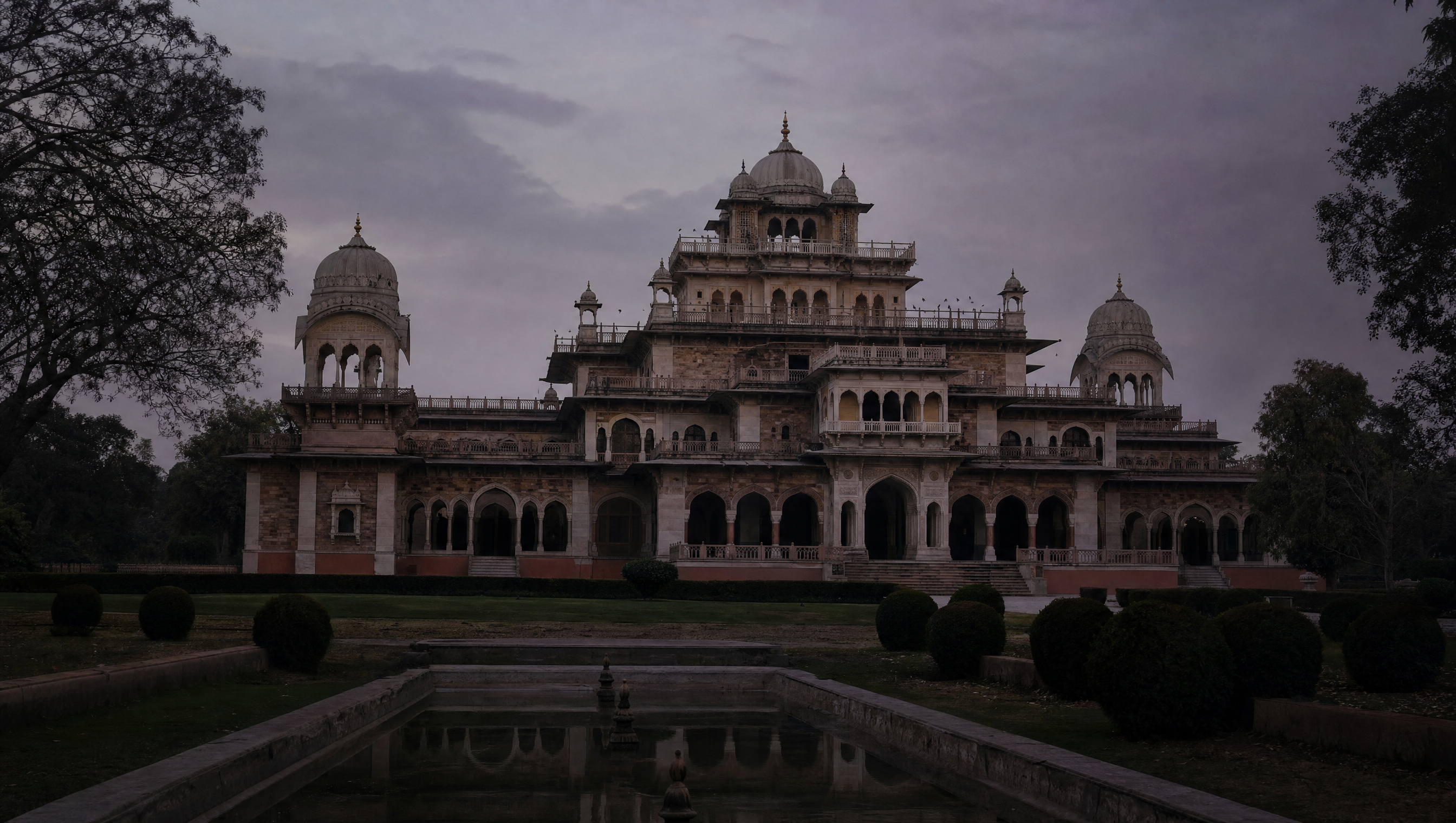
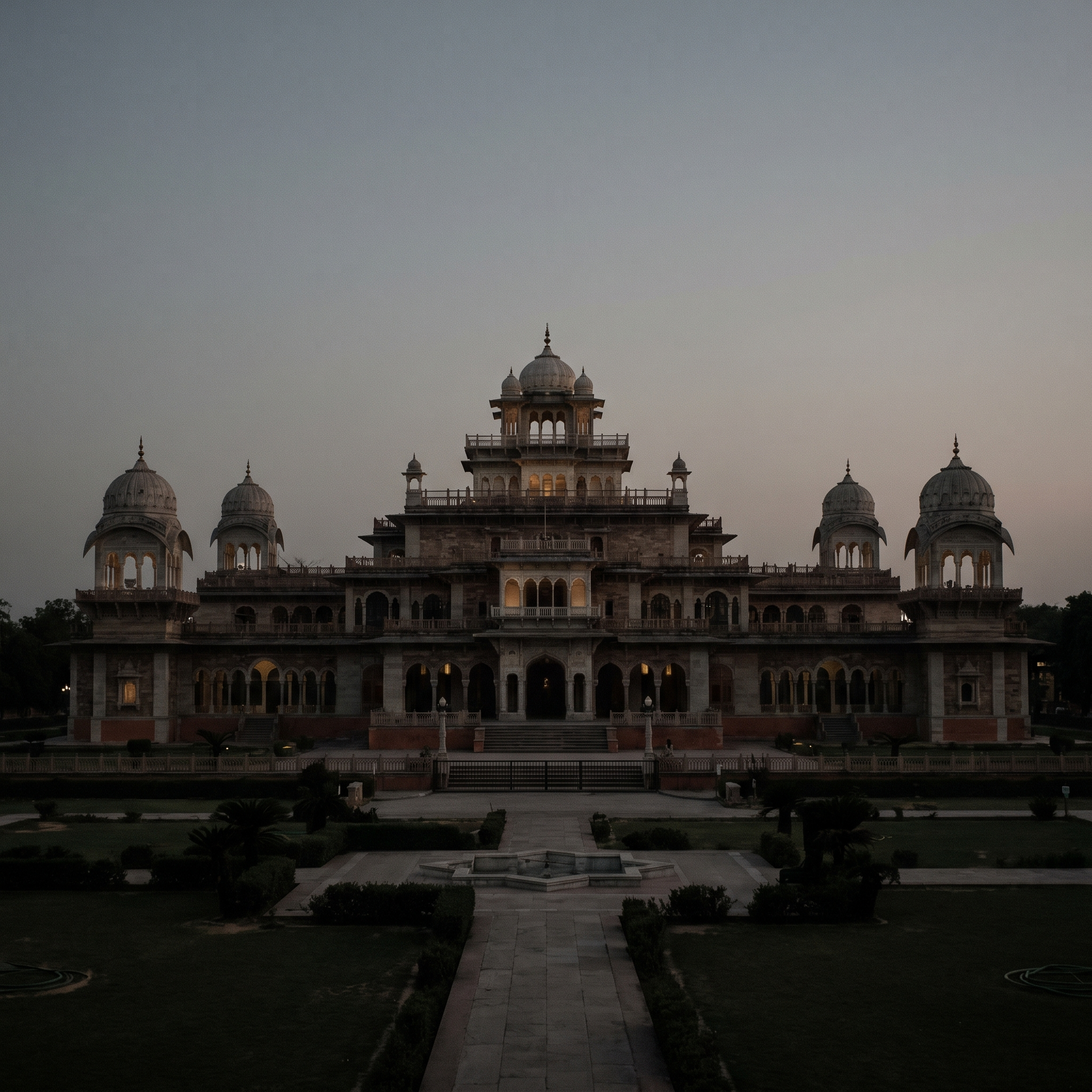
The foundation stone was laid in 1876, for the Prince of Wales, and for some years afterwards nobody could agree what the building was for. Ram Singh wanted a town hall. His successor, Madho Singh II, decided it should hold the art of Jaipur instead, and it opened as a museum in 1887. That indecision is legible in the plan: the halls are too generous and too ceremonial for vitrines, and the collection has been arranging itself around the architecture ever since.
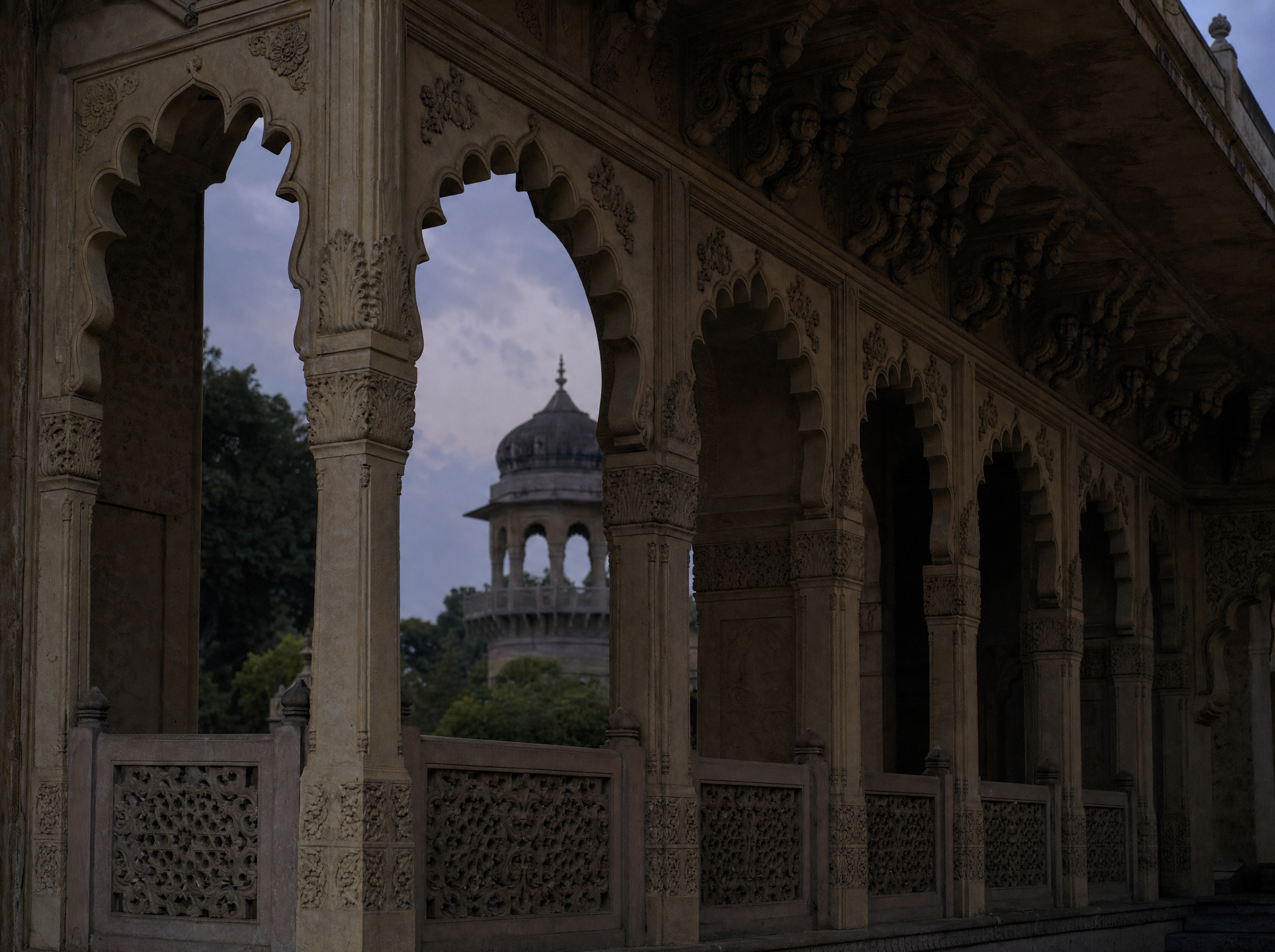
Samuel Swinton Jacob designed it, and Jacob was the man who spent years measuring and drawing the ornament of Rajput buildings for what became the Jeypore Portfolio — a compendium of details published so that craftsmen could keep making them. Albert Hall is that project standing up. Cusped arches, jali, brackets, the little domed chhatris along the roofline: it is a catalogue of a region's building crafts executed at full size by the people who owned them. I walked the arcade twice before I went in, which is the correct order and not the usual one.
Inside there are some nineteen or twenty thousand objects and the honest thing to say is that the display is uneven — sixteen galleries, a great deal of glass, and lighting that flatters almost none of it. But three things are worth the fare on their own: the Persian garden carpet, the mummy, and the ceilings. Go at nine, when the doors open. I had perhaps forty minutes before the coaches turned the halls into a scandal, and I do not think the rooms can be read at all after that.
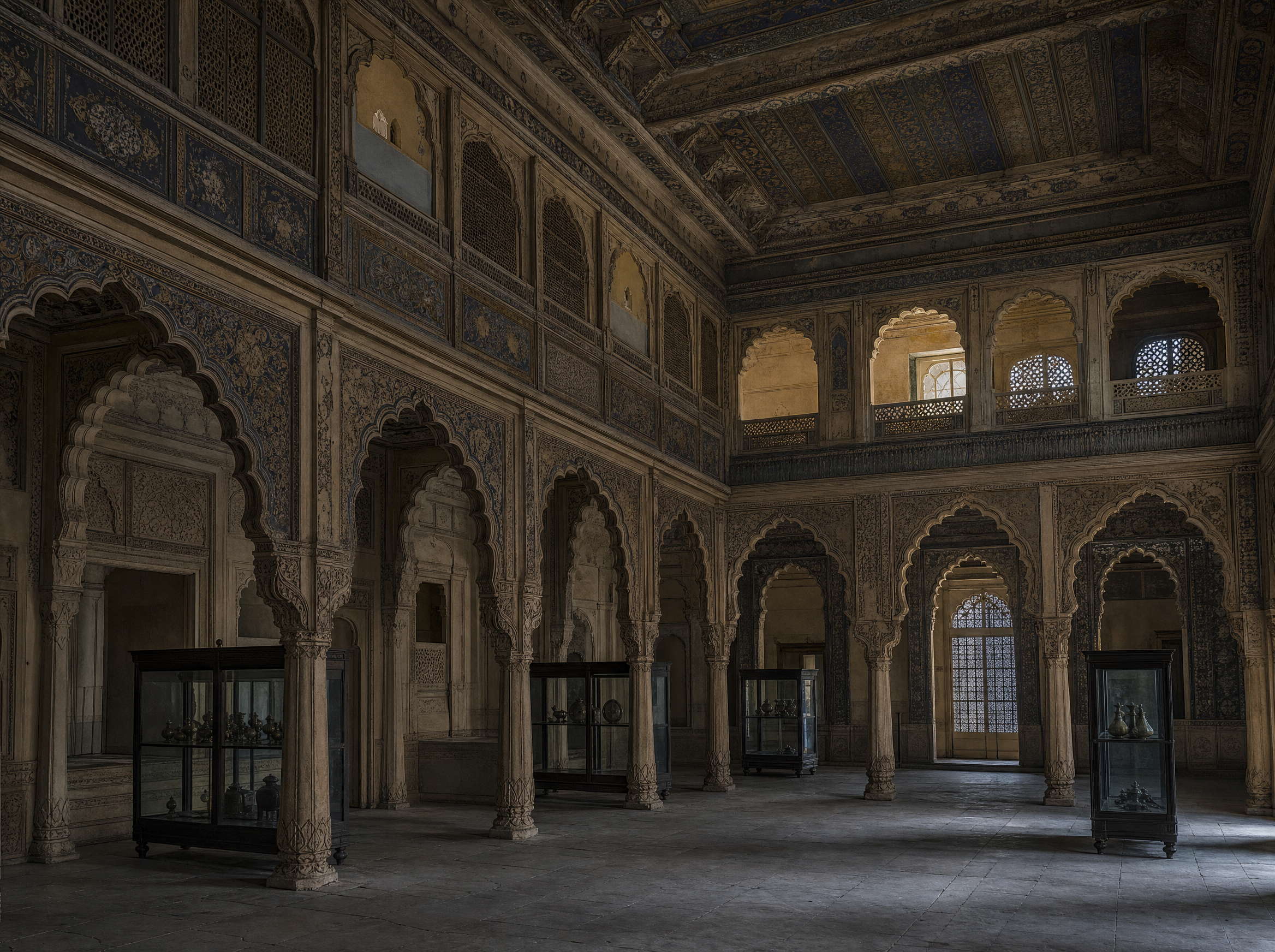
the garden carpet · no photograph
of my own worth printing
It was built to show a city its own craftsmen, and the craftsmen built it.
The collection here began as an exhibition of industrial crafts, assembled by Thomas Holbein Hendley for the Jaipur Exhibition of 1883 — pots, tools, weaving, metal, the working trades of the state gathered up and shown back to the people who made them. It became a permanent museum almost by momentum.
Which makes the building the honest part of the argument. Jacob's ornament was measured off Rajput buildings and cut by Rajput masons; the arcade is not a colonial architect quoting a style, it is the local trades doing at scale what the cases inside are asking you to admire in miniature. The exhibit swallowed the exhibition.
I left by the steps and sat on the garden wall for twenty minutes looking back at it, which was the most useful thing I did all morning.